

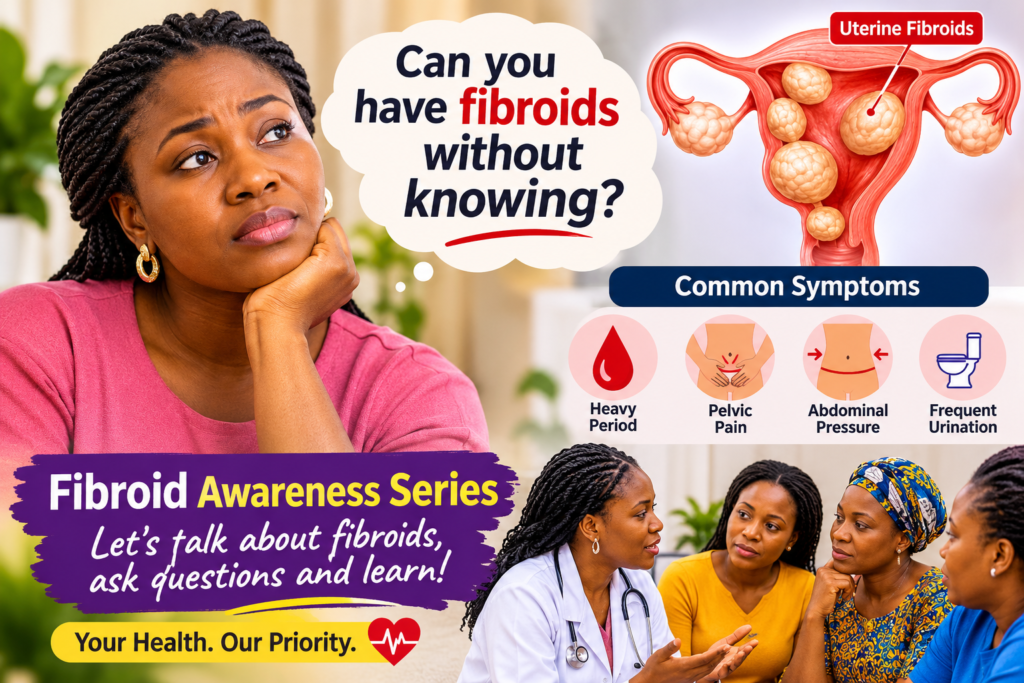
Welcome to our Fibroid Awareness Series on the Health Corner.
Have you ever been in a gathering of women and wondered how many of them are living with fibroids without even knowing it?
Let me tell you what happened.
I was at church one morning. It was quite early, around 7 a.m., and the service hadn’t really started. I was somewhere in the church when a mutual friend walked in, looking for a place to change her sanitary pad.
I remember asking, almost out of surprise, “Ah-ah! It’s just 7 a.m. Are you changing your pad already?”
She said yes. Her menstrual flow was quite heavy.
As we got talking, she mentioned that she had gone for a scan and was told she had fibroids.
And that was how an ordinary morning turned into a conversation about women’s health.
Interestingly, she wasn’t the only one. About three other ladies around us also shared that they had been diagnosed with fibroids after going for scans.
Some already knew what fibroids were because they had been diagnosed. Others were asking questions. Some, I suspect, had never even gone for a pelvic scan.
I left that conversation with one thought:
How many women are actually living with fibroids without knowing it?
Think about it for a moment.
You could be sitting beside a woman who has fibroids. Your colleague at work could have them. Your sister, your friend, your neighbour, or even the woman you see every Sunday in church could be living with them.
And the sad part of this is that some of these women may not even know.
CAN YOU HAVE FIBROIDS WITHOUT KNOWING?
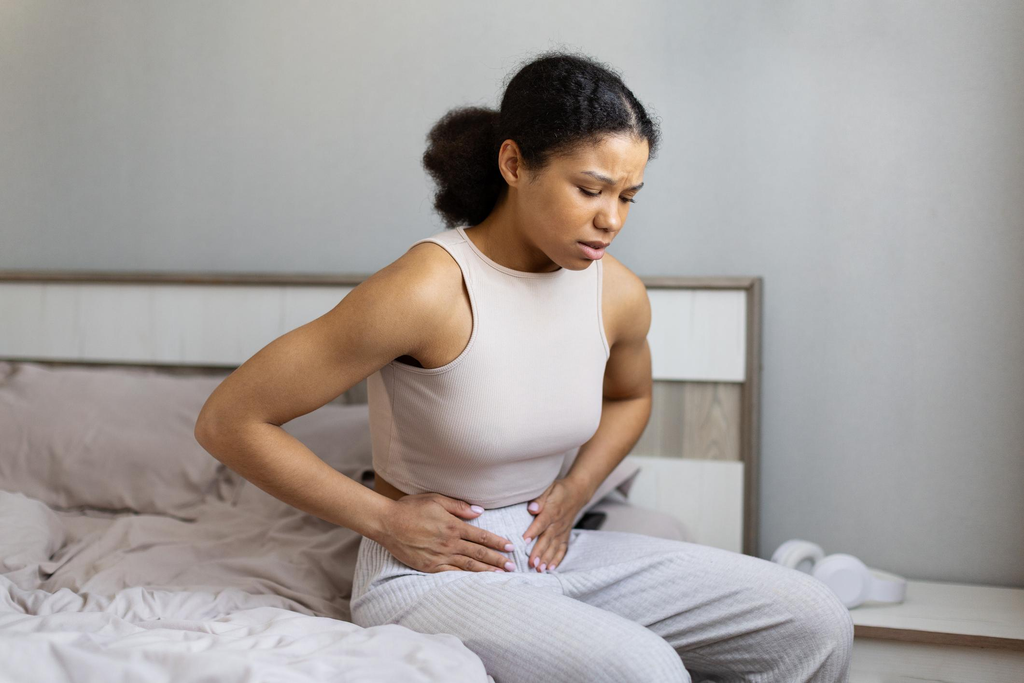
Here is something I want us to understand from the beginning: not every woman with fibroids experiences symptoms.
Yes, you read that correctly.
Some women have fibroids and go about their daily activities without experiencing any noticeable discomfort. They may only discover them when they eventually go for a pelvic scan, sometimes for an entirely different reason.
Others are not so fortunate.
For some women, fibroids come with heavy menstrual bleeding, prolonged periods, pelvic pain, pressure around the lower abdomen, frequent urination and other uncomfortable symptoms.
Imagine having to change your sanitary pad several times before midday because your flow is unusually heavy.
Imagine planning your outings around your menstrual cycle because you are worried about bleeding through your clothes.
Imagine dealing with constant pelvic discomfort and wondering whether what you are experiencing is normal.
For some women, this is their reality.
And this is why it is important to understand the possible symptoms of fibroids and know when to seek medical attention.
WHAT HAPPENS WHEN A WOMAN DISCOVERS SHE HAS FIBROIDS?
For some women, discovering they have fibroids comes with fear, confusion and a thousand questions.
I have spoken to quite a number of women, and honestly, some of the experiences I have heard are worth discussing.
One thing that keeps coming up is the confusion that follows a fibroid diagnosis.
A woman goes for a scan, discovers she has fibroids and suddenly has a thousand questions.
Will I have children?
Will I need surgery?
Is it dangerous?
Will it keep growing?
Can it disappear?
What should I eat?
What should I avoid?
And sometimes, instead of getting answers that help them understand their condition, they leave with more questions and anxiety.
Some are advised to monitor the fibroids. Others are asked about their pregnancy plans or referred for further medical assessment. Some are told they may eventually need surgery.
But here is what every woman should understand: a fibroid diagnosis is not an automatic sentence to surgery, infertility or a life of discomfort.
Treatment depends on several things, including the size, number and location of the fibroids, the symptoms they cause, a woman’s age and whether she hopes to become pregnant.
Two women can have fibroids and require completely different approaches to managing them.
This is why we cannot rely on what happened to our friend, sister or neighbour to decide what will happen to us.
We need to understand our own bodies and get the right medical advice.
SO, WHAT EXACTLY IS A FIBROID?
Let’s start with the basics.
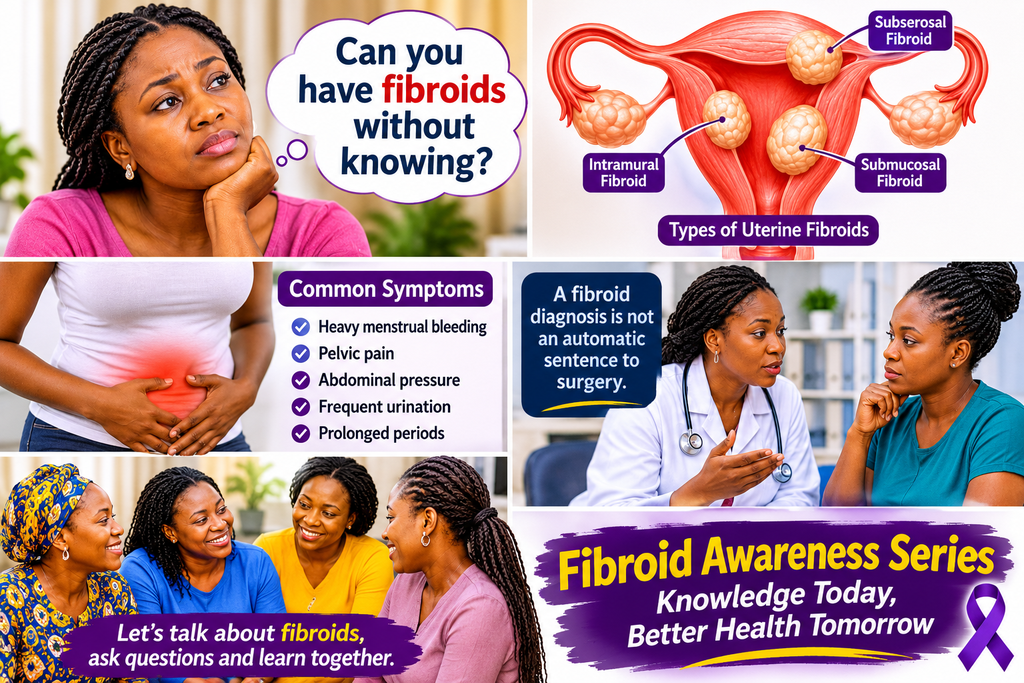
Uterine fibroids, medically known as leiomyomas, are non-cancerous growths that develop in the muscular wall of the uterus (womb).
They are among the most common growths affecting the female reproductive system.
They can be as small as tiny nodules or grow large enough to change the size and shape of the uterus.
Some women have just one, while others may have several.
Fibroids are particularly common during the reproductive years, and research shows that women of African ancestry tend to develop them earlier and experience a greater burden of the condition.
But despite how common they are, there is still so much many of us do not understand about them.
For instance, why do some women develop fibroids while others don’t?
Why do some grow larger than others?
Why do some women experience severe symptoms while others have no symptoms at all?
Can lifestyle and environmental factors influence their development?
These are some of the questions we will be exploring as this series progresses.
WHY I WANT US TO HAVE THIS CONVERSATION
I am starting this series because I believe women deserve more than frightening stories and half-understood medical information.
We need to know what fibroids are, understand the different types, recognise possible symptoms and know when to seek medical attention.
We also need to separate facts from myths.
No, every woman with fibroids does not need surgery.
No, having fibroids does not automatically mean you cannot get pregnant.
And no, not every herbal mixture, natural remedy or food advertised as a solution for fibroids is actually effective.
Just because something is labelled ‘natural’ does not mean it can shrink or eliminate fibroids. We need to understand what science says before accepting every claim we come across.
We will discuss all of these things, including what science says about diet, lifestyle, treatment and prevention.
Insulin: Before You Blame Carbohydrates
WHAT WILL WE BE DISCUSSING IN OUR FIBROID AWARENESS SERIES?
For the next several episodes, we will be taking a closer look at fibroids.
We will discuss:
Understanding Fibroids
- What exactly are fibroids?
- The different types of uterine fibroids.
- Why do women develop fibroids?
- Risk factors: What increases the chances of developing fibroids?
- Why are fibroids more common and often more severe among women of African ancestry?
Recognising Fibroids
6. Symptoms: What should you look out for?
7. Can you have fibroids without knowing?
8. Fibroid diagnosis: Understanding your scan report.
Fibroids and Reproductive Health
9. Can fibroids affect fertility and pregnancy?
10. Does the size or location of a fibroid matter?
Managing Fibroids
11. Do all fibroids require surgery?
12. Available treatment options.
13. Food, nutrition and lifestyle: What does the evidence actually say?
14. Common fibroid myths women need to stop believing.
And much more!
WELCOME TO OUR FIBROID AWARENESS SERIES!
So, get comfortable, grab your popcorn and invite your friends.
We are going to learn quite a bit together.
And please, don’t keep this conversation to yourself. Share this post, tag a friend, send it to your sister and let other women join us.
You never know who needs this information.
This is our Fibroid Awareness Series on the Health Corner.
Let us talk about fibroids. Let us ask questions. Let us learn.
Because understanding your reproductive health should never be optional.
NEXT EPISODE: What exactly is a fibroid, and how does it develop in the womb?
See you in the next episode!
https://www.acog.org/womens-health/faqs/uterine-fibroids?utm_source=chatgpt.com
