

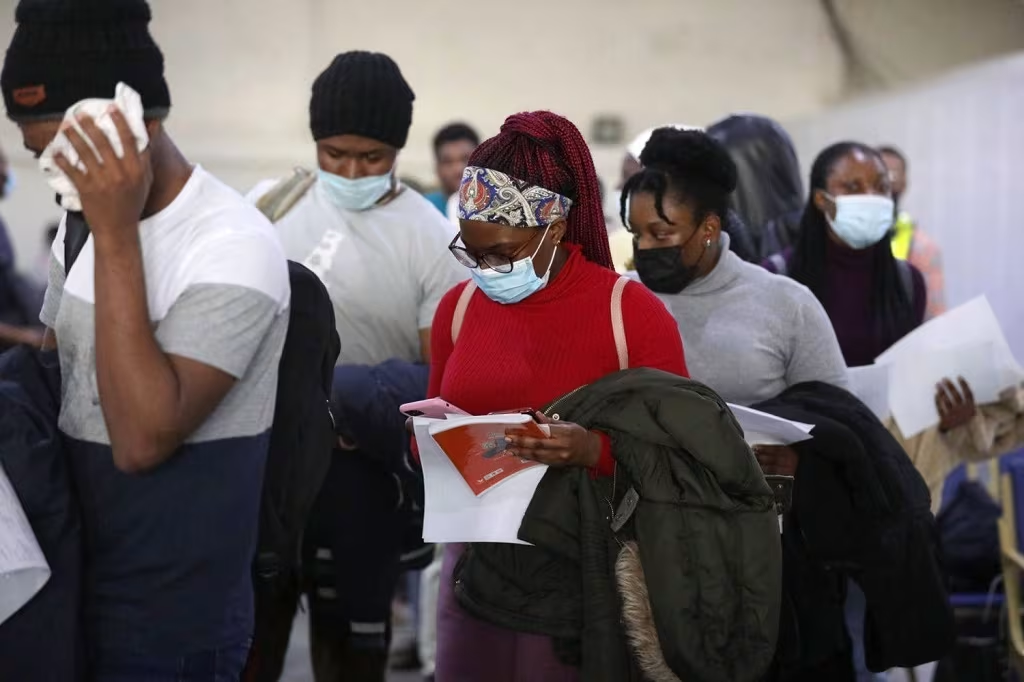
Hundreds of Nigerians who registered for the Federal Government’s voluntary repatriation programme from South Africa have been left stranded without shelter, food, or financial support following delays in scheduled evacuation flights.
The development was disclosed by the Nigerian Citizens Association South Africa (NICASA) in a statement issued on Friday, raising concerns over the worsening humanitarian situation facing affected Nigerians, including women and children.
NICASA National President, Frank Onyekwelu, said many of those awaiting evacuation had travelled from distant provinces across South Africa after being directed to report for registration and screening, only to find themselves stranded due to delays in the programme.
According to him, many of the affected citizens exhausted their limited resources after undertaking long journeys in the belief that arrangements for their departure had already been finalised.
“Today, numerous families, including women and children, are stranded without shelter, food, transportation, or financial means to sustain themselves,” Onyekwelu said.
“The situation has become increasingly distressing as some of our nationals have been left sleeping in difficult conditions, uncertain of when they will return home. Several have exhausted their limited resources after travelling long distances in good faith, believing that arrangements had been adequately concluded for their departure.”
He further alleged that some Nigerians experienced humiliation, insensitive treatment, and poor communication from certain officials during the registration and screening process, stressing that citizens who complied with government directives deserved better treatment.
“Our citizens are not merely statistics. They are fathers, mothers, children, students, workers, and entrepreneurs who have found themselves in desperate circumstances. Their cries for help must not go unanswered,” he added.
NICASA called on the Federal Government to urgently intervene by accelerating the repatriation process, deploying emergency assistance, and establishing a humanitarian support mechanism for stranded citizens pending their evacuation.
The association also expressed optimism that the Nigerian High Commission in South Africa would improve communication, provide temporary welfare support, and work closely with community leaders to address the immediate needs of affected Nigerians.
Onyekwelu reaffirmed NICASA’s commitment to collaborating with the government and relevant stakeholders to ensure the successful completion of the voluntary repatriation programme, emphasizing the need for swift and decisive action to alleviate the suffering of stranded citizens.
The situation comes amid continued xenophobic attacks in South Africa, which have persisted since April 2026 and prompted several African countries, including Nigeria, Ghana, and Malawi, to begin evacuating their citizens from the country.
