

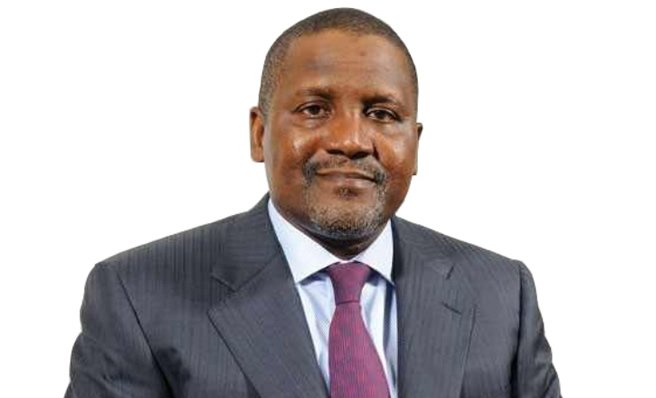
Kenyan presidential hopeful Patrick Osoi has warned Nigerian billionaire and President of Dangote Group, Aliko Dangote, against proceeding with his proposed refinery project in Kenya, threatening to send him back to Nigeria if he becomes president in February 2027.
Osoi issued the warning in a video shared by AM Media, in which he urged Dangote not to rush the construction of the proposed 700,000-barrel-per-day refinery, insisting that local investors could undertake the project.
The presidential aspirant declared that he would ensure Dangote returned to Nigeria after his anticipated inauguration, although his claim to the presidency remains a political ambition rather than an established outcome.
“I want to tell Dangote, please, don’t hurry up to start the refinery, because by next year, February, the time I’m sworn in as the president of this country, you’ll be back going to Nigeria,” Osoi said.
He argued that Kenya had businesspeople with the capacity to invest in the country’s energy sector and questioned the need to rely on a foreign investor for such a major project.
According to him, the country needs a refinery capable of meeting its domestic energy demands, adding that Kenyan entrepreneurs should be given the opportunity to undertake the investment.
“Because we are asking a refinery which can do that job. We also have business people in this country who can do that job,” he said.
Osoi’s comments come amid plans by Dangote Group to expand its refining operations beyond Nigeria through the proposed multibillion-dollar refinery in Kenya, a project expected to have significant implications for the East African energy market.
Dangote and Kenyan President William Ruto recently participated in the groundbreaking ceremony for the proposed facility at Lamu Port, marking a major step towards the development of the project.
The $16bn refinery is designed to process up to 700,000 barrels of crude oil daily and is expected to be completed by 2030. Once operational, it is projected to reduce Kenya’s dependence on imported refined petroleum products while improving regional fuel supply.
The proposed investment is also expected to strengthen Kenya’s position in the petroleum industry and support broader efforts to develop its energy infrastructure.
Dangote’s proposed Kenyan refinery is modelled on the Dangote Petroleum Refinery in Lagos, Nigeria, which has a nameplate capacity of 650,000 barrels per day and was developed to reduce Nigeria’s reliance on imported petroleum products.
The Nigerian facility has marked a major shift in the country’s refining landscape, with its operations creating opportunities for domestic fuel production and exports to international markets.
However, Osoi’s remarks have introduced a political dimension to the proposed Kenyan investment, raising questions about how his position could affect foreign investors and major infrastructure projects if he were to gain political power.
His warning also highlights the debate over local participation in strategic industries, particularly energy, where governments must balance the promotion of domestic businesses with the capital, expertise and technology that foreign investors can bring.
There has been no indication in the provided report that the Kenyan government has endorsed Osoi’s position or announced any plan to halt the refinery project.
The proposed facility remains a significant investment in Kenya’s long-term energy plans, although its eventual progress will depend on project development, financing, regulatory approvals and the wider investment environment.
