

As attention turns to the 2027 Lagos 2027 governorship election, voter turnout could become one of the most telling factors in the outcome of the contest.
How many people voted in the 2023 Lagos governorship election?
The 2023 Lagos governorship election offers a striking starting point. INEC recorded 7,060,195 registered voters and 6,214,970 collected Permanent Voter Cards (PVCs), yet only 1,173,631 votes were cast in the governorship election.
The figures raise a central question for Lagos 2027 governorship election: how many of the state’s millions of registered voters will actually turn up to vote?
The answer could matter because the results of the 2015, 2019 and 2023 governorship elections show a persistent gap between Lagos’s enormous registered electorate and the much smaller number of people who ultimately cast ballots.
In the 2023 Lagos governorship election, INEC recorded 7,060,195 registered voters and 6,214,970 collected Permanent Voter Cards (PVCs). Yet only 1,173,631 votes were cast in the governorship election.
APC candidate Babajide Sanwo-Olu won with 762,134 votes, followed by Labour Party candidate Gbadebo Rhodes-Vivour, who received 312,329 votes, while PDP candidate Olajide Adeniran polled 62,449 votes.
The figures raise a bigger question for the 2027 Lagos election: what happens if a significant proportion of those who have previously stayed away from the polls decide to participate?
Lagos 2027 Governorship Election: The Numbers Behind the Electorate
The gap between registered voters and actual voters is not new.
In 2015, Lagos had a significantly smaller registered electorate than it does today, while the governorship election produced about 1.48 million votes. APC’s Akinwunmi Ambode polled 811,994 votes, while PDP’s Jimi Agbaje received 659,788.
Four years later, the number of registered voters had increased, but participation fell.
The 2019 Lagos governorship election had 6,505,512 registered voters, according to INEC’s collation figures. Of these, 1,006,074 voters were accredited, while total votes cast stood at 998,715, representing a turnout of 15.46 per cent. Sanwo-Olu won with 739,445 votes, while Agbaje polled 206,141.
By 2023, the registered electorate had crossed seven million.
Yet total votes cast rose only modestly to about 1.17 million.
What 2015, 2019 and 2023 Tells about Lagos Governorship Election
| Election year | Registered voters | Votes cast | APC winning vote | Main opposition vote |
|---|---|---|---|---|
| 2015 | — | ~1.48m | 811,994 | PDP: 659,788 |
| 2019 | 6,505,512 | 998,715 | 739,445 | PDP: 206,141 |
| 2023 | 7,060,195 | 1,173,631 | 762,134 | LP: 312,329; PDP: 62,449 |
Sources: INEC and published election results.
The pattern is clear enough: Lagos has a very large registered electorate, but only a fraction has participated in recent governorship elections.
PVC Collection Has Not Translated Into Higher Turnout
The PVC figures make the situation even more striking.
By 2023, Lagos had 6,214,970 collected PVCs, compared with 7,060,195 registered voters. That means about 88 per cent of registered voters had collected their PVCs.
Yet only about 1.17 million people voted in the governorship election.
This means the explanation cannot simply be that millions of Lagosians were registered but lacked voting cards.
A large proportion had completed the process required to participate.
The much bigger gap was between those who possessed the means to vote and those who actually turned up on election day.
That distinction could become important in the Lagos 2027 governorship election.
A voter who did not participate in 2023 cannot automatically be classified as an APC, PDP, Labour or opposition voter. Election results do not reveal the political preference of people who stayed away from the polls.
But their numbers demonstrate the scale of the potential electorate outside the active voting pool.
APC’s Winning Vote Has Remained Relatively Stable
Another important feature of Lagos’s recent electoral history is the relatively stable size of the APC’s winning vote.
The party’s governorship candidate received:
- 811,994 votes in 2015
- 739,445 votes in 2019
- 762,134 votes in 2023
Sanwo-Olu therefore received fewer votes in 2023 than Ambode did in 2015, despite the registered electorate being considerably larger.
Between 2019 and 2023, registered voters increased from 6.51 million to more than 7.06 million. However, the APC’s winning vote increased by only about 22,700.
The figures do not establish what individual voters did between elections, but they do show that the APC’s winning vote has not expanded at the same pace as Lagos’s registered electorate.
For the 2027 Lagos election, that distinction matters.
The Opposition Vote Has Changed More Dramatically
The opposition picture is more complicated.
In 2015, PDP’s Jimi Agbaje came relatively close to Ambode, receiving 659,788 votes against Ambode’s 811,994.
By 2019, however, PDP’s vote had fallen sharply to 206,141, while Sanwo-Olu’s APC remained above 700,000 votes.
The 2023 election produced another major shift.
PDP’s Olajide Adeniran received 62,449 votes, while Labour’s Gbadebo Rhodes-Vivour emerged as the principal opposition challenger with 312,329 votes.
If the LP and PDP votes are considered together for analytical purposes, they amounted to approximately 374,778 votes in 2023.
That was substantially higher than PDP’s 2019 total but still well below the 659,788 votes PDP received in 2015.
The figures therefore suggest that the opposition vote did not simply disappear. Its political distribution changed.
Some voters may have switched parties, some may have abstained, while others may have moved towards Labour or other political platforms. The aggregate results cannot determine the behaviour of individual voters.
What the Local Government Results Tell Us
The local government results add another layer to the analysis.
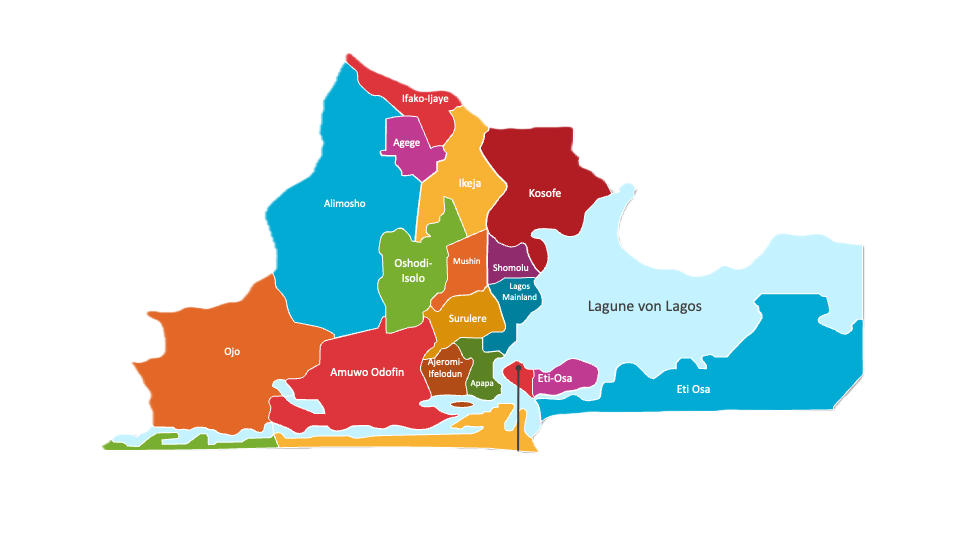
Between 2015 and 2023, the APC’s absolute vote declined in a number of Lagos’s 20 local government areas. In four LGAs — Badagry, Ibeju-Lekki, Ikorodu and Lagos Island — its vote increased compared with 2015.
In several other areas, however, the APC received fewer votes in 2023 than it did eight years earlier.
The opposition also experienced substantial changes.
For example, in Ajeromi-Ifelodun, PDP received 52,596 votes in 2015, while the combined LP and PDP vote in 2023 was around 22,428.
In Alimosho, one of Lagos’s largest electoral areas, PDP received approximately 67,480 votes in 2015, compared with about 45,000 combined votes for LP and PDP in 2023.
Similar changes can be observed in other major local government areas.
However, the 2023 election also demonstrated that an opposition party could gain significant ground when a different political platform attracted voters.
Amuwo-Odofin, for example, was one of the areas where Labour performed strongly against the APC.
The implication for 2027 is not necessarily that one particular party will benefit. Rather, the results demonstrate that Lagos voters can move between political platforms from one election to another.
What New Political Parties Could Mean for Lagos 2027
The political landscape heading towards Lagos 2027 is also likely to involve established and emerging opposition platforms.
Parties such as Labour Party, African Democratic Congress (ADC) and National Democratic Congress (NDC) are among the platforms attracting attention around Nigeria’s 2027 political landscape, alongside the governing APC.
However, historical Lagos governorship results cannot be used to measure the electoral strength of parties that did not contest the 2023 Lagos governorship election.
That means their significance in 2027 will depend on the political constituencies, candidates, alliances and voters they are able to attract.
It also means that historical election figures should be treated as context, rather than as a forecast.
Why Voter Turnout Could Be Central to Lagos 2027
The most important number in the Lagos 2027 Governorship election conversation may ultimately not be the number of registered voters.
It may be the number who actually vote.
In 2023, Lagos had more than 7 million registered voters and more than 6.2 million collected PVCs, but only about 1.17 million votes were cast in the governorship election.
That leaves a substantial difference between the potential electorate and the active electorate.
The reasons for non-participation cannot be established simply from election results. Voters may stay away for different reasons, including political preferences, logistical difficulties, disillusionment, work or personal circumstances, or other factors.
What the election figures establish is simply that registration does not automatically translate into voting.
That could become one of the defining questions of the next Lagos governorship contest.
Can the 2023 Numbers Predict Lagos 2027?
Not by themselves.
The results of 2015, 2019 and 2023 provide useful historical evidence, but they cannot determine the outcome of the 2027 Lagos State governorship election.
The APC has maintained a relatively consistent winning vote across the three elections.
The opposition has experienced significant changes in its electoral base and the political platforms through which voters have expressed opposition.
At the same time, Lagos’s registered electorate has continued to grow while actual participation in governorship elections has remained comparatively low.
These factors create several measurable questions for 2027:
- Will voter turnout increase?
- Will millions of registered PVC-holding Lagosians participate?
- Will opposition parties consolidate their support behind fewer candidates or platforms?
- Will the APC retain its established voting base?
- Will new political alliances attract voters who previously supported different parties?
- Will previously inactive voters become an important part of the election?
None of these questions can be answered conclusively from the 2015–2023 results alone.
Lagos 2027: The Silent Electorate
So, who will win Lagos in 2027?
The historical data cannot answer that question.
What the numbers can show is where the uncertainty lies.
It lies in the relationship between a relatively stable APC vote, an opposition electorate whose political alignment has changed considerably, and millions of Lagosians who are registered to vote but have not participated in recent governorship elections.
That is the central electoral story emerging from Lagos’s recent history.
Lagos has millions of registered voters. But the last three governorship elections show that only a fraction have actually turned up to vote.
The biggest question heading into Lagos 2027 may therefore not be simply which party can retain its existing supporters or win voters from another party.
It may be whether the state’s enormous pool of registered and PVC-holding but previously inactive voters becomes an active part of the electoral contest.
Lagos has millions of voters on paper. The 2027 election will show how many of them decide to become voters at the ballot box.
By Oghenekevwe Kofi, Lagos

1 Comment
This is some great work and the analysis is spot on