

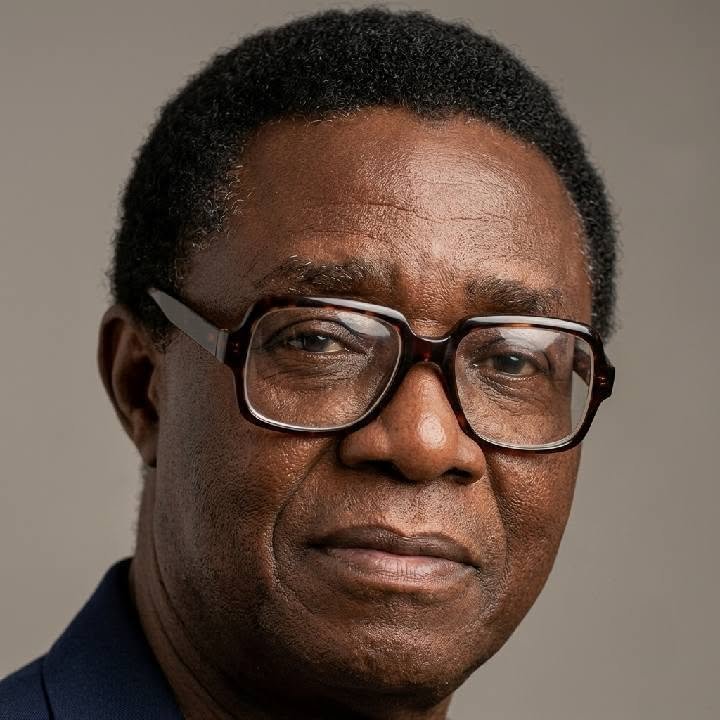
The Men Who Saw Tomorrow: Another Part of the Aoiri Obaigbo Series
Professor Eyo Ita occupies an important but often overlooked place in the history of Nigerian nationalism, education and political development. His work in practical education, vocational training and minority politics offers an important Eastern link to the broader debate over how Nigeria could have built a more productive and economically independent society after colonial rule.
If Samuel Ladoke Akintola represented one strand of Western Nigeria’s emphasis on agricultural modernisation and technical development, and Aminu Kano championed mass political participation and social reform in the North, Eyo Ita brought a distinctive educational philosophy to the Eastern Region.
His central argument was simple but ambitious: education should not merely produce certificate holders. It should produce people capable of building, making, repairing, inventing and producing.
That idea found its most concrete expression in the West African Peoples’ Institute (WAPI) in Calabar, an indigenous educational institution founded by Ita in the colonial period. Historical records identify WAPI as an important private African educational initiative that combined academic education with practical and vocational instruction.
Who was Professor Eyo Ita?
Eyo Ita was a Nigerian nationalist, educator and politician from Calabar. He was educated at institutions in Calabar before studying in the United States and at London University. His time abroad exposed him to educational ideas that influenced his subsequent approach to African education.
Ita became involved in Nigerian nationalist politics during the colonial period and was associated with the Nigerian Youth Movement. He later became a leading figure in the National Council of Nigeria and the Cameroons (NCNC) and served as its first national vice-president.
But politics was only one part of his contribution.
For Ita, education was inseparable from national development.
He believed that Africans needed an education system capable of producing not only clerks, administrators and professionals, but also technicians, artisans, farmers, entrepreneurs and practical problem-solvers.
That philosophy shaped his educational experiment in Calabar.
West African Peoples’ Institute: Eyo Ita’s educational experiment
The West African Peoples’ Institute became one of the clearest expressions of Eyo Ita’s educational philosophy.
Historical accounts describe WAPI as an indigenous institution that combined conventional academic education with vocational and practical instruction. Its educational philosophy was linked to self-reliance and the idea that education should prepare young Africans for useful participation in economic and social development.
This was significant in colonial Nigeria.
The dominant colonial educational structure placed considerable emphasis on academic instruction and the production of people suitable for administrative and clerical employment. Institutions such as WAPI represented a different possibility: education as a tool for economic capability and African institutional development.
The institute therefore belonged to a wider history of Nigerians establishing educational institutions outside direct colonial control.
A surviving historical record also shows that WAPI was officially recognised among secondary schools in the Eastern Region in the 1950s.
The significance of WAPI was therefore not simply that Eyo Ita founded a school.
It was that he was asking a much bigger question:
What should education actually produce?
Eyo Ita, practical education and the industrial arts
The strongest connection between Eyo Ita and the idea of industrial development lies in his emphasis on practical education.
The philosophy associated with WAPI sought to connect academic knowledge with useful skills. Historical accounts describe the institution as offering both academic and vocational subjects, reflecting Ita’s belief that African education should contribute directly to African development.
That approach challenged the assumption that intellectual achievement should be measured primarily by academic credentials.
The alternative was an education system in which knowledge could move from the classroom into the workshop, farm, office and community.
The question was no longer simply:
What certificate did you obtain?
It became:
What can you do with what you have learned?
That question remains remarkably relevant to Nigeria’s contemporary debate over technical education, vocational training, entrepreneurship and graduate employability.
Eyo Ita and the politics of the Eastern Region
Eyo Ita eventually carried his educational and political ideas into government.
Following the 1951 elections, he became Leader of Government Business in the Eastern Region and Minister of Natural Resources. Historical records identify him as the first Leader of Government Business of the Eastern Region.
His political position, however, soon became entangled in a major struggle within the NCNC.
The 1953 Eastern Nigerian political crisis involved a deepening conflict between Eyo Ita and Nnamdi Azikiwe, alongside disagreements over party organisation, constitutional questions and political authority.
British documentary records describe how six ministers led by Eyo Ita withdrew their resignations and subsequently formed an alliance with members of the United National Party, leading to a political deadlock in the Eastern Region. The crisis eventually resulted in the dissolution of the Eastern House of Assembly and fresh elections.
Other historical studies similarly identify the crisis as a political struggle involving Ita and Azikiwe within the NCNC, although historians have offered different interpretations of the underlying causes and ethnic and constitutional dimensions of the dispute.
That distinction matters.
The episode was not simply a story of one politician against another. It reflected larger questions about party authority, regional government, constitutional arrangements and the position of minority communities within the Eastern Region.
Eyo Ita and the minority question
After the crisis, Eyo Ita became increasingly associated with movements seeking greater political protection for minority communities in the Eastern Region.
He helped establish the National Independence Party (NIP), while the broader political movement for the creation of a separate Calabar-Ogoja-Rivers state also gained momentum. Historical accounts identify Ita as one of the important figures associated with the COR movement.
The minority question would eventually become one of the most important constitutional issues in late-colonial Nigeria.
The central concern was straightforward:
How could smaller ethnic and regional communities protect their political interests inside larger regional structures?
For Eyo Ita and other minority activists, the answer increasingly involved constitutional safeguards, political representation and eventually the demand for separate states.
The forgotten connection between education and political freedom
This is where Eyo Ita’s story becomes particularly interesting.
His educational work and political activism were not unrelated projects.
Both were concerned with capacity and independence.
Education could give individuals the ability to think and work for themselves.
Political representation could give communities greater control over their affairs.
Economic capability could reduce dependence.
Taken together, these ideas point towards a model of development in which political freedom was supported by educational and productive capacity.
That is perhaps the most useful way to understand Eyo Ita’s historical importance.
Akintola, Aminu Kano and Eyo Ita: three different paths
There are obvious differences between Samuel Ladoke Akintola, Aminu Kano and Eyo Ita.
They operated in different regions, belonged to different political traditions and addressed different social problems.
Yet there is an interesting historical question to explore: what if their approaches to education, economic development and mass participation had converged?
This is a counterfactual question, not an established historical fact.
Akintola’s political career became associated with agricultural and economic development in Western Nigeria.
Aminu Kano became one of the most important advocates of mass political participation and social reform in Northern Nigeria.
Eyo Ita placed considerable emphasis on education, vocational development and minority political rights in the Eastern Region.
Their approaches were not identical.
But they can be read together as part of a larger debate about whether Nigeria’s development should be built primarily through elite political structures or through broader investment in ordinary citizens’ productive capabilities.
The idea of a horizontal Nigeria
This leads to the central argument of this essay: the possibility of a more economically interconnected and socially horizontal Nigeria.
A horizontal society, in this context, does not mean the elimination of political leadership or government hierarchy.
It means a society in which economic opportunity, knowledge and productive relationships are not concentrated exclusively at the top.
Farmers, artisans, engineers, technicians, traders, teachers and entrepreneurs would all have meaningful roles in national development.
Instead of defining national relationships primarily through ethnicity or region, citizens could also be connected through shared economic interests and productive activity.
A farmer in Kano could have more in common economically with a farmer in Oyo than with a wealthy landowner in Kano.
An engineer in Enugu could share professional interests with an engineer in Lagos.
An artisan in Calabar could participate in a national manufacturing supply chain alongside producers in Kaduna or Ibadan.
That is the essence of the horizontal argument.
What could practical education have changed?
One of the most important implications of Eyo Ita’s educational philosophy concerns Nigeria’s approach to technical education.
Imagine an education system in which students could move seamlessly between academic learning and practical training.
A student interested in engineering could learn mathematics alongside machine operation.
An agricultural student could combine biology with farm mechanisation.
A young entrepreneur could study accounting while learning how to manufacture or repair equipment.
A student interested in construction could combine technical drawing, mathematics and hands-on building skills.
Such a system would not diminish academic education.
It would expand the meaning of education.
From certificates to competence
Nigeria’s continuing debate over unemployment and skills development makes this historical question particularly relevant.
For decades, academic certificates have carried enormous social and economic value.
Degrees can open doors to employment, professional advancement and social mobility.
But a modern economy also requires technicians, machinists, welders, electricians, software developers, agricultural technologists, mechanics, designers and skilled manufacturers.
The challenge is therefore not to choose between university education and vocational education.
It is to create a system in which both are respected and connected.
That is one of the most important lessons that can be drawn from Eyo Ita’s educational experiment.
The 1953 crisis and the limits of political unity
The Eastern Region crisis also offers another historical lesson.
The NCNC presented itself as a nationalist organisation, but its internal struggles demonstrated how difficult it was to reconcile national political aspirations with regional and local interests.
The crisis eventually reshaped political alignments in the Eastern Region. Following the political deadlock, fresh elections produced a new NCNC government under Azikiwe.
For historians, the episode raises difficult questions about the relationship between party authority and regional government.
It also demonstrates that the politics of the First Republic cannot be understood solely through the familiar North-versus-South narrative.
There were serious political divisions within regions as well.
The Eastern Region had its own minority question, constitutional disputes and competing political interests.
Eyo Ita’s career sits directly inside that complicated history.
Why Eyo Ita still matters today
Eyo Ita is often less prominent in popular discussions of Nigerian political history than figures such as Nnamdi Azikiwe, Obafemi Awolowo, Ahmadu Bello and Aminu Kano.
Yet his legacy deserves closer examination.
He was simultaneously an educator, nationalist, political organiser and advocate for minority interests.
More importantly, he demonstrated that education could be conceived as something larger than preparation for examinations.
It could be an instrument for building institutions, developing practical skills and strengthening economic independence.
That idea remains relevant.
Nigeria continues to face questions about graduate unemployment, technical skills, manufacturing capacity, agricultural productivity and the relationship between education and employment.
The answers will obviously require modern solutions rather than a simple return to colonial-era models.
But history can still provide useful questions.
And Eyo Ita asked one of the most important:
What kind of education does a country need if it wants to become economically self-reliant?
The unfinished Nigerian project
The history of Nigeria’s First Republic contains many competing visions of the country’s future.
Some centred on political control.
Others focused on regional autonomy.
Some emphasised mass participation.
Others prioritised economic development, education or constitutional reform.
Eyo Ita’s contribution belongs within this larger contest of ideas.
His work at the West African Peoples’ Institute showed an early attempt to connect education with practical capability.
His political career demonstrated the difficulties of translating such ideas into a deeply competitive regional political system.
And his involvement in the minority question showed that political independence meant little if smaller communities felt excluded from meaningful representation.
The great historical question is therefore not whether Eyo Ita alone possessed the solution to Nigeria’s problems.
History rarely works that way.
The more useful question is what his ideas can teach a country still struggling to connect education, productivity, political inclusion and economic independence.
Perhaps the answer begins with something very simple.
A nation cannot build technological independence if it teaches its young people only how to pass examinations.
It cannot create broad prosperity if productive citizens remain economically marginalised.
And it cannot achieve lasting political integration if citizens encounter one another primarily through ethnic and regional competition.
Eyo Ita’s legacy points towards a different possibility: an education system that develops both the mind and the hand, an economy that values production alongside administration, and a political system capable of giving minorities and ordinary citizens meaningful institutional space.
That was the significance of the experiment in Calabar.
And perhaps that is why Professor Eyo Ita deserves another look.
Not as a forgotten footnote to the story of Nnamdi Azikiwe.
Not simply as a participant in the 1953 Eastern Region crisis.
But as one of the early Nigerian thinkers who understood that political independence without educational and productive capacity would always remain incomplete.
Aoiri Obaigbo is a biographer, creative director, and versatile writer. Obaigbo, a former editor of Mister Magazine and former Head of Media and Communication at Shell Nigeria (West), he blends storytelling flair, historical knowledge with editorial skill, and corporate communication expertise in his work. His books include The Wretched Billionaire and The Virgin Widow.
