

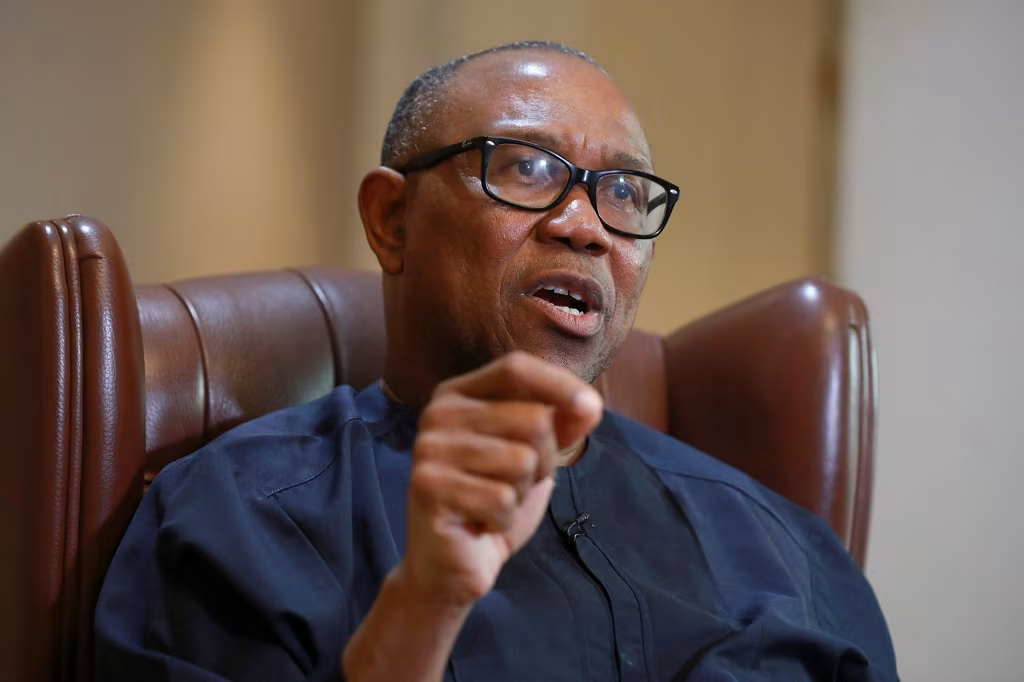
The presidential candidate of the Nigeria Democratic Congress (NDC), Peter Obi, has urged Nigerians to move beyond historical grievances and past conflicts to build a united and prosperous nation.
Obi made the call on Thursday during an interview on Arise Television’s Morning Show, while responding to questions about the 1966 military coup and its historical impact on Nigeria.
The former Anambra State governor was asked to address concerns surrounding the January 1966 coup, which led to the deaths of several prominent political and military figures, particularly in Northern Nigeria.
The coup was led by Major Chukwuma Kaduna Nzeogwu and other young military officers and was followed by a period of political instability that contributed to subsequent military interventions and heightened ethnic tensions in the country.
Responding to questions about his position on the events of the period, Obi said Nigerians should not allow events that occurred decades ago to continue determining the country’s future.
“You cannot hold what happened when I was barely three or four years old against me. That’s in the past now,” Obi said.
He stressed the need for Nigerians to focus on reconciliation, love, and national unity rather than allowing historical disagreements to deepen divisions among citizens.
“But we must build the future based on love, not on hatred. So it is time to show love. It is time to show unity,” he said.
Obi said the principle of national unity would be central to his presidency, arguing that Nigeria could only make meaningful progress when its citizens moved beyond ethnic, religious, and historical divisions.
“That’s why my presidency is about the unity of the country, and people must understand that,” he added.
The NDC candidate’s remarks come amid renewed discussions about Nigeria’s political history and the events surrounding the 1966 coup, particularly as the country continues to grapple with questions of national cohesion, ethnic relations, and political inclusion.
Obi maintained that the focus should be on building a common future for Nigerians rather than assigning blame for events that occurred before the present generation assumed responsibility for the country.
He called for greater understanding and a collective commitment to creating a more united Nigeria, saying love and unity should guide efforts to address the country’s challenges.
