

From Lagos to the global screen, the 15th Africa International Film Festival brings together filmmakers, international stars and investors for a powerful conversation about African identity, creative ownership, film financing and global distribution.
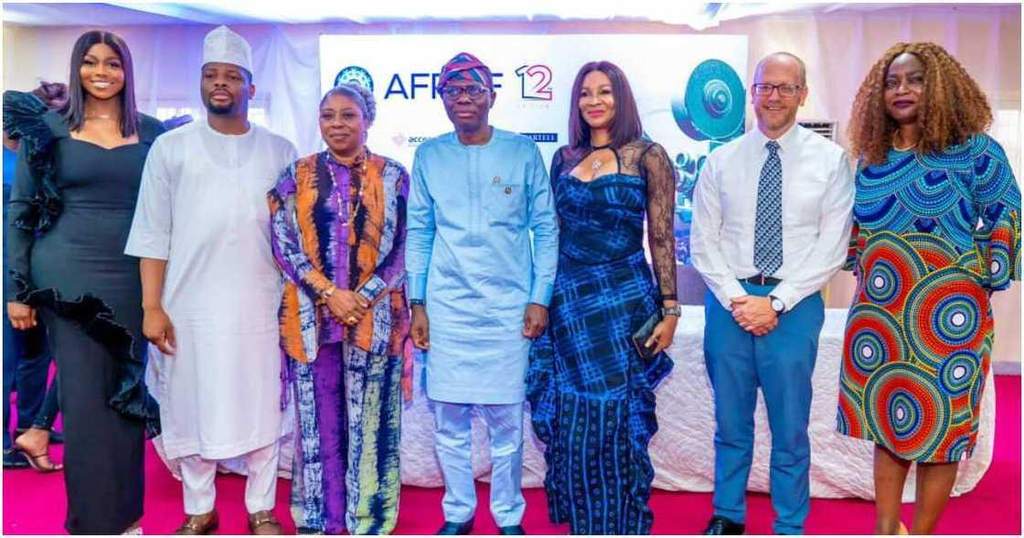
Lagos came alive on Sunday, November 1, as the 15th Africa International Film Festival (AFRIFF 2026) opened with the glamour, energy and cultural confidence that have become synonymous with Africa’s growing influence in global entertainment.
The opening ceremony attracted filmmakers, actors, producers, international guests and other key players in the creative industry. There were familiar faces, striking fashion statements, industry conversations and the unmistakable excitement of a film community gathering to celebrate its craft.
But beyond the red carpet and celebrity appearances, AFRIFF 2026 is addressing a much bigger question: how can Africa move from producing compelling films to building a sustainable, commercially competitive and globally influential film industry?
Under the theme, “Frames of the Future: Africa’s Creative Intelligence,” the 15th edition of the Africa International Film Festival places African creativity, ownership, innovation and industry development at the centre of its programme.
The message from the opening ceremony was clear: Africa must not only tell its stories; it must also have a greater stake in how those stories are financed, produced, protected, distributed and consumed around the world.
AFRIFF 2026 Opening Night: A Red Carpet Reflecting African Entertainment
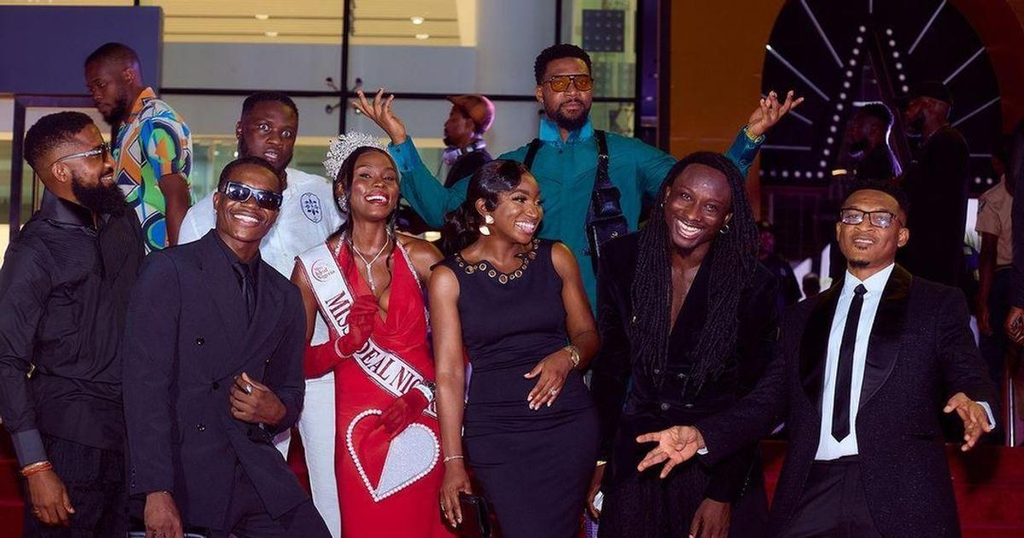
The opening-night red carpet offered a glimpse of the personalities and creative voices shaping Nigeria’s entertainment landscape.
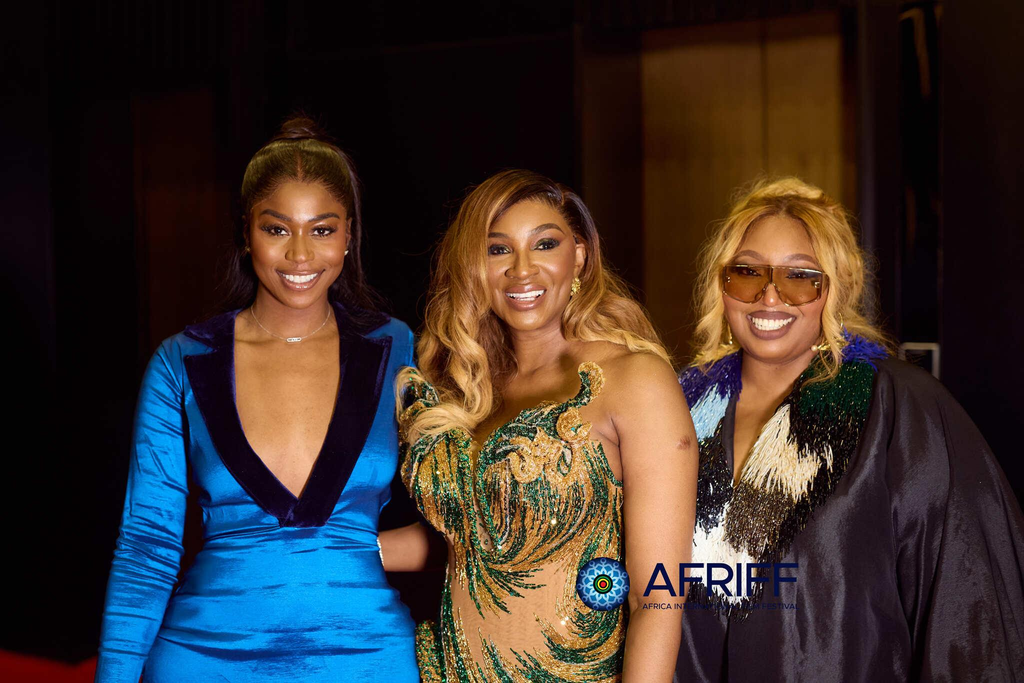
Among the notable personalities captured during the evening were former Minister of Information and Culture, Lai Mohammed; media personality and entrepreneur Debola Lagos; veteran actor Wale Ojo; and entertainer Darey Art Alade.
Their presence reflected the broad cultural and professional reach of AFRIFF, an event increasingly positioned at the intersection of film, music, business and public life.
The red carpet was about more than fashion and celebrity appearances. It brought together established names, emerging talent, industry stakeholders and international visitors, highlighting the range of people required to build a thriving creative economy.
Music also played an important role in the opening ceremony. Nigerian singer Timi Dakolo performed the Nigerian National Anthem, giving the occasion a strong sense of national identity and setting the tone for a festival celebrating African stories on an international platform.
Actors Kunle Remi and Keturah King hosted the evening’s main-stage proceedings, welcoming guests and guiding the audience through the ceremony.
Their presentation returned to the festival’s central idea of the frame: what audiences see, whose perspectives shape the narrative and whose stories remain outside the picture.
For generations, African stories have sometimes been presented through perspectives that Africans did not necessarily choose. Today, a new generation of filmmakers is increasingly taking control of the camera, the narrative and the creative direction.
That is the spirit behind AFRIFF 15.
Djimon Hounsou at AFRIFF 2026: A Message of Inspiration for Young African Filmmakers
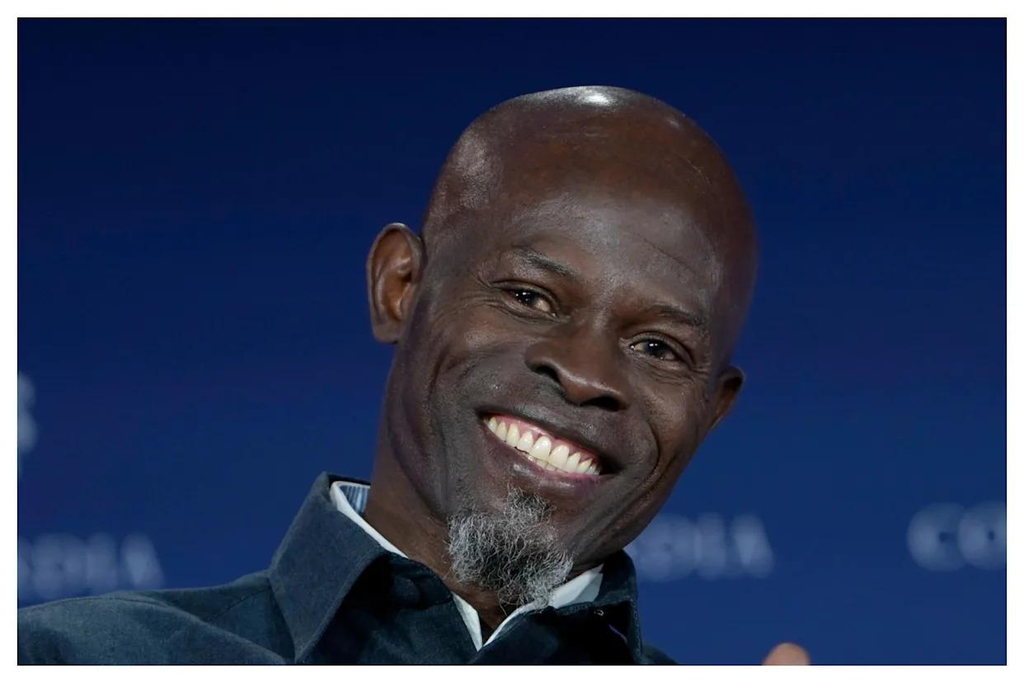
One of the major highlights of the opening ceremony was the appearance of internationally acclaimed actor and two-time Academy Award nominee Djimon Hounsou, who attended as the festival’s Guest of Honour.
Welcomed to the stage to a warm reception, the Beninese-born actor reflected on his journey from Africa to Europe and his eventual pursuit of an acting career in Hollywood.
His account went beyond the familiar narrative of international success. Hounsou spoke about the challenges of adapting to a new environment, learning a different language and finding his place in an industry where he had to prove himself.
He also recalled meeting legendary actor Sidney Poitier early in his Hollywood journey. The encounter formed part of a wider reflection on representation, opportunity and the responsibility of those who have travelled the road before to make the journey easier for others.
For Hounsou, appearing on an African film festival stage carried particular significance. He described it as his first appearance at an African film festival and expressed the hope that young people watching would recognise that international success was possible.
His message was that the next generation must be inspired, supported and given opportunities to create its own cinematic future.
He also commended Nigeria’s contribution to filmmaking across the continent, recognising the country’s creative energy as an inspiration.
His presence at AFRIFF was therefore more than a celebrity appearance. It represented a connection between an African talent who built an international career and a new generation of filmmakers seeking to expand the continent’s influence.
AFRIFF 15 Highlights the Economic Power of International Film Partnerships
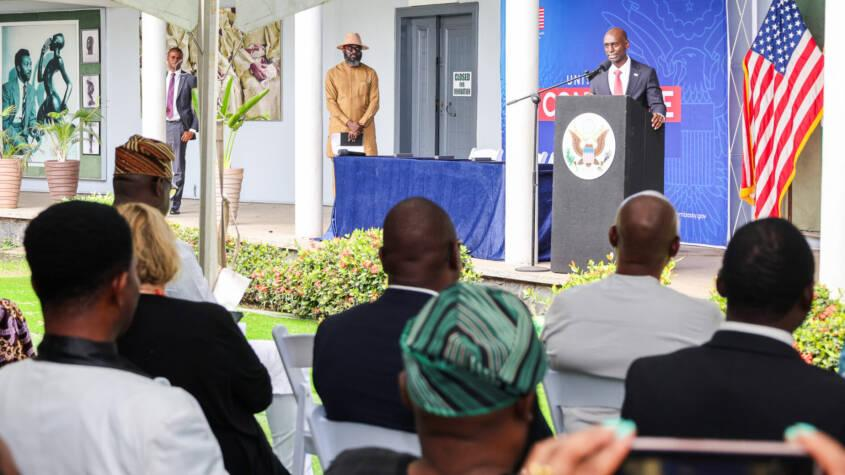
The international dimension of AFRIFF 2026 became more apparent through an address by United States Consul General to Nigeria, Brandon Hudspeth.
Hudspeth congratulated the festival on 15 years of showcasing African stories and acknowledged the longstanding partnership between the United States and AFRIFF.
He highlighted how the festival has helped connect Nigerian filmmakers and creative businesses with American enterprises and wider international opportunities.
His remarks placed filmmaking firmly within the context of economic development.
The creative industry does more than entertain. It generates employment, attracts investment, opens new markets and gives countries another platform to communicate their identities to the world.
Hudspeth pointed to the cultural connections between Nigeria and the United States, particularly in music, fashion, art and film. Nigerian creators, he noted, are increasingly working with American studios, streaming platforms and production companies, introducing new audiences to different perspectives and stories.
He also recognised AFRIFF founder Chioma Ude and her contribution to building connections between African content creators and international industry partners.
Among the initiatives he referenced was the 10-project agreement between Living Media Studios and US-based StoryLab, alongside the work of the Africa Film Content Market in connecting Nigerian producers, distributors and investors with American companies.
He further highlighted the festival’s opening film, LADY, and its recognition at the Sundance Film Festival earlier in the year, noting the interest it had attracted from US distributors.
The Consul General’s message reinforced an important point: cultural exchange and commercial opportunity are not competing interests. They can strengthen one another.
When African stories travel, they take the continent’s talent, language, fashion, music, locations, ideas and business opportunities with them.
Olive Nwosu’s LADY Opens AFRIFF 2026 with a Powerful Lagos Story
The choice of opening film offered another important statement about the future of African cinema.
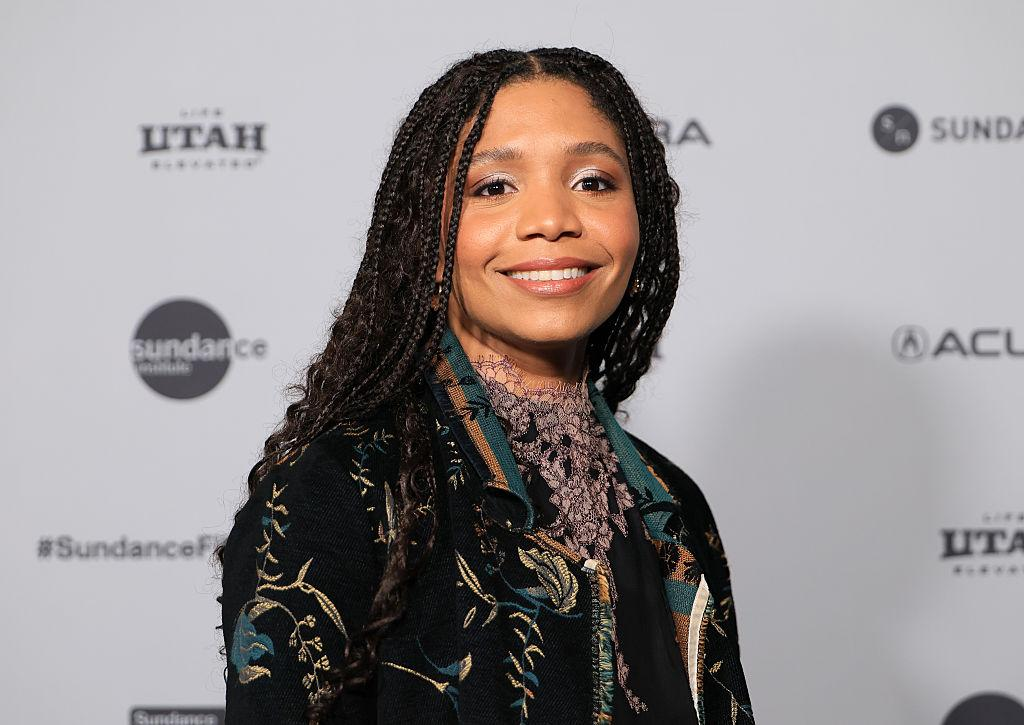
AFRIFF 2026 opened with LADY, the feature directorial debut of Nigerian filmmaker Olive Nwosu.
Taking the stage, Nwosu described the film as a love letter to Lagos, the city where she was born. However, the film explores a side of the city that audiences may not encounter in glossy tourism campaigns or familiar screen portrayals.
She wanted to examine Lagos’s underbelly, its overlooked corners, difficult realities and stories that people may sometimes be uncomfortable telling.
At the centre of LADY are young women navigating difficult choices and circumstances. Nwosu explained that while developing the screenplay during her time in film school in New York, she wanted to centre women whose lives and experiences are often pushed to the margins.
One of the most striking details from her address was her account of spending nine weeks meeting sex workers in Lagos as part of her research.
She listened to their stories and sought to understand them beyond the labels society often places on them.
They are sisters, daughters, mothers and friends, she reminded the audience.
That perspective gives the film its human centre. Rather than presenting its subjects as distant social issues, LADY seeks to recognise their humanity and give their experiences a place in the conversation.
Nwosu also invited members of her cast and creative team to stand and be recognised, acknowledging the women who helped bring the story to life.
Among the cast members recognised were Jessica Gabriel’s Ujah, Amanda Oruh, Tinuade Jemiseye and Precious Agu Eke. Amanda Oruh, in particular, is one of the emerging Nigerian talents whose contribution to the production deserves attention.
The moment reinforced the collaborative nature of filmmaking and the importance of women contributing not only as performers but also as storytellers and creative decision-makers.
The film has already travelled to international audiences, including Sundance, Berlin, London and New York. Its Special Jury Award for Acting Ensemble at Sundance 2026 has added to its profile, but its Lagos premiere carried a different significance for its director.
For Nwosu, bringing LADY home was particularly special.
Her remarks also connected directly with AFRIFF’s wider theme. She spoke about the emerging generation of creative talent and the need to celebrate, champion and support them.
But she made an important distinction: talent alone is not enough.
African filmmakers need infrastructure, financing and sustained institutional support.
It was one of the evening’s clearest statements about the gap between creative potential and the systems required to turn that potential into a sustainable film industry.
Africa Film Content Market: AFRIFF’s Push for Film Financing and Global Distribution
Beyond the opening-night celebrations, AFRIFF 2026 is placing considerable attention on the business of African cinema through the Africa Film Content Market (AFCM).
Running from November 2 to 5 at Twinwaters, Lekki, the market brings together producers, filmmakers, buyers, financiers, distributors and industry partners for discussions and opportunities around investment, co-production, intellectual property rights, pitching and distribution.
Its investment roundtables list participants including Chapel Hill Denham, Kuramo Capital and Oui Capital. The programme also includes buyer meetings and sessions designed to help African film projects access financing, partnerships and distribution networks.
These conversations are central to the future of African filmmaking.
A film’s success should not be measured only by its premiere, festival selection or box-office performance. The industry must also consider who financed the production, who owns the intellectual property, who controls the distribution rights and who benefits when the film reaches new territories.
For African filmmakers, these are not academic questions. They determine whether creative businesses can survive and grow beyond individual successful productions.
The AFCM Producer Track is another significant component of the programme. Its four-day structure is designed to develop the practical skills required to build and operate sustainable productions.
Areas covered include project development, production management, budgeting, financing, rights management, pitching and distribution.
A selected cohort of emerging producers is expected to participate in workshops, networking opportunities and a pitching session.
The market also features four pitch-related opportunities:
- Producers Pitch.
- Goes to Cannes.
- Micro-drama Pitch, sponsored by Lebara Play.
- Animation Grant and Pitch, sponsored by ColoredAnime.
Goes to Cannes offers selected projects an opportunity to travel to the Marché du Film in Cannes in 2027.
Together, these initiatives point towards a broader ambition: helping African creators move from developing promising ideas to building commercially viable projects and production companies.
The opportunities are significant, but their ultimate value will be measured by the projects that progress, partnerships that develop and businesses that emerge.
AFRIFF Academy: Developing the Next Generation of African Filmmakers
AFRIFF 2026 is also designed to support people seeking careers in film and the wider creative economy, not just those who already have established industry positions.
The AFRIFF Academy programme covers several areas, including acting, producing, directing, animation, cinematography, costume design, AI filmmaking, editing and screenwriting.
The Actors Pitch gives emerging performers an opportunity to audition before filmmakers, while the Future Filmmaker Challenge provides a competitive platform for aspiring filmmakers.
The Creator Summit, meanwhile, focuses on the digital creator economy, an increasingly important part of how content is produced, distributed, discovered and monetised.
These initiatives recognise a fundamental reality of today’s entertainment industry: the future of African storytelling will not be shaped by actors and directors alone.
It will also depend on cinematographers, editors, animators, writers, costume designers, production managers, digital creators, technology specialists, rights professionals and entrepreneurs.
Artificial intelligence is another important part of the conversation.
Its growing role in filmmaking raises practical questions about new production tools, creative possibilities, authorship, copyright and intellectual property protection.
For an industry still working to secure stronger control over its content and commercial rights, these discussions are particularly timely.
Women in African Cinema: The Growing Importance of Creative Ownership
The opening film provided a fitting introduction to another important strand of AFRIFF 2026: the role of women in shaping the future of African cinema.
Nwosu’s LADY places women’s experiences at the centre of its narrative, while the wider festival programme includes conversations on Women Leading Africa’s Creative Future.
The Producer Track also brings attention to women working across producing, writing, acquisitions and creative leadership.
This matters because representation should not stop at the screen.
Women must also have opportunities to lead production companies, finance projects, acquire content, negotiate distribution agreements and influence the decisions that shape the industry.
The future of African cinema will be stronger when more of its creative and commercial leadership reflects the diversity of the people whose stories it tells.
AFRIFF 2026: Lagos Connects African Filmmakers with Global Cinema
Running from November 1 to 7, AFRIFF 2026 brings together Nigerian, African and international films, alongside industry conversations and learning opportunities connecting creative communities across borders.
The published film schedule lists 137 films for screenings between November 1 and 6.
Its international programme includes participation and sessions involving France, Canada, the European Union and Sweden.
The Canada–Nigeria co-production session is presented with the Canada Media Fund and Telefilm Canada, while other discussions address European co-production and distribution, as well as Sweden–Nigeria collaboration.
The programme also features international organisations and industry players, including the World Bank Group, BPIFrance/Euroquity and Le Pacte.
This international outlook is important for African film industries.
Individual national markets have different strengths, audiences, financing structures and distribution challenges. Stronger cross-border relationships can create pathways for co-production, talent exchange, investment and wider audience reach.
A Nigerian production should not have to stop at the Nigerian market. Similarly, filmmakers from other African countries need access to meaningful regional partnerships and international opportunities.
The Pan-African opportunity is to build an interconnected creative economy in which filmmakers can collaborate across borders, share resources, reach new audiences and develop projects with international potential.
AFRIFF’s programme is positioning Lagos as a meeting point for many of these conversations.
AFRIFF at 15: The Next Chapter of African Cinema Must Be About Ownership and Investment
The opening night of AFRIFF 2026 was a celebration, and rightly so.
There was the glamour of the red carpet, the warmth of familiar faces, Timi Dakolo’s performance of the national anthem, the presence of international guests, Djimon Hounsou’s reflections on his career and Olive Nwosu’s emotional homecoming with LADY.
There was also the diplomatic presence of US Consul General Brandon Hudspeth and representatives of the wider international community, reinforcing the value of cultural relationships in creating opportunities for collaboration.
But perhaps the most significant takeaway from the evening was the consistency of the message delivered from different corners of the stage.
Djimon Hounsou spoke about inspiration, legacy and creating possibilities for the next generation. Brandon Hudspeth highlighted the cultural and economic connections that filmmaking can create between countries. Olive Nwosu spoke about the importance of telling difficult stories and building the infrastructure needed to support emerging talent.
Different perspectives, but one common destination.
African cinema needs more than applause. It needs ownership, investment, skills, infrastructure, distribution and the freedom to tell its stories on its own terms.
That is the larger promise of AFRIFF 2026.
Over 15 years, the Africa International Film Festival has helped create a platform where African films, filmmakers and industry professionals can connect with international audiences and partners.
Its next chapter must be measured not only by the number of films screened or the calibre of guests welcomed, but also by the strength of the creative businesses, partnerships and opportunities that emerge.
As AFRIFF moves from its opening celebration into a week of screenings, academy sessions, industry meetings and cross-border conversations, attention is turning to what comes next.
The future of African cinema is not simply about getting more African films onto international screens. It is about ensuring that Africans have a stronger hand in owning their stories, building their businesses, controlling their intellectual property, developing technology and sharing in the value those stories generate.
Fifteen years of bringing African stories to the world. The next 15 must be about building an African film industry capable of taking those stories even further.
By Oregbemi Martins Moren, NDN Special Correspondent
