

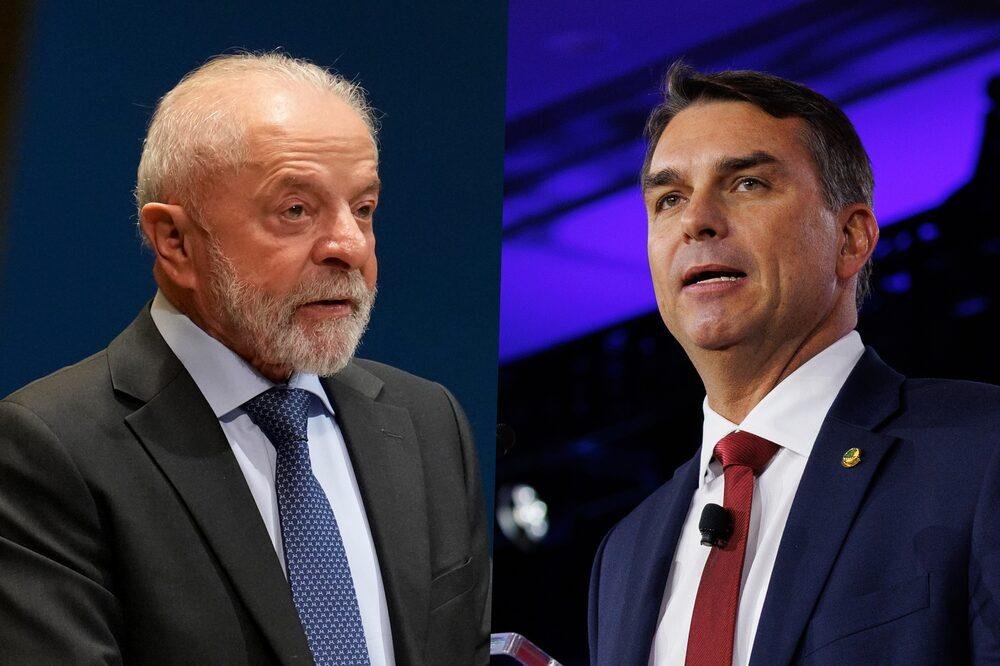
Brazil’s 2026 presidential election has produced a dramatic second-round contest: President Luiz Inácio Lula da Silva will face Flávio Bolsonaro, the son of former President Jair Bolsonaro, in a runoff on October 25.
Flávio Bolsonaro finished ahead of Lula in the first round on October 4, but neither candidate secured the majority required to win the presidency outright. Brazil’s electoral authority, the Superior Electoral Court (TSE), said Flávio received 56.1 million votes, or 47.03% of valid votes, while Lula received 53.88 million, or 45.16%.
The result sets up another Lula-Bolsonaro showdown — but this time, Lula is facing the former president’s son rather than Jair Bolsonaro himself.
Brazil election 2026: Why there will be a runoff
Brazil uses a two-round presidential electoral system. A candidate must receive more than half of the valid votes to win the presidency in the first round. If no candidate reaches that threshold, the two candidates with the most votes advance to a runoff.
That is exactly what happened on October 4.
Flávio Bolsonaro came first, but his 47.03% share was below the threshold. Lula followed with 45.16%, sending both candidates into the October 25 second round. The TSE officially confirmed the two candidates as the finalists after virtually all ballots had been counted.
The distinction is important: Flávio Bolsonaro won the first round, but he did not win the presidency.
The final decision will now be made by voters in the runoff.
Lula vs Flávio Bolsonaro: A rematch with a different Bolsonaro
The political symbolism is difficult to overlook.
In 2022, Lula defeated Jair Bolsonaro in a closely fought presidential runoff. Four years later, Lula is again in a runoff — but the Bolsonaro on the ballot is now Jair’s eldest son, Flávio.
Flávio Bolsonaro, a senator representing Rio de Janeiro and a member of the Liberal Party (PL), is running for president for the first time. The TSE lists him as 45 years old and identifies him as a lawyer and former state legislator.
His candidacy represents an attempt to extend the Bolsonaro political movement into a new generation.
Jair Bolsonaro, meanwhile, was convicted over efforts to overturn the 2022 election result and is serving a prison sentence, with his legal circumstances including periods under house arrest. His political influence, however, remains significant, and Flávio has openly carried his father’s political legacy into the 2026 campaign.
The Bolsonaro family scores multiple victories
Flávio was not the only Bolsonaro to have a strong election night.
Former President Jair Bolsonaro’s wife, Michelle Bolsonaro, won a Senate seat in the Federal District, according to election authorities and AP reporting.
Other members of the Bolsonaro family also secured elected positions. Carlos Bolsonaro won a Senate seat in Santa Catarina, while Jair Renan Bolsonaro and Renato Bolsonaro won seats in the Chamber of Deputies.
The results give the Bolsonaro family a significant presence in Brazil’s legislature even before the presidential runoff is decided.
The Liberal Party also emerged as a major force in Congress, strengthening the political significance of the October 25 presidential vote.
Lula enters the runoff with economic and political challenges
Lula’s campaign faces its own set of issues.
The cost of living, inflation, household debt, crime and corruption have featured prominently in the 2026 presidential campaign. Reuters reported that economic concerns remain important despite improvements in areas such as unemployment and inequality.
One particularly controversial issue is Brazil’s online betting industry.
In September, Lula announced a measure that would ban online betting operations unless Congress approves the policy within the required period. The government has defended the measure partly on concerns about household indebtedness and the social effects of gambling. Betting companies and other critics have challenged the policy.
The policy adds another issue to an already crowded election debate, although its ultimate impact on the runoff remains a question for voters.
Lula, Flávio Bolsonaro and Donald Trump
The Brazilian election also has an important international dimension.
Flávio Bolsonaro has maintained close political ties with U.S. President Donald Trump, while Lula has taken a more critical approach to Trump’s policies and has accused Washington of interfering in Brazilian affairs. Reuters has described the two candidates as representing different approaches to Brazil’s relationship with the United States.
The outcome therefore matters beyond Brazil.
Brazil is Latin America’s largest economy and one of the world’s major agricultural and commodity producers. It is also an important member of BRICS and plays a significant role in global discussions on trade, climate policy, energy and international diplomacy.
A Lula victory would continue his government’s current foreign-policy direction, while a Flávio Bolsonaro administration would represent a significant change in Brazil’s political and international orientation.
Where will the votes of eliminated candidates go?
Perhaps the biggest question before October 25 is not who finished first.
It is where the votes of the candidates who have now been eliminated will go.
Flávio Bolsonaro and Lula together accounted for more than 109 million valid votes in the first round, but millions of voters backed other candidates. Those voters cannot simply be ignored in a runoff.
Both campaigns now have to reach beyond their existing supporters.
That means persuading voters who did not choose either Lula or Flávio in the first round to support them in the second round.
The runoff therefore resets the electoral contest.
A first-round lead does not automatically translate into a second-round victory. Brazil’s electoral system requires the winner to secure a majority of valid votes in the final round.
What happens next in Brazil’s presidential election?
The second round of Brazil’s 2026 presidential election will take place on October 25. The TSE’s official election calendar confirms October 4 as the first-round date and October 25 as the scheduled runoff date.
Between now and then, Lula and Flávio Bolsonaro will have to broaden their coalitions, negotiate with political groups and appeal to voters who backed other candidates.
The issues likely to dominate the final campaign include the cost of living, crime and public security, the economy, household debt, corruption, Brazil’s relationship with the United States and the country’s broader international position.
The candidates will also face the challenge of turning first-round support into a majority.
Lula vs Flávio Bolsonaro: What is at stake?
Brazil’s 2026 presidential runoff is more than a contest between an incumbent president and a first-time presidential candidate.
It is also a continuation of the political divide that has shaped Brazil since the rise of Jair Bolsonaro and Lula’s return to the presidency.
Lula is seeking a fourth non-consecutive presidential term, while Flávio Bolsonaro is attempting to take the Bolsonaro political project into its next generation.
On October 25, Brazilian voters will make the final decision.
The first round produced a clear result — Flávio Bolsonaro finished first.
But the presidency remains undecided.
Brazil’s final choice is now Lula or Flávio Bolsonaro.
