

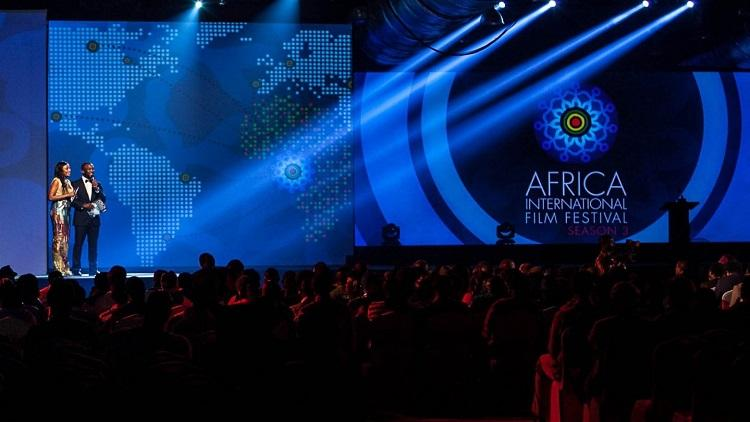
From delayed and disrupted screenings to technical failures and a chaotic Globe Awards night, AFRIFF’s 15th edition has renewed questions about planning, execution and accountability.
The Africa International Film Festival (AFRIFF) has spent 15 editions building a platform for African cinema, attracting filmmakers, actors, producers and audiences from across the world.
But the 15th edition of AFRIFF in Lagos has once again drawn criticism over the organisation and delivery of the festival, with concerns ranging from screening delays and technical failures to programme coordination and the final AFRIFF Globe Awards 2026 ceremony.
What happened at this year’s festival raises a broader question: after 15 editions, why do some of the same organisational problems continue to surface?
AFRIFF 2026: When Films Don’t Make It to the Screen

One of the most disappointing incidents involved LADY, directed by Olive Nwosu.
The film had previously screened at international platforms including Sundance, Berlinale, BFI and Film Africa. However, during its AFRIFF screening, attendees reported poor picture and sound quality before the picture eventually went off.
Another film was reportedly introduced before LADY had been completed.
AFRIFF later apologised for technical problems affecting LADY, If I Go Will They Miss Me and Sentimental Value. The films were subsequently rescheduled for November 6 at 6 p.m.
However, attendees reported that LADY did not begin until approximately 7:30 p.m.
The incident was not the only complaint involving screenings at AFRIFF 2026.
Filmmaker Victor Eyike, whose film Anwuli was scheduled for November 6 between 4 p.m. and 4:30 p.m. on Screen 1, announced on X that the film had not screened.
“Sadly, our film didn’t screen at Afriff. An avoidable technical issue deprived our audience of this experience.”
He ended his post with a blunt appeal to the festival: “Afriff, do better!”
Programme Coordination Also Came Under Scrutiny
There were also complaints about programme coordination during the festival.
Filmmaker Nneka Vivian, posting on X as @Nneka_Viv, described attending a screening expecting to watch a feature documentary but instead finding a short film on screen.
Although she said the short eventually became her favourite film at the festival, she questioned why organisers continued insisting that the scheduled feature had screened.
Such incidents matter because film festivals depend heavily on accurate scheduling. Filmmakers travel, audiences plan around screening times, and industry professionals often have only limited opportunities to see particular films.
When schedules change without clear communication, the consequences extend beyond inconvenience.
AFRIFF Closing Night Faces Another Screening Problem
The closing-night programme raised another concern.
AFRIFF’s invitation listed The Spectacular Death of Prisca for 7:30 p.m., followed by It’s the Blackness at 8:30 p.m. as the closing film.
However, The Spectacular Death of Prisca reportedly did not begin until approximately 9:30 p.m., representing a delay of about two hours.
While the first film eventually screened, attendees reported that It’s the Blackness was not shown.
For a festival’s closing programme, where expectations are particularly high, such a disruption can significantly affect the audience experience.
AFRIFF’s Organisational Problems Are Not New
The concerns surrounding the AFRIFF 2026 edition did not emerge in isolation.
Following the 2025 festival, Culture Custodian published a report titled AFRIFF 2025: Few Great Films and Manifold Chaos, documenting missed screenings, significant delays and communication problems.
The report questioned the festival’s ability to consistently deliver a smooth experience after 14 editions.
Pulse Nigeria also reported on delayed screenings, venue changes and sound and picture-quality problems in its coverage of the festival.
In 2024, an attendee interviewed by Pulse Nigeria similarly raised concerns about scheduling conflicts, arguing that the organisation of masterclasses and screenings could be improved.
Taken together, these reports suggest that organisational challenges have appeared across several editions of the festival rather than being limited to one year’s programme.
AFRIFF Globe Awards 2026: A Difficult Finale
If the Globe Awards of AFRIFF 2026 were expected to provide a polished conclusion to the festival, accounts from attendees suggest that the ceremony instead generated another round of criticism.
The awards night was reportedly affected by sound problems, teleprompter failures and difficulties with stage coordination.
According to attendees, presenters struggled with their cues, while hosts Osas Ighodaro and Keturah were repeatedly backstage waiting to come on.
At some points, attendees said new presenters were introduced while previous speakers were still on stage.
The criticism was not limited to a single attendee.
An X user, @evvss_, wrote after the ceremony:
“If you think AFRIFF’s festival days were badly organized, the Globe Awards night said hold my Martell.”
Another attendee, Orobosa Ikponmwmen, gave a more detailed account of the evening, describing the ceremony as starting late and experiencing problems with sound, the teleprompter and the main screen.
She also alleged that the Best Director and Audience Choice awards were not presented as expected and that nominee videos were eventually stopped.
In a subsequent post, she described the experience as embarrassing and said people were complaining and leaving the hall to take photographs outside. She estimated that fewer than half of the audience remained by the end.
These accounts are from attendees and social-media posts and should be distinguished from independently verified information. However, the consistency of the complaints raises questions about the event’s technical and production preparedness.
Does AFRIFF 2026 Have a Funding Problem?
Another attendee, Ogoo Umeadi, offered a different perspective.
He argued that a festival on the scale of AFRIFF requires substantial funding and suggested that higher ticket prices and a more exclusive model could help address some of its recurring challenges.
Such an approach, however, could also have consequences.
A more expensive and exclusive festival could mean fewer films being nominated or screened and fewer opportunities for audiences to participate in events that have become associated with AFRIFF.
His argument therefore points to a larger issue: the relationship between AFRIFF’s ambitions and the resources required to deliver them.
AFRIFF at 15: Fifteen Editions Should Mean Institutional Maturity
At this stage, it is difficult to dismiss every problem surrounding AFRIFF 2026 as an isolated technical failure.
Fifteen editions into its history, AFRIFF should have developed the institutional capacity, professional systems and operational discipline necessary to deliver a consistently well-organised international film festival.
The repeated complaints raise legitimate questions about leadership, planning and organisational oversight.
The festival’s founder, Chioma Ude, and her team have played an important role in building AFRIFF and expanding its profile. But leadership responsibility also means confronting the weaknesses that affect the festival’s delivery.
How can a festival in its 15th edition still struggle with basic screening arrangements?
How can filmmakers travel, audiences make plans and films be officially scheduled, only for screenings to be delayed, interrupted or cancelled?
How can a closing-night film be formally announced and then not be shown?
And how can an awards ceremony designed to celebrate African cinema face problems involving sound, teleprompters, presenters and stage coordination?
These are not unreasonable questions. They are questions of accountability and professional standards.
AFRIFF Cannot Rely on Its Reputation Forever
AFRIFF’s contribution to African cinema is significant. Its longevity is itself an achievement, and the festival has provided a platform for films and filmmakers that deserve international attention.
But reputation cannot become a shield against legitimate criticism.
Fifteen editions should provide enough institutional experience to identify recurring weaknesses, strengthen operational systems and introduce safeguards that prevent the same failures from happening repeatedly.
The organisers owe filmmakers more than apologies. They owe audiences more than explanations after problems occur.
They owe the industry evidence that lessons are being learnt and that meaningful corrective measures are being implemented.
If AFRIFF’s ambitions have outgrown its financial, technical or administrative capacity, its leadership must confront that reality and make the necessary structural changes.
Expanding a programme without having the systems to deliver its basic commitments only increases the risk of disappointing the very filmmakers and audiences the festival exists to serve.
What AFRIFF Must Do Next
The immediate challenge for AFRIFF is not simply to defend the 2026 edition. It is to demonstrate what will change before the next festival.
That could mean stronger technical testing before screenings, clearer communication channels, tighter programme coordination, professional stage management and more robust contingency plans for film screenings and award ceremonies.
Most importantly, the festival needs a mechanism for collecting, reviewing and acting on feedback from filmmakers, audiences, technical teams and industry stakeholders.
AFRIFF is 15. At this stage, the conversation should move beyond apologies to accountability, systems and measurable improvement.
African cinema deserves a festival that matches the quality and ambition of the filmmakers it celebrates.
