

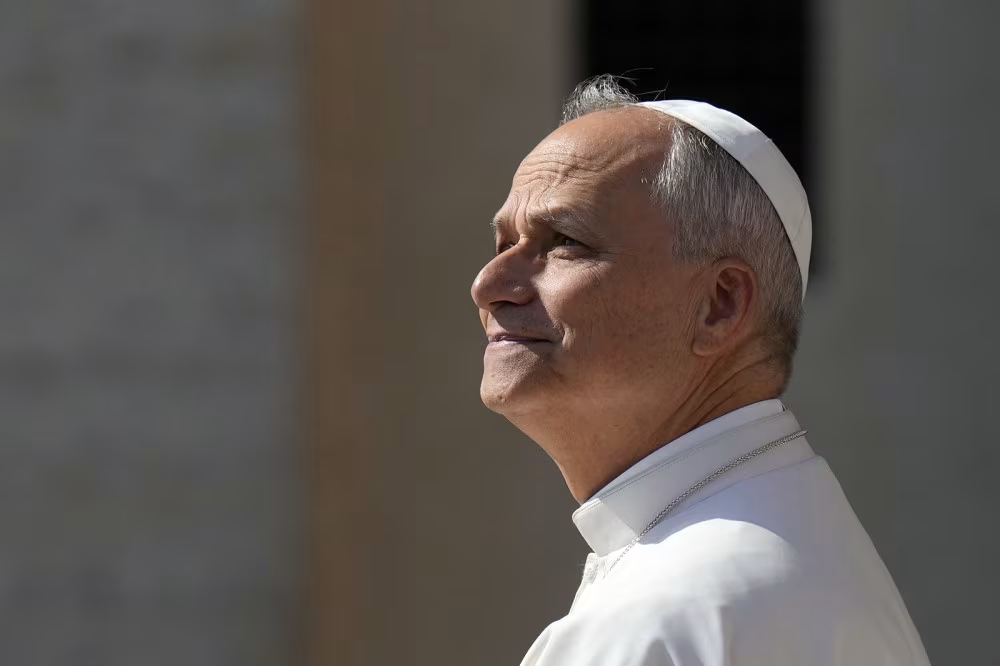
Pope Leo XIV has reportedly been declared cancer-free following a successful operation to remove a cancerous section of his right lung, with his medical team confirming that he will not require further treatment.
The pontiff’s physician, Dr Luigi Carbone, and surgeon, Dr Stefano Margaritora, reportedly confirmed the development in a joint statement after reviewing the results of follow-up examinations.
According to the doctors, the cancer was localised and had been fully addressed during surgery, eliminating the need for additional oncological treatment.
“A subsequent oncological evaluation has confirmed that no further therapy is required,” the doctors stated.
The 71-year-old pope underwent a 90-minute surgical procedure at Rome’s Gemelli Hospital to remove the lower lobe of his right lung after being diagnosed with lung adenocarcinoma, a type of lung cancer that develops in glandular cells.
Following the operation, Leo XIV reportedly remained under medical observation before being discharged four days later. He was said to have stopped to greet well-wishers as he left the hospital, offering an early indication of his improving condition.
His discharge marked an important step in his recovery, although his medical team would typically continue monitoring his health after such a procedure.
On Wednesday, October 21, 2026, the pontiff reportedly resumed his weekly general audience at St Peter’s Square, his first since leaving the hospital.
During the gathering, he waved to thousands of faithful from the popemobile and blessed children as he moved through the square, demonstrating encouraging progress in his recovery.
The appearance offered reassurance to Catholics and other observers who had been concerned about the pope’s health following news of his diagnosis and surgery.
The Vatican also reportedly confirmed that the pontiff was expected to proceed with his planned trip to South America in early November, suggesting that his recovery had not significantly disrupted his immediate schedule.
Lung adenocarcinoma is the most common type of lung cancer and can occur in people who have never smoked. Treatment depends on factors including the stage of the disease, its location and the patient’s overall health. Surgery may be sufficient in some localised cases, while others require additional treatment.
If confirmed, the medical team’s assessment that no further therapy is necessary would represent a significant milestone in the pope’s recovery, allowing him to concentrate on his pastoral responsibilities and planned engagements.
