

…Northern Power Brokers, and the Political Shake-Up
By Austin Manekator
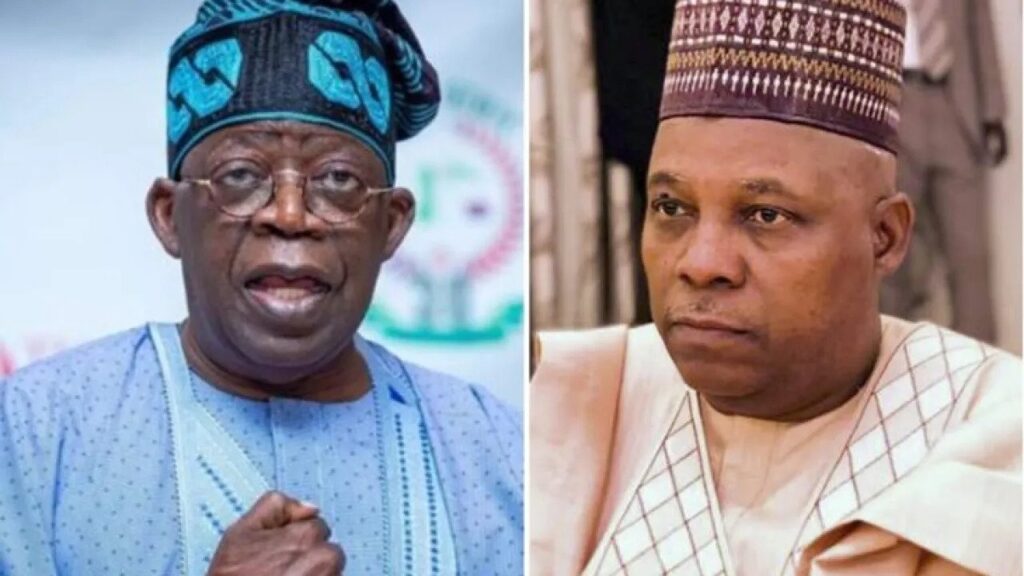
As Nigeria moves past the 2023 general elections, political realignments are already reshaping the landscape ahead of the 2027 presidential election. President Bola Ahmed Tinubu, deep into his first term, is navigating rising political turbulence—not only from opposition figures but also from the northern political establishment within his party, the All Progressives Congress (APC).
What once appeared to be a united APC front is now splintering. Influential northern leaders, some of whom reluctantly backed Tinubu’s 2023 victory, are reportedly working behind the scenes to return power to the North in 2027. At the same time, Tinubu is moving swiftly to outmanoeuvre his opponents by poaching high-profile governors and expanding the APC’s influence into traditional opposition strongholds, especially in the Southsouth and Southeast, which the main opposition, Peoples Democratic Party (PDP) had relied on in the past for its bloc votes and massive oil money for its sponsorship.
Key political figures in the North have voiced frustration over what they see as a “Lagos-centric” administration. Many feel underrepresented in national appointments and marginalised in key policy decisions. This perceived exclusion has triggered a wave of quiet consultations among northern political elites, including governors, former military leaders, and cross-party actors. Sources suggest that a north-based coalition may be forming with the singular goal of stopping a Tinubu second-term bid.
Yet Tinubu, known for his political dexterity, is deploying a counterstrategy that is already bearing fruit. The recent defections of two prominent PDP governors—Sheriff Oborevwori of Delta State and Umo Eno of Akwa Ibom—signal a bold move to break the opposition’s hold on the South-South region. These defections have sent shockwaves through the People’s Democratic Party (PDP), a party still struggling to recover from its 2023 presidential loss.
Political analysts view these defections as calculated steps in a broader campaign to dismantle the PDP’s influence across key geopolitical zones. The South-South, long a PDP bastion, is now in play. By persuading governors to switch allegiance, Tinubu is not only strengthening the APC’s presence but also weakening the PDP’s grassroots mobilisation machinery.
Insiders say Tinubu is actively engaging more first-term PDP governors, especially those unsure about their re-election chances. Facing shrinking support from party leadership and growing pressure from within their states, some governors see defection as a path to political survival. Tinubu, leveraging his position and experience as a kingmaker, is offering targeted incentives—federal appointments, political protection, and strategic resources—in exchange for loyalty.
For the PDP, these developments mark a dangerous turning point. Internal instability is growing as more governors reportedly consider crossing over to the APC. Among those under pressure are governors Agbu Kefas (Taraba), Caleb Mutfwang (Plateau), Peter Mbah (Enugu), Ademola Adeleke (Osun), and Dauda Lawal (Zamfara). In several states, support bases are shifting. Traditional rulers, youth groups, and business elites—many dependent on federal patronage—are beginning to tilt toward the APC in anticipation of leadership changes.
Governor Adeleke sent further shockwaves down the spine of the PDP recently when he, his older brother and moneybag of the Adeleke clan, as well as popstar David Adeleke (Davido) to confer with Tinubu in Aso Rock, the seat of Nigeria’s government in Abuja.
Another volatile flashpoint is Rivers State, where suspended Governor Siminalayi Fubara remains a PDP loyalist but is locked in a bitter standoff with his estranged godfather, predecessor and current APC minister, Nyesom Wike. The political tension escalated in March 2025 when the federal government declared a six-month state of emergency in the state, suspending the governor, his deputy, and the state House of Assembly. The legality of this unprecedented action remains under judicial review, but it underlines Rivers’ critical role in Nigeria’s political future.
Fubara has resisted pressure to defect, but many observers believe it is only a matter of time. As PDP support crumbles and federal influence intensifies, Rivers may soon join the list of APC-controlled states, further shifting the balance of power before 2027.
With less than two years to go, the 2027 election is shaping up to be a high-stakes contest not only between political parties but also between regional blocs and ideological power centres. Tinubu’s ability to manage internal divisions within the APC while weakening the opposition could define his political legacy. However, the northern political establishment—experienced, organised, and historically effective—remains a formidable force.
Northern power brokers like former Vice President Atiku Abubakar, former Kaduna State Governor, Nasir El-Rufai, and his Kano State counterpart, Rabiu Musa Kwankwaso, are in the market for alliance and coalition members to torpedo Tinubu’s train. They have in their ring corner, former governors Rotimi Amaechi and Liyel Imoke of Rivers and Cross Rivers, respectively. But for the latter duo, the coalition is seen as another desperate plot by the North to return to power at all costs.
However, the elusive commitment to the anti-Tinubu gangup by the influential candidate of the Labour Party and former Anambra State Governor, Peter Obi, remains elusive and could scuttle whatever coalition plans the opposition has he did in 2023.
For the PDP, time is running out to regroup. The party must stabilise its base, retain its governors, and counter growing defections to remain a viable contender. Failure to act decisively may result in further losses that could leave it unrecognisable by the time the 2027 campaign season officially begins.
The countdown to 2027 has already begun—not through rallies or manifestos, but via silent realignments, strategic betrayals, and calculated power plays. Nigeria’s political terrain is shifting, and all eyes are on what promises to be one of the most consequential elections in the country’s democratic history.
As the saying goes in Nigerian politics: “No permanent enemies, no permanent friends—only permanent interests.” And in 2027, those interests are on a direct collision course.
