

By Oghenekevwe Kofi
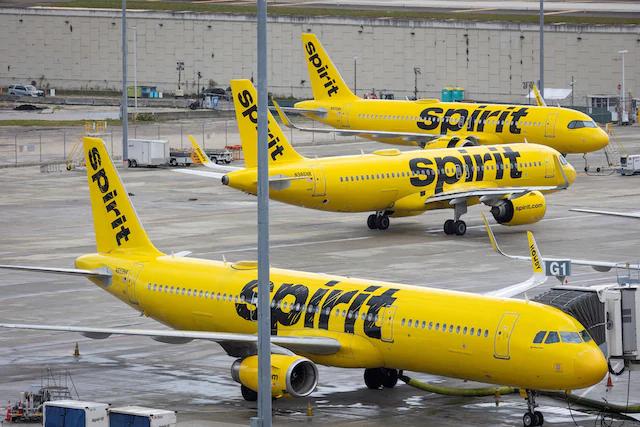
On the evening of May 2, 2026, the departure boards told a story no airline ever wants to write. Flights cancelled across the network. Crews stood down. Passengers staring at screens, refreshing apps, hoping for an update that never came. Within hours, Spirit Airlines was gone.
To many travellers, it felt abrupt, almost surreal. An airline that had carried millions simply stopped flying. But within the industry, there was a different reaction. Not shock, but recognition. This was not a sudden failure. It was the end of a long squeeze, one that had been tightening for years.
Spirit built its brand on a promise that reshaped modern travel. Fly for less. Strip away the extras. Let passengers pay only for what they use. It was a model that opened the skies to a new kind of traveller, one willing to trade comfort for affordability. For a time, it worked. Aircraft were full, routes expanded, and the airline carved out a distinct place in a crowded market.
But the same model that made Spirit successful also made it vulnerable. Ultra low cost carriers live on thin margins. Every cost matters. Fuel, maintenance, staffing, airport fees. There is little room for error, and even less room for bad timing. When conditions are favourable, the model thrives. When they shift, the pressure builds quickly.
In the years leading up to its collapse, that pressure became impossible to ignore. A planned merger that could have provided stability fell apart under regulatory scrutiny. Debt and restructuring efforts bought time but did not solve the underlying problem. Then came rising fuel costs, driven by global tensions and supply disruptions, hitting the very expense that budget airlines can least afford to see increase. A last attempt at financial rescue failed to gain traction. By the time operations ceased, the runway had already run out.
Spirit’s story might feel dramatic, but it is not unique. It is part of a pattern that has quietly defined the airline industry over the past decade. Aviation has always been a difficult business, but the last ten years have been particularly unforgiving. By most estimates, between 60 and 120 airlines have shut down globally in that period. Some disappeared without much notice. Others collapsed in ways that forced the world to pay attention.
Before the pandemic, there were already warning signs. Thomas Cook Airlines collapsed in 2019, stranding hundreds of thousands of passengers and triggering one of the largest peacetime repatriation efforts in history. WOW Air, once celebrated for making transatlantic travel accessible, folded after expanding faster than its finances could support. Jet Airways, a dominant player in its home market, succumbed to debt and operational strain. These were not fringe operators. They were established names that still could not withstand sustained pressure.
Then came the shock that no airline could fully prepare for. The COVID 19 pandemic grounded fleets across the world almost overnight. Demand collapsed, borders closed, and revenue streams evaporated. Airlines that had survived for decades suddenly found themselves unable to cover even their basic costs. Flybe disappeared early in the crisis. Others entered bankruptcy not as a failure, but as a survival strategy. LATAM Airlines and Avianca both restructured and returned, leaner but burdened by the scars of the period.
Recovery, when it came, was uneven. Travel demand rebounded, but the industry that emerged was weaker and more exposed. Airlines carried heavier debt loads. Operational challenges, from staffing shortages to supply chain disruptions, made it difficult to rebuild capacity smoothly. New entrants tried to seize the moment, but the barriers to success remained high. Flyr and Lynx Air are reminders that launching an airline in a volatile environment is as risky as sustaining one.
Across these stories, a pattern becomes clear. Airlines rarely fail for a single reason. It is almost always a combination of factors arriving at the wrong time. Margins are thin, so rising costs cut deep. Debt limits flexibility, so there is little room to manoeuvre. External shocks, whether economic or geopolitical, arrive without warning. And when these pressures converge, even established carriers can be pushed to the edge.
The challenges are even more pronounced in parts of the world where economic conditions are less stable. Airlines operating in such environments face a constant imbalance. Many of their costs, from fuel to aircraft leasing, are tied to stronger currencies, while their revenues are earned in local currencies that may be volatile or weak.
Take Arik Air. Once one of Nigeria’s most prominent carriers, it did not collapse in a single headline moment. Instead, it slipped into distress over time, eventually being taken over and placed under receivership. It continues to operate, but at a fraction of its former scale. Its story is not about a sudden crash, but a gradual erosion shaped by debt, operational challenges, and a difficult economic climate.
A similar story has played out with Air Zimbabwe. Over the years, it has faced repeated financial crises, grounded aircraft, and inconsistent operations. At times, it has all but disappeared from the skies, only to return in a reduced capacity. Survival, in this context, is not a steady state. It is a cycle of recovery and retreat.
What links these airlines to Spirit is not geography, but vulnerability. The margin for error in aviation is extremely small. The difference lies in how the pressure unfolds. In some cases, like Spirit, the end comes quickly once multiple shocks align. In others, the decline is slower, stretched out over years. The destination, however, is often the same.
For travellers, these failures are more than industry statistics. They are disruptions that play out in real time. Cancelled flights, missed connections, unexpected costs. There is also a longer term effect that is less visible but equally important. When low cost carriers disappear, competition weakens. When competition weakens, prices tend to rise. Spirit’s absence will likely be felt in the cost of travel, particularly on routes where it played a significant role in keeping fares low.
The broader industry, however, continues to move forward. Demand for air travel is growing, especially in emerging markets. Opportunities remain strong for airlines that can manage costs, maintain reliability, and adapt to changing conditions. But the gap between strong and weak carriers is widening. Well capitalised airlines are consolidating their position, while those with structural weaknesses are finding it harder to survive.
In the end, the collapse of Spirit Airlines is not just a story about one company. It is a reflection of an industry that rewards efficiency but punishes fragility. It shows how quickly fortunes can change, and how little margin there is for miscalculation.
The departure board that night did not just mark the end of an airline. It captured a moment in a longer story, one that continues to unfold across the global aviation landscape. Airlines will keep launching. Planes will keep flying. But as the past decade has shown, staying in the air is only half the battle. Landing safely, year after year, is what truly determines who survives.
