

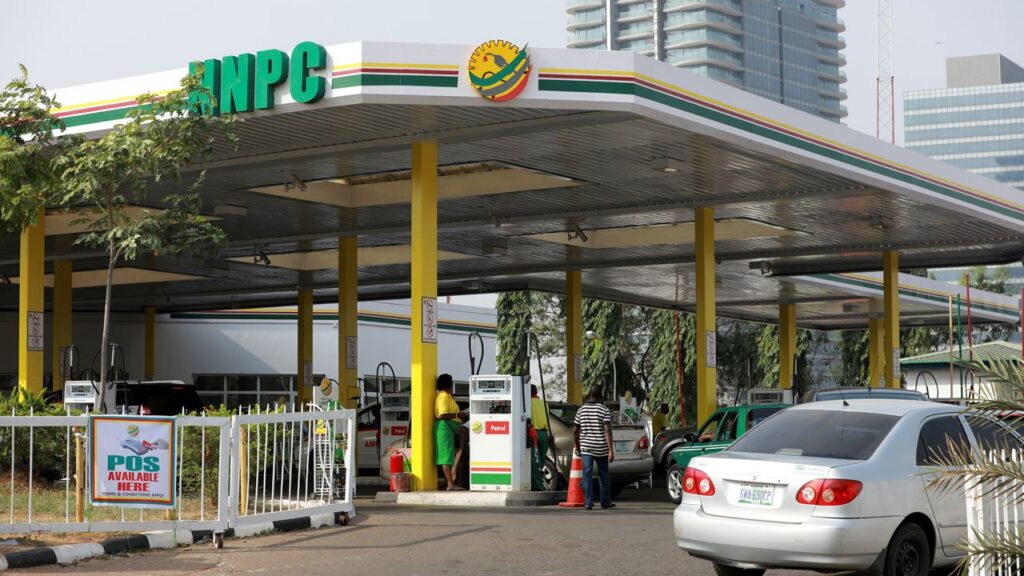
There is a peculiar wisdom in a discount. It offers relief without necessarily changing the conditions that made relief necessary in the first place, and that seems to be the same with Nigeria petrol discount.
For Nigerians struggling with rising transport costs, food prices and the wider cost-of-living crisis, a temporary reduction in the price of petrol can provide welcome breathing space. But when a discount becomes the preferred response to a problem that requires deeper reform, an important question arises: is the government providing sensible temporary relief, or merely postponing a more difficult decision?
The recent decision by the President Bola Tinubu-led Federal Government to introduce a 30-day petrol discount through the Nigerian National Petroleum Company Limited (NNPC) has reopened the debate over the direction of Nigeria’s economic reforms.
Under the arrangement announced in October, NNPC Retail will temporarily forgo its retail profit margin and sell petrol at cost, with priority given to public transport operators. The government maintains that the measure is not a return to the fuel subsidy regime abolished in May 2023.
Yet, coming amid renewed concerns about petrol prices, transport costs and the rising cost of living, the intervention inevitably raises questions about how temporary relief fits into the government’s broader economic reform agenda.
Why Nigeria petrol discount matters
The controversy is not simply about the price Nigerians pay at filling stations.
It is about what happens to the cost of moving people and goods when petrol prices rise.
Higher transport costs affect virtually every part of the economy. Workers spend more commuting. Traders pay more to move goods. Businesses face higher logistics costs. Those additional expenses can eventually find their way into the prices consumers pay for food and other essential goods.
This explains why any attempt to reduce petrol costs attracts immediate public attention.
The opposition has questioned the timing, adequacy and sustainability of the petrol discount. Some critics have described it as political tokenism, while others see it as an indirect return to the subsidy system the government has spent considerable political capital defending its decision to dismantle.
The government, meanwhile, argues that temporary relief is necessary in response to global energy price pressures.
Both positions raise legitimate questions.
But perhaps the most important question is this:
What exactly is the government trying to achieve, and how will Nigerians know whether the intervention has succeeded?
Fuel subsidy removal was supposed to deliver a different future
The removal of the petrol subsidy in May 2023 was presented as a necessary economic reform.
The central argument was that the enormous public resources previously used to keep petrol prices artificially low could instead be redirected towards productive investment, infrastructure and targeted support for vulnerable Nigerians.
In other words, Nigerians were being asked to endure immediate hardship in anticipation of a better economic future.
That promise carried an obligation.
If citizens were expected to bear the immediate consequences of fuel subsidy removal, government also had a responsibility to build a credible bridge between present hardship and the promised benefits of reform.
This is where the latest petrol discount becomes complicated.
A temporary reduction in petrol costs may provide genuine relief. There is little reason to oppose relief simply because it is temporary.
Families struggling with transport costs cannot wait indefinitely for long-term economic reforms to produce results. Traders moving goods and workers commuting every day need practical assistance when costs become unbearable.
Immediate hardship sometimes requires immediate intervention.
But temporary relief must still be judged by its reach, duration and impact.
A discount that lasts 30 days must answer the question of what happens on the 31st day.
And if the price of petrol falls, another question becomes unavoidable:
Will transport fares also fall?
Will cheaper petrol actually reduce transport fares?
This is where previous government interventions offer an important lesson.
The Nigerian government has repeatedly introduced measures intended to cushion the impact of rising energy and transportation costs. These have included mass transit schemes, subsidised fares and the promotion of compressed natural gas (CNG) as a cheaper alternative to petrol.
The logic behind CNG was straightforward.
If petrol was becoming increasingly expensive, encouraging motorists and transport operators to switch to a potentially cheaper fuel could reduce operating costs and, eventually, transport fares.
Government-supported vehicle conversions, incentives and investments in refuelling infrastructure were intended to make the transition easier.
The economic reasoning was sound.
The challenge has been translating that reasoning into consistent relief for ordinary Nigerians.
In Lagos, for example, commercial minibuses are central to the movement of millions of people. Yet the adoption of CNG has not consistently resulted in lower fares across ordinary commercial routes. Some commuters have continued to pay fares comparable to those charged by petrol-powered vehicles.
That raises an important policy question:
Who ultimately captures the savings created by government intervention?
To be fair, lower fuel costs do not automatically mean lower transport fares.
Vehicle owners have other expenses, including maintenance, financing, levies and operating costs. Nor would it be accurate to conclude that every CNG conversion programme has failed. Government-backed bus services and selected routes in some states have reportedly produced significant reductions in fares.
The bigger problem is inconsistency.
The benefit of cheaper energy does not always reach the ordinary commuter in a clear and measurable way.
Government intervention should be measured by impact, not activity
This distinction is critical.
Government can pay for vehicle conversions, subsidise an input, purchase buses or build infrastructure. But if the intended beneficiaries continue to experience the same financial burden, the public purpose of the intervention has not been fully achieved.
A policy should not be judged only by what government spends or what it launches.
It should be judged by what changes in people’s lives.
Conversion figures, funds disbursed, buses acquired and facilities commissioned are measures of activity.
They are not necessarily measures of impact.
The more important questions are:
- Have transport fares fallen?
- How much are households saving?
- How many commuters are benefiting?
- Are businesses paying less to move goods?
- Are the savings reaching low-income households?
- How long do the benefits last?
These are the indicators that can tell Nigerians whether an intervention is actually working.
Is the petrol discount a return to fuel subsidy?
This is perhaps the most politically sensitive question surrounding the current intervention.
The Tinubu administration has spent considerable political capital arguing that fuel subsidy is economically unsustainable. The government therefore faces a difficult balancing act.
It cannot repeatedly emphasise the dangers of subsidy while reaching for temporary price relief whenever public pressure intensifies without clearly explaining the principles guiding those interventions.
There is, however, an important distinction.
A temporary decision by NNPC to forgo its retail margin and sell petrol at cost is not automatically the same as the former fuel subsidy arrangement, under which government absorbed part of the cost of petrol.
The distinction matters.
But it must be more than a question of terminology.
Nigerians deserve transparency about the cost of the intervention, how it is being financed, who qualifies to benefit, how long it will last and what criteria will be used to determine whether it has succeeded.
Most importantly, government must explain what happens when the petrol discount ends.
What happens after the 30-day petrol discount?
This is the question that should sit at the centre of the debate.
Will transportation costs have fallen by then?
Will the underlying pressure on household budgets have eased?
Will cheaper energy translate into lower prices for goods and services?
Will vulnerable households have access to a more durable mechanism for protection?
And will the benefits of cheaper energy actually reach the people for whom the policy was designed?
Or will another temporary intervention become necessary when the next wave of public dissatisfaction arrives?
These questions cannot be answered by political messaging alone.
They require measurable targets and transparent reporting.
Tinubu’s economic reforms need consistency, but not rigidity
Reform requires conviction.
But conviction should not be confused with stubbornness.
A reform-oriented government must be willing to examine evidence, review its methods and protect citizens from avoidable hardship.
That does not mean abandoning reform whenever the public becomes uncomfortable.
Nor does it mean refusing to adjust a policy simply because changing course could appear politically embarrassing.
If the consequences of an economic reform prove more severe than anticipated, government should have the courage to make adjustments.
But those adjustments should be deliberate, transparent and consistent with a clearly defined economic objective.
There is a significant difference between a carefully designed emergency intervention and a government repeatedly improvising in response to political pressure.
The first can be responsible governance.
The second can undermine confidence in the reform itself.
Nigerians need relief that leads somewhere
The Nigerian people are not necessarily asking for a government that never changes course.
They are asking for one that knows where it is going, understands the cost of getting there and accepts responsibility for those who bear that cost.
That is the real test of the petrol discount.
If the intervention reduces the cost of petrol but leaves transport fares unchanged, its public value is diminished.
If it provides temporary relief without a credible plan for what comes next, its impact will remain limited.
And if it is introduced without clear principles, it risks making Nigeria’s economic policy appear less like a coherent reform programme and more like a series of reactions to mounting public pressure.
The government therefore needs to make its position clear.
If fuel subsidy removal remains a cornerstone of its economic policy, it must demonstrate how the benefits of that policy will eventually reach ordinary Nigerians and how those who bear the immediate costs will be protected.
If targeted intervention is necessary, government should explain its rationale, define its limits and establish safeguards to ensure that public resources produce measurable public benefits.
Nigeria cannot afford an endless cycle of temporary relief
The country cannot afford an endless cycle in which difficult economic reforms are followed by hurried relief measures that leave the underlying problems unresolved.
But neither can Nigeria afford a government so concerned about preserving the appearance of policy consistency that it becomes indifferent to the suffering caused by reform.
A discount can buy time.
It can ease pain.
It can even be a sensible instrument of public policy.
But a discount cannot replace the harder work of building an economy in which reforms ultimately produce visible and measurable improvements in people’s lives.
The real test of government is therefore not how generously it announces relief.
It is how effectively that relief reaches the people who need it.
Nigerians deserve more than temporary concessions and promises of future benefits. They deserve economic policies whose purpose is clear, implementation is accountable and results can be felt beyond the headlines.
Until then, one question remains:
Is this the wisdom of a discount, or simply the cost of postponing a more difficult decision?
By Gabriel Efe contributed this piece from Lagos, Nigeria
