

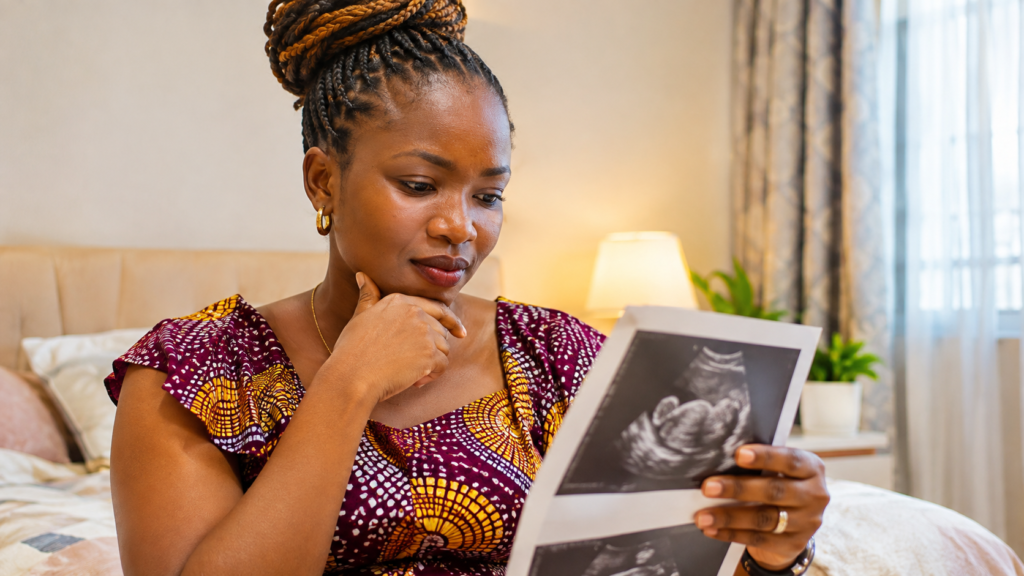
You’ve just been told, “You have fibroids.” And suddenly, your mind is filled with questions: How big is it? How many do I have? Is it dangerous? Will I need surgery?
But there’s one question many women don’t think to ask: Where exactly is the fibroid located?
The truth is, not all fibroids behave the same way. A fibroid in one part of the uterus may cause heavy bleeding, while another may cause pressure, pain or no symptoms at all.
So in this series, we are going beyond simply saying, “I have fibroids.” We are going to look at the different types, where they grow, and why the location of a fibroid can matter.
Let us start with when was the last time you went for a pelvic scan?
Let me guess…
Last month?
Last year?
Maybe two years ago?
Or perhaps you honestly cannot remember.
And for some of you, you have never had a pelvic scan before.
But don’t worry, I am not here to judge you.
I am here to start a conversation that may help you make more informed decisions about your health.
Because by the time we get to the end of this Fibroid Series, I hope you will understand why paying attention to your reproductive health matters, and why appropriate medical checks should not only happen when something feels wrong.
If you are just joining us, go back and read Series 1: What Are Fibroids? so you can follow the conversation from the beginning.
https://naijadaily.news/fibroids-without-knowing-symptoms-signs/
In Series 1, we talked about what fibroids are and why this conversation matters.
So, we are not going to repeat all of that here.
In this episode, the conversation gets deeper.
Types of uterine fibroids: Why location matters
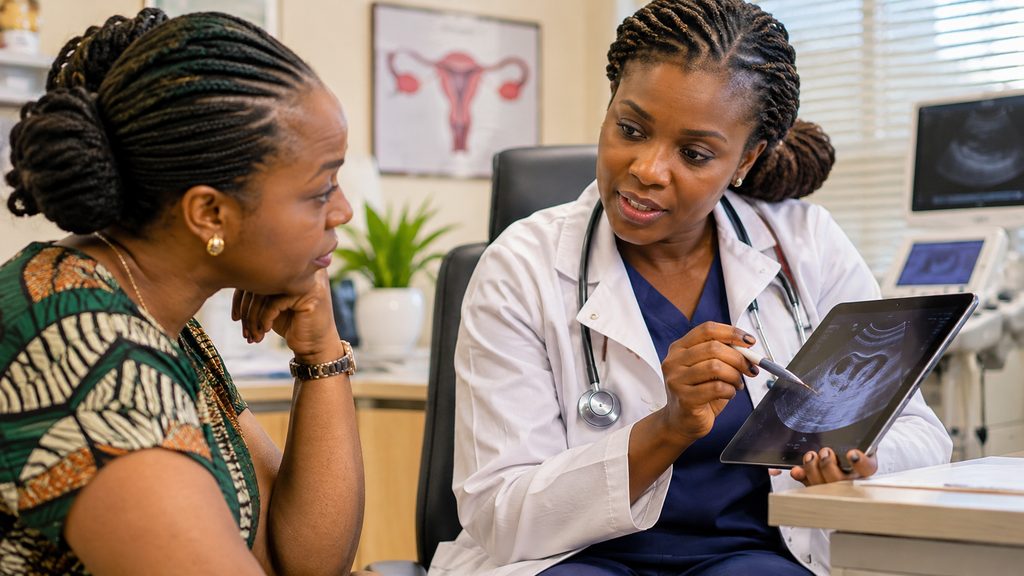
Many women hear the word fibroid and immediately think:
“That can’t happen to me.”
Until it happens to them.
Sometimes, a woman can have fibroids and not even know it.
No obvious warning.
No dramatic pain.
No major symptoms.
She may simply go for a scan for another reason and suddenly hear:
“You have fibroids.”
And then the questions begin.
How did I get this?
How long have I had it?
How many are there?
How big are they?
And perhaps one of the biggest questions:
“Where are they located?”
That is exactly what we are going to unpack in this episode.
Because here is something I want you to understand from the beginning:
Not all fibroids are the same
They can differ in number, size and location, and these differences can influence the symptoms a woman experiences.
So when someone tells you, “I have fibroids too,” don’t automatically assume that her experience will be the same as yours.
Your fibroid may be in a different part of the uterus.
You may have one while she has several.
Yours may be small while hers is larger.
You may have symptoms while she has none.
And this is why simply saying: “I have fibroids.” doesn’t tell the whole story.
In this episode, we are going beyond those three words.
We are going to look at the different types of uterine fibroids, where they grow, and why their location can matter.
And hopefully, by the end of this episode, you won’t just know the word fibroid.
You will understand your uterus a little better.
And perhaps you will also understand why that pelvic scan you have been postponing deserves a little more attention.
So, let’s begin.
What are the different types of uterine fibroids
Fibroids can develop in different parts of the uterus. They are described according to where they grow
The main types include:
- Submucosal fibroids — grow toward the inside of the uterine cavity.
- Intramural fibroids — develop within the muscular wall of the uterus.
- Subserosal fibroids — grow toward the outer surface of the uterus.
- Pedunculated fibroids — are attached to the uterus by a narrow stalk.
The location of a fibroid can influence the symptoms it causes.
Let’s take them one at a time.
1. Submucosal fibroids
Submucosal fibroids develop close to the inner lining of the uterus and may project into the uterine cavity.
They are less common than intramural fibroids, but because of where they are located, they can be particularly important.
Why?
Because they grow close to the part of the uterus involved in menstrual bleeding and pregnancy implantation.
Depending on their characteristics, submucosal fibroids may be associated with:
- Heavy or prolonged menstrual bleeding
- Iron-deficiency anemia caused by blood loss
- Bleeding between periods
- Fertility difficulties in some women
- Pregnancy complications in some circumstances
This is why a woman with a relatively small fibroid in one location may experience more symptoms than another woman with a larger fibroid somewhere else.
So when people ask:
“Which type of fibroid is the worst?”
There isn’t one answer for everybody.
But when it comes to heavy menstrual bleeding and some fertility problems, submucosal fibroids can be particularly troublesome.
And this is an important point:
Do not look at the size of a fibroid alone and conclude that a small fibroid cannot cause problems.
Sometimes, with fibroids, location can matter as much as (or even more than) size.
So when you receive a scan report, don’t only ask:
“How big is my fibroid?”
Also ask:
“Where is it located?”
“How many fibroids do I have?”
“Is it affecting the uterine cavity?”
Those details can help you and your healthcare professional understand what the findings may mean for you.
2. Intramural fibroids
Intramural fibroids develop within the muscular wall of the uterus.
They are one of the most common types of uterine fibroids.
Depending on their size and position, intramural fibroids may contribute to:
- Heavy menstrual bleeding
- Painful periods
- Pelvic pressure
- Lower abdominal or back discomfort
- An enlarged uterus
- Pressure-related symptoms when they become larger
Some small intramural fibroids cause few or no symptoms, while larger fibroids or those in particular locations may cause noticeable problems.
And again, this brings us back to the bigger picture.
It isn’t always about looking at the number on the scan report and saying:
“It’s only 2 cm, so it can’t be causing any problems.”
Or:
“It’s 8 cm, so it must be the reason for everything I’m experiencing.”
The size, number and location all matter when assessing fibroids and their possible effects.
3. Subserosal fibroids
Subserosal fibroids develop toward the outer surface of the uterus and grow outward.
Because of their position, they may produce what are sometimes called bulk or pressure symptoms.
For example, a larger fibroid growing outward may press against nearby structures and contribute to:
- Pelvic pressure
- Abdominal fullness
- A feeling of increased abdominal size
- Frequent urination
- Difficulty passing urine
- Constipation
- Lower abdominal or back discomfort
And this is another reason why two women with fibroids can have completely different experiences.
One woman may have heavy menstrual bleeding.
Another may have very little change in her period but experience pressure, urinary symptoms or constipation.
Another woman may have no symptoms at all.
Fibroids can sometimes be discovered during an examination or scan performed for another reason.
This is why the question should not only be:
“Do I have fibroids?”
It should also be:
“Where are they, how many are there, how large are they, and could their location explain what I am experiencing?”
4. Pedunculated fibroids
A pedunculated fibroid is a fibroid attached to the uterus by a narrow stalk.
Think of it almost like a growth hanging from a small stem.
It can develop from the inner or outer surface of the uterus, and its symptoms can depend on where it projects.
But there is something important to know here.
In rare cases, the stalk can twist. This is called torsion.
When this happens, the blood supply to the fibroid can become restricted, which can cause sudden and severe abdominal or pelvic pain.
A patient experiencing sudden, severe abdominal or pelvic pain needs urgent medical assessment.
So if you ever experience sudden, severe pelvic or abdominal pain, don’t simply assume:
“It’s just the fibroid.”
Seek medical attention promptly.
The 4 types of fibroid at a glance
| Type | Where it grows | What it may affect |
|---|---|---|
| Submucosal | Toward the inside of the uterine cavity | Menstrual bleeding and, in some cases, fertility |
| Intramural | Within the muscular wall | Bleeding, pain, pressure and uterine enlargement |
| Subserosal | Toward the outside of the uterus | Pressure on nearby organs |
| Pedunculated | Attached by a stalk | Symptoms depend on where it projects |
So, which type is the “worst”?
There is no single answer.
The effect of a fibroid depends on several factors, including:
Location.
Size.
Number.
Symptoms.
And how it is affecting the individual woman.
So, does size matter?
Yes.
But size is not the whole story.
A larger fibroid may cause pressure or enlarge the uterus, while a smaller fibroid in a particular location may cause significant symptoms.
This is why comparing fibroids based on size alone can be misleading.
You might hear:
“Mine is only 3 cm.”
Someone else says:
“Mine is 7 cm.”
But those numbers alone do not tell the complete story.
Instead, ask:
Where is it?
How many are there?
Is it affecting the uterine cavity?
What symptoms could it be causing?
Understanding the full picture is much more useful than focusing on size alone.
Your reproductive health deserves attention too.
Keep reading
Keep sharing.
Keep tagging your friends, colleagues and siblings.
Let us bring more women into the conversation, because the more we know, the better we can advocate for ourselves and others.
A note from women Health Corner
This article is for general educational and informational purposes only. It is not intended to diagnose, treat or replace advice from a qualified healthcare professional.
If you have symptoms, have been diagnosed with fibroids, are pregnant, or have concerns about your fertility, menstrual health or reproductive health, speak with an appropriate healthcare professional for personalised advice.
See you in series 3
