

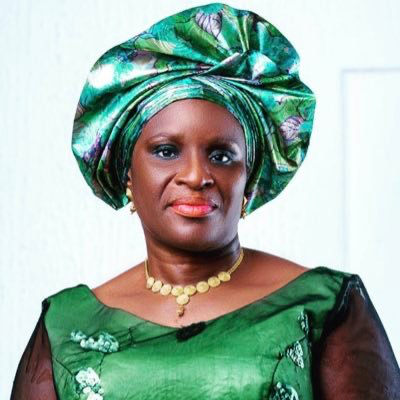
Imo State’s changing political landscape could create a historic opportunity for Deputy Governor Chinyere Ekomaru. But could succeeding Hope Uzodimma and winning a governorship election affect her eligibility to contest in 2031?
Governor Hope Uzodimma’s ambition to represent Imo West Senatorial District, popularly known as Orlu Zone, in the Senate and then probably emerging President of the 10th Senate, could have far-reaching implications for Imo State politics. If a series of political developments unfold as envisaged, Deputy Governor Chinyere Ihuoma Ekomaru could have a historic opportunity to become Nigeria’s first woman elected directly as a state governor.
However, the same circumstances that could propel her into history may also raise constitutional questions about her eligibility to contest the 2031 governorship election.
The possibility hinges on several developments, including Uzodimma’s senatorial ambition, the outcome of a legal dispute over his candidacy, a potential resignation and the All Progressives Congress (APC)’s choice of candidate for the next Imo State governorship election.
Beyond the political calculations, the scenario raises an important constitutional question: could Ekomaru succeed Uzodimma, win a governorship election in her own right and still be barred from seeking another term in 2031?
How Hope Uzodimma’s Senate Ambition Could Change Imo State Politics
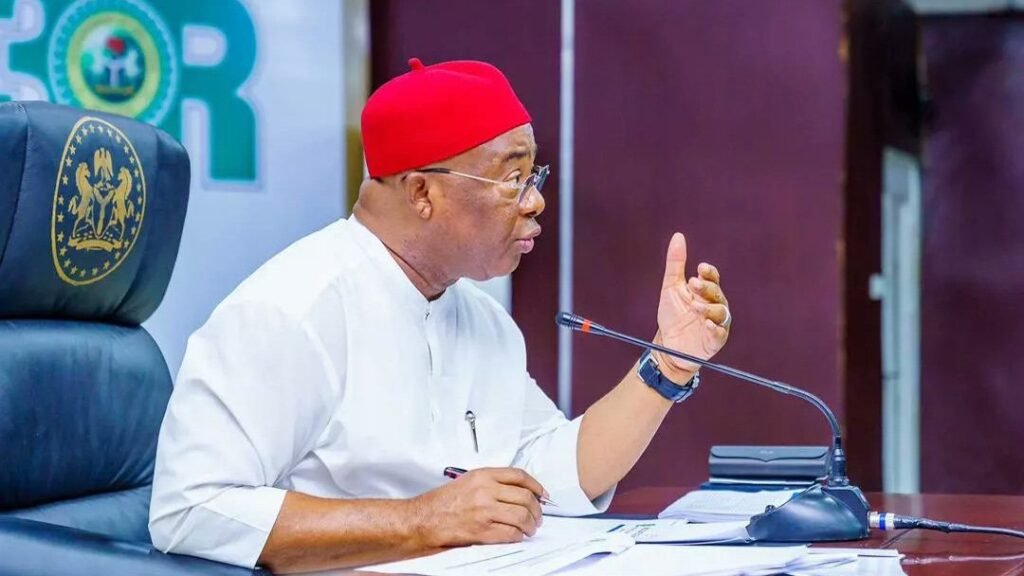
Gov Hope Uzodimma: His ambition has implications for Chinyere Ekomaru
To understand the potential implications, consider a hypothetical sequence of events. Assume Uzodimma overcomes the legal challenge to his senatorial candidacy, wins the 2027 election to represent Imo West in the Senate and subsequently decides to resign as governor when the new National Assembly is inaugurated in June 2027.
Former Imo State Governor Rochas Okorocha has challenged Uzodimma’s emergence as the APC candidate for Imo West, making the legal dispute a significant factor in the unfolding political story. For this analysis, however, the assumption is that Uzodimma resolves the dispute in his favour, wins the senatorial election and proceeds to the Senate.
If he resigns, the consequences for Imo State would extend beyond his departure from Government House. His decision could open the way for Deputy Governor Chinyere Ekomaru to assume the state’s highest executive office under Nigeria’s constitutional succession framework.
Can Chinyere Ekomaru Become Governor Without a Separate Election?
Section 191(1) of the 1999 Constitution of the Federal Republic of Nigeria, as amended, provides for the deputy governor to assume the office of governor when a vacancy arises in specified circumstances, including the governor’s resignation.
Consequently, if Uzodimma resigns while Ekomaru remains the serving deputy governor, she would ordinarily succeed him as governor of Imo State, subject to the applicable constitutional requirements. She would not need to win a separate election simply to assume office following his resignation. Instead, she would serve the remainder of his existing tenure, which is expected to end in January 2028.
Such a transition would immediately place Ekomaru at the centre of Imo State politics and potentially position her for a much larger political role. The more consequential question, however, would be whether she could convert that succession into an electoral victory at the next governorship poll.
Imo Governorship Election 2027: A Historic Opportunity for, Chinyere Ekomaru, and Nigeria’s Women
Imo State operates on a different governorship election cycle from Nigeria’s general elections. Its next governorship election is expected in November 2027, with the winner scheduled to assume office in January 2028.
If the APC selects Ekomaru as its candidate and she wins the election, she would begin a fresh four-year term in January 2028. That outcome would represent a landmark moment for women’s political representation in Nigeria.
Dame Virginia Ngozi Etiaba holds an important place in Nigeria’s political history as the country’s first female governor. She assumed office in Anambra State in November 2006 following the impeachment of Governor Peter Obi. Her tenure lasted approximately three months, ending in February 2007 when the Court of Appeal overturned Obi’s impeachment and he returned to office.
Etiaba’s brief tenure established a historic precedent, but she did not win a governorship election in her own right. If Ekomaru succeeds Uzodimma and subsequently wins the 2027 Imo governorship election, she could become the first woman in Nigeria’s history to be elected directly as a state governor.
The distinction matters. Assuming office through constitutional succession and winning a governorship election are different routes to executive power. Ekomaru’s hypothetical victory would therefore carry significance beyond Imo State, potentially marking a new chapter in Nigeria’s political history.
Could the Nigerian Constitution Bar Ekomaru From Contesting in 2031?
The potential historic achievement comes with a constitutional complication that could shape Ekomaru’s long-term political future.
Section 182(3) of the 1999 Constitution addresses the eligibility of a person sworn in as governor to complete the term for which another person was elected. It provides that such a person cannot subsequently be elected to the office for more than a single term.
Applied to the hypothetical scenario, Ekomaru could first assume office following Uzodimma’s resignation, complete the remainder of his tenure and then win a full four-year term beginning in January 2028.
The constitutional question is whether that combination of succession and election would limit her to one elected term, potentially preventing her from contesting the 2031 governorship election.
If the restriction applies as described, Ekomaru could face a constitutional barrier to seeking re-election in 2031, even if she remained politically popular and wanted to continue in office. Her opportunity to make history could therefore come with a limit on how long she could remain governor.
However, the precise application of Section 182(3) should not be treated as settled merely on the basis of this hypothetical sequence. Any conclusion about Ekomaru’s eligibility would depend on the constitutional provision’s authoritative interpretation and its application to the specific circumstances of her succession and election.
What the Ondo State Experience Could Mean for Chinyere Ekomaru’s Eligibility
The issue has wider implications for Nigerian politics because similar constitutional questions have arisen around Ondo State Governor Lucky Aiyedatiwa.
Aiyedatiwa succeeded the late Governor Rotimi Akeredolu and subsequently won a governorship election. His circumstances have brought attention to the question of how completing another governor’s tenure affects eligibility to contest subsequent elections under the Constitution.
The comparison is relevant because both scenarios involve the relationship between constitutional succession and the limits on governorship terms. Nevertheless, the legal outcome in one case should not automatically be assumed to determine the outcome in another. The applicable facts, relevant judicial decisions and authoritative interpretation of the constitutional provisions are essential to any definitive conclusion.
For Chinyere Ekomaru, the issue would become especially important if she assumed office through succession and later won a full term in her own right. Before any 2031 candidacy could be assessed conclusively, the precise constitutional implications of that sequence would need to be established.
Imo State Politics: A Hypothetical Scenario With Major Implications for 2031
For now, this remains a hypothetical political scenario, not a prediction that Uzodimma will resign or that Chinyere Ekomaru will become the APC’s governorship candidate.
Several developments would have to occur for the scenario to materialise: Uzodimma would need to pursue and win the senatorial seat, resolve the legal challenge to his candidacy, decide to resign, and leave Ekomaru in a position to succeed him. The APC would then have to select her as its candidate, and she would have to win the next Imo governorship election.
Nevertheless, the possibility presents a striking political paradox. Uzodimma’s ambition to move from Government House to the Senate could create an opening for his deputy, Lady Chinyere Ekomaru to become Nigeria’s first directly elected female governor. Yet the constitutional consequences of her succession could also restrict her future electoral ambitions.
Ultimately, a contest for the Imo West senatorial seat could have consequences far beyond the Senate. It could reshape Imo State’s political leadership, create a historic opportunity for women’s representation in Nigeria and bring the constitutional limits of executive succession into sharper focus ahead of the 2031 governorship election.
