

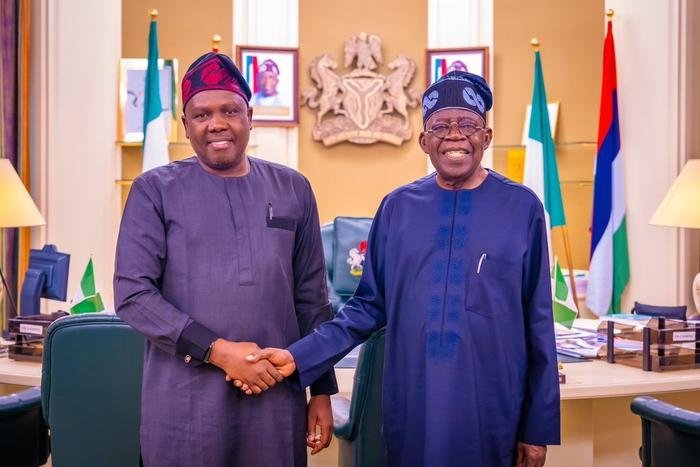
Nigerian politics has a long history of unlikely alliances, political realignments and dramatic changes in allegiance. There is a long list of Tinubu’s former critics, including the number of politicians who once strongly attacked him and his All Progressives Congress (APC), before becoming more accommodating, or openly supportive, of his administration. This raises an important question: what changed?
For some, the answer is political maturity or a reassessment of the president’s policies. Others have pointed to personal encounters, new information, changing political circumstances or the need to place national interests above partisan differences.
Whatever the explanation, their previous statements remain part of Nigeria’s public political record.
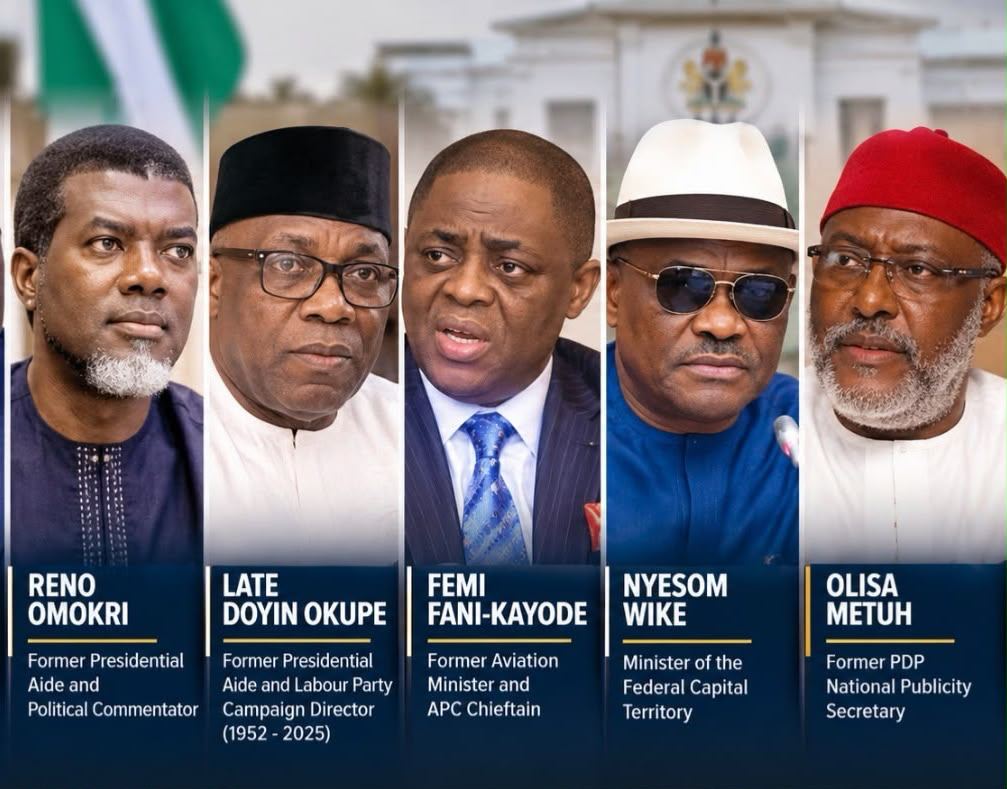
Reno Omokri, Nyesom Wike, Segun Sowunmi and other political figures have taken positions that differ significantly from their earlier opposition to Bola Tinubu. Their political realignments raise questions about changing alliances ahead of Nigeria’s 2027 elections.
Daniel Bwala: From APC, and of Tinubu’s former critics to Adviser
One of the most striking examples is Daniel Bwala, who was once a vocal critic of Tinubu and the APC before becoming a Special Adviser to the president on Policy Communication.
Bwala’s earlier political rhetoric came under renewed scrutiny during an interview with journalist Mehdi Hasan on Al Jazeera’s Head to Head in March 2026.
During the interview, Hasan confronted Bwala with archival material relating to allegations he had previously made about Tinubu. Bwala disputed some of the statements attributed to him, prompting Hasan to challenge his denials with recordings.
Bwala subsequently criticised aspects of the interview, describing the approach as “opposition research-style journalism”.
The exchange raised a broader question about political realignments: when politicians change sides, how much responsibility should they take for the claims they made while in opposition?
Bwala has maintained that his current role requires him to defend the administration, while arguing that opposition politics influenced some of his previous rhetoric.
Reno Omokri: From Chatham House Protest to Tinubu Supporter
The political journey of Reno Omokri, a former aide to President Goodluck Jonathan, is equally striking.
Before the 2023 presidential election, Omokri was one of Tinubu’s outspoken critics. In December 2022, he led a protest at Chatham House in London while Tinubu was scheduled to speak there. He also repeatedly made strong allegations against the then-presidential candidate.
By February 2026, however, Omokri was defending his decision to accept an ambassadorial appointment from the Tinubu administration.
He explained that his position had changed and that he now believed Tinubu was the best option for Nigeria.
The contrast between his earlier opposition to Tinubu and his subsequent defence of the president illustrates how dramatically political positions can change in Nigeria.
Doyin Okupe: From Peter Obi Campaign Director to Tinubu Supporter
The late Doyin Okupe also revised his assessment of Tinubu before his death on March 7, 2025.
Okupe had served as Director-General of Peter Obi’s presidential campaign during the 2023 election. His subsequent comments about Tinubu therefore attracted considerable attention.
In June 2024, speaking on Channels Television, Okupe said that, with the benefit of hindsight, Tinubu was the best of the presidential candidates who contested the 2023 election.
He also defended aspects of the administration’s economic reforms.
His change of assessment demonstrated how political judgments can evolve after an election, particularly when politicians assess the performance of an administration against their expectations.
Femi Fani-Kayode: From APC Critic to Tinubu Supporter
Femi Fani-Kayode offers another example of Nigeria’s fluid political landscape.
After years of strongly criticising former President Muhammadu Buhari and the APC, Fani-Kayode joined the ruling party in 2021.
He later became a supporter of Tinubu, marking a significant shift from his earlier political positioning.
His journey highlights how political affiliations in Nigeria can change rapidly as politicians reassess alliances, parties and political calculations.
Segun Showunmi: From Strong Criticism to a More Open Position
Perhaps one of the more revealing cases is Segun Showunmi, a former spokesman for Atiku Abubakar.
In August 2023, Sowunmi criticised the Tinubu administration over what he described as policy somersaults, an oversized cabinet and an inadequate response to Nigeria’s economic difficulties.
He argued that the government appeared unprepared for the challenges of governance.
His criticism continued into 2024.
In January, during an appearance on Channels Television’s Politics Today, Showunmi argued that palliatives were not enough to address the economic hardship facing Nigerians.
“You can’t run a big economy on palliatives, especially when you are running the palliatives on wholesales and not retail,” he said.
He argued that sustained salary increases would do more to support ordinary Nigerians than relief measures that were poorly distributed.
By September 2024, his criticism had become even more pointed.
Discussing the floating of the naira and the rising cost of living, Sowunmi said: “I think he is confused.”
He also questioned petrol pricing and demanded greater accountability in the management of Nigeria’s petroleum sector.
However, his tone later became more accommodating.
Following a meeting with Tinubu in 2025, Sowunmi said: “I am not anti-Tinubu.”
He praised the president’s political ability and indicated that he could leave the PDP if he eventually decided to support Tinubu’s 2027 re-election bid.
Showunmi has since praised some government initiatives while continuing to criticise other decisions.
His case is therefore different from that of a politician who has completely abandoned opposition. Instead, it represents a shift towards engagement with the administration while retaining room for criticism.
Nyesom Wike: From PDP Loyalist to Tinubu’s FCT Minister
The political evolution of Nyesom Wike presents another striking contrast.
In an earlier BBC Pidgin interview, Wike famously compared the PDP to malaria and the APC to cancer, insisting that he would not leave one party for the other.
Yet the former Rivers State governor is now serving as Minister of the Federal Capital Territory under President Tinubu.
Wike has also publicly stated that he will not contest against Tinubu in the 2027 presidential election.
His political alignment with the Tinubu administration represents one of the most significant realignments in Nigeria’s current political landscape.
Olisa Metuh: Personal experience changed his perception
Former PDP National Publicity Secretary Olisa Metuh provides a different explanation for his changed perception of Tinubu.
Metuh has spoken about the personal support he received from Tinubu during a difficult period in his life.
According to Metuh, that experience influenced how he viewed the president and contributed to his subsequent support for the administration.
His case suggests that political realignments are not always driven by party politics or policy considerations alone. Personal relationships and experiences can also influence political opinions.
Why are Tinubu’s former Critics changing their positions?
The examples of Bwala, Omokri, Okupe, Fani-Kayode, Sowunmi, Wike and Metuh are not identical.
Some changed political parties. Others changed their assessment of Tinubu’s policies. Some accepted appointments within his administration, while others have simply become more willing to engage with or support the president.
The reasons for these changes may therefore vary considerably.
Political calculations, personal relationships, changing circumstances, assessments of government performance and perceptions of national interest can all influence political realignments.
But these changes inevitably raise questions among voters.
Should Politicians be held accountable for their past statements?
Changing one’s mind is not necessarily a political offence.
People can legitimately reassess their views when circumstances change, new information becomes available or a government performs differently from what they expected.
However, voters are equally entitled to ask what prompted the change.
They can also ask whether politicians who now defend policies once criticised are applying the same standards they used when they were in opposition.
That is where political accountability becomes important.
A politician does not necessarily have to remain permanently opposed to someone simply because of what they said in the past. But a credible political realignment is easier to understand when it comes with a clear explanation of what changed.
Nigeria’s Politics of Realignment
Nigeria’s political history is filled with examples of former opponents becoming allies.
The Tinubu administration has brought together politicians and political figures who once occupied very different sides of the political divide.
For some, these alliances represent pragmatism. For others, they reflect political opportunity. Some see them as evidence that political leaders can put national interests ahead of partisan differences.
Ultimately, voters will decide how they interpret these changes.
Yesterday’s critics can become today’s allies. But the real test is whether those new alliances are accompanied by honest explanations, consistent arguments and accountability for what was said before.
That may be one of the most important questions Nigeria’s increasingly fluid political landscape will face as the country moves towards the 2027 general elections.
