

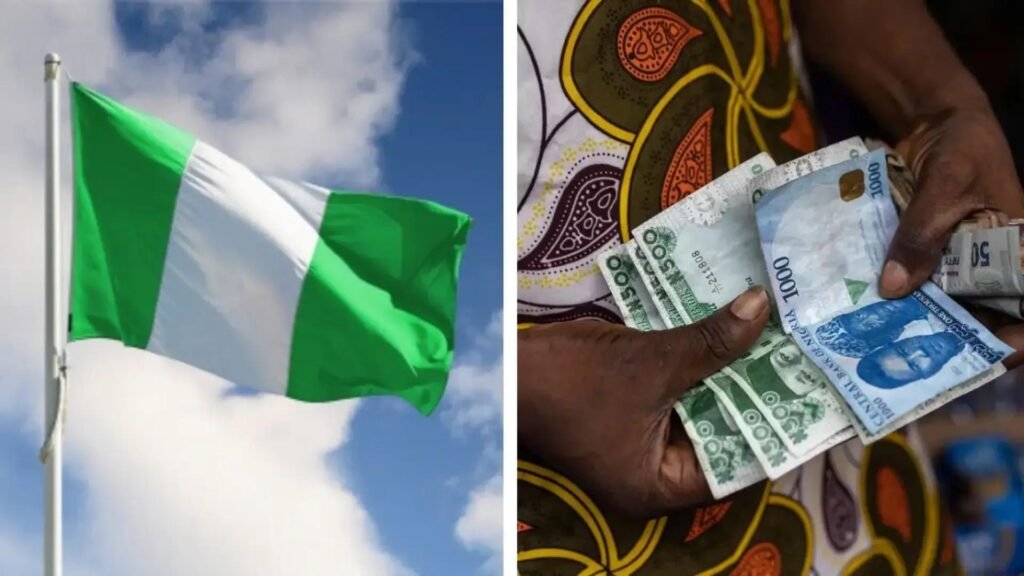
Nigeria’s economic outlook ahead of the 2027 presidential election is marked by improving macroeconomic indicators and persistent household hardship. Economic reforms have helped strengthen public revenues and support growth, but high living costs, poverty and limited employment opportunities remain major concerns.
The World Bank projects Nigeria’s economy will grow by an average of 4.4% annually between 2026 and 2028. Yet the central question is whether this growth will translate into higher real incomes, affordable food and better jobs before Nigerians head to the polls.
With the election approaching, the government’s economic record—and the opposition’s alternatives—will face growing scrutiny from voters, businesses and investors.
Key Economic Indicators Shaping Nigeria’s 2027 Election
| Economic Indicator | Latest Figure or Outlook | Implication Ahead of the 2027 Election |
|---|---|---|
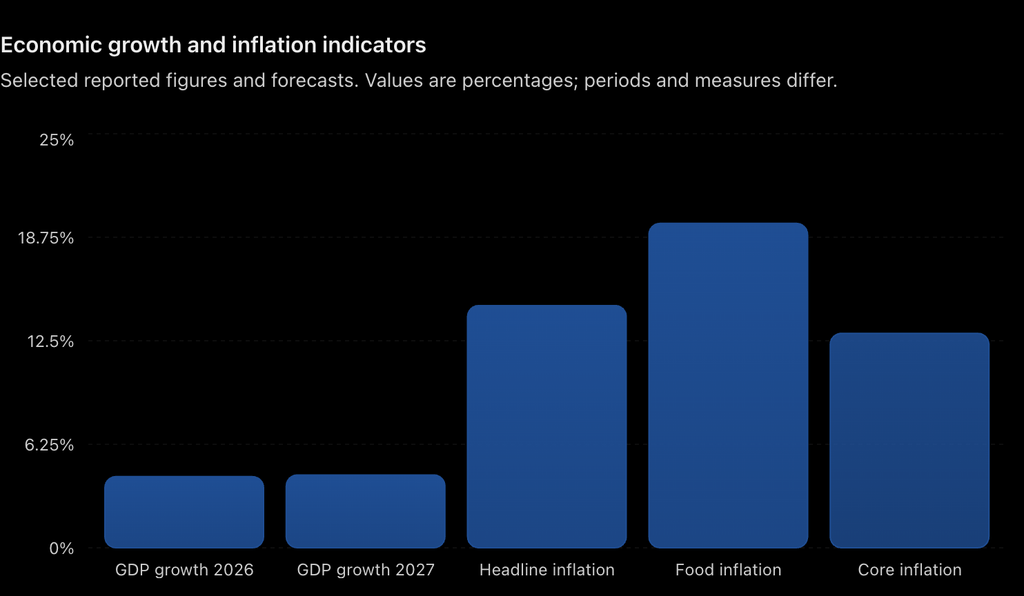
| GDP Growth | 4.3% projected for 2026; 4.4% for 2027 | Growth prospects depend on sustained reforms and private investment. |
| Headline Inflation | 14.63% in September 2026 | Easing inflation may provide relief, but the cost of living remains high. |
| Food Inflation | 19.59% in September 2026 | Food affordability remains a major concern for households. |
| Core Inflation | 12.95% in September 2026 | Underlying price pressures remain important for monetary policy. |
| Naira Stability | Dependent on foreign exchange conditions and policy | Exchange-rate movements affect prices, imports and investor confidence. |
| Oil Revenue | Dependent on crude production and global oil prices | Revenue volatility affects government spending and fiscal stability. |
| Employment and Poverty | Persistent structural challenges | Job creation and household welfare are likely to be important election issues. |
Sources: World Bank — Nigeria Development Update · Voice of Nigeria — September 2026 Inflation Report
Nigeria’s Economic Performance in 2026
Nigeria economy outlook 2007 shows signs of recovery following major policy changes, including petrol subsidy removal and foreign exchange reforms. The World Bank reported that real GDP grew by 4.2% in the first half of 2026, up from 3.9% a year earlier, supported by services and agricultural activity.
However, economic growth does not automatically improve household welfare. Many Nigerians continue to face pressure from food, transport, electricity and housing costs, while businesses contend with financing constraints and infrastructure gaps.
The challenge ahead of the 2027 presidential election is to convert macroeconomic progress into broader improvements in living standards.
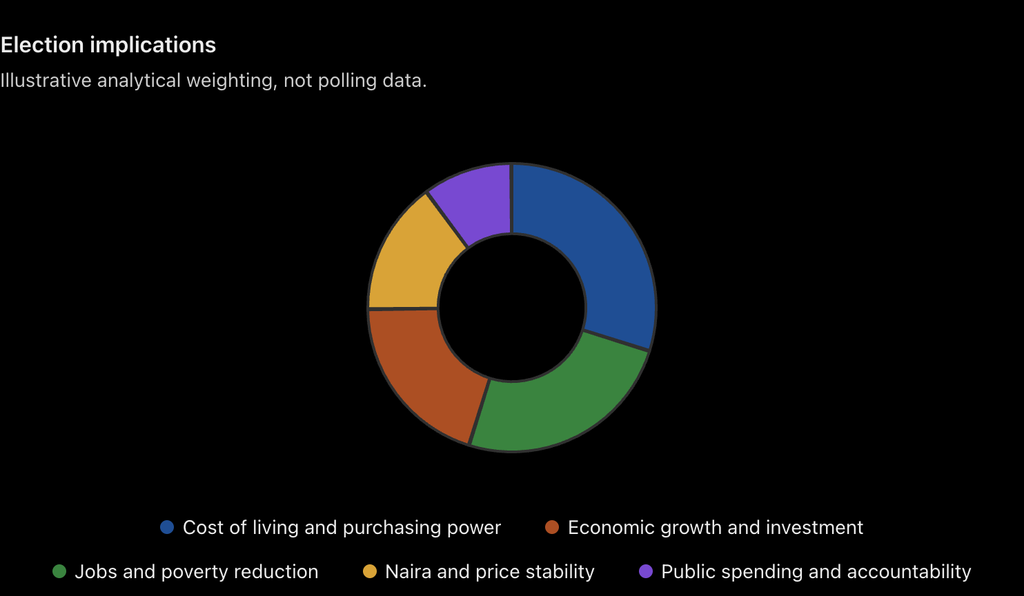
Nigeria economic outlook 2027: Conditions could influence voter priorities in Nigeria’s 2027 presidential election, particularly the cost of living, job creation and household purchasing power.
Inflation and the Cost of Living
Inflation remains one of the most important economic issues shaping Nigeria’s 2027 election.
According to the National Bureau of Statistics (NBS), headline inflation fell to 14.63% in September 2026, down from 15.39% in August and 20.98% in September 2025. Food inflation stood at 19.59% year-on-year, while core inflation was 12.95%.
The figures indicate a substantial easing in overall price pressures. However, slower inflation does not mean prices are falling: it means they are generally increasing at a slower rate. The cost of essential goods therefore remains a significant burden for households.
For voters, the key test will be whether income growth begins to outpace rising living costs. Policies that improve food production, strengthen supply chains, reduce transport costs and provide targeted support to vulnerable households could help make the recovery more tangible.
GDP Growth, the Naira and Investor Confidence
The outlook for Nigeria’s economy will depend partly on maintaining growth, stabilising prices and sustaining confidence in the foreign exchange market.
A more predictable naira can help businesses plan, reduce exchange-rate uncertainty and support investment. However, currency pressures, expensive credit and inconsistent policy implementation remain potential obstacles.
High interest rates can help contain inflation but also raise borrowing costs for businesses and households. Smaller firms, in particular, may struggle to expand and create jobs when access to affordable finance is limited.
The next administration will need to balance monetary stability with policies that encourage productive investment, strengthen domestic manufacturing and improve access to credit. Investors will also look for regulatory consistency, transparency and a credible commitment to economic reform.
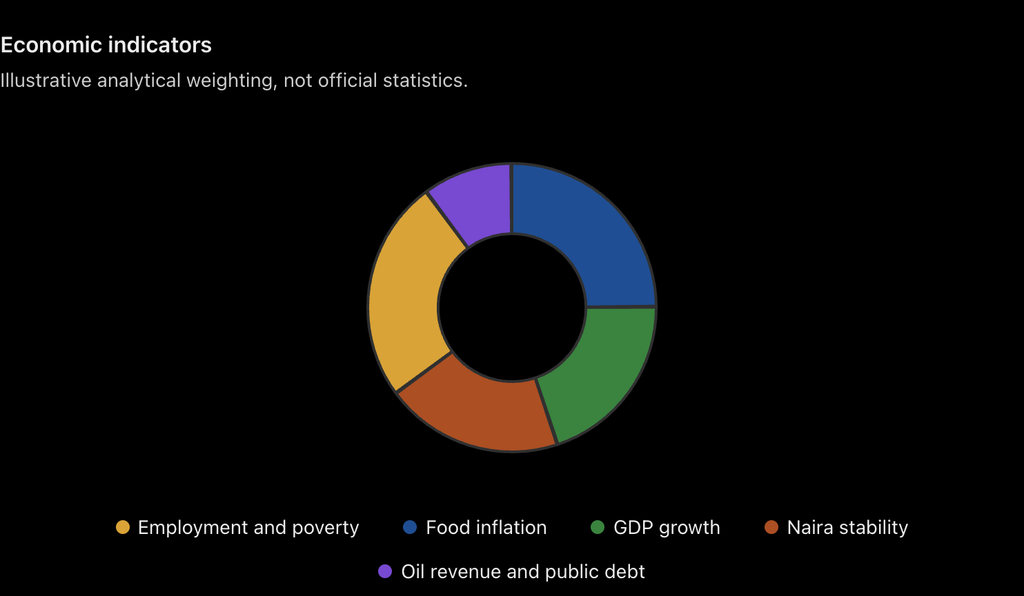
Nigeria’s growth, inflation, currency stability, employment and public finances are key factors in the economic outlook before the 2027 election.
Oil Revenue, Public Debt and Fiscal Sustainability
Oil remains an important source of Nigeria’s foreign exchange earnings and government revenue. Higher oil prices and improved production could strengthen public finances, but dependence on crude exports leaves the country vulnerable to global price fluctuations, production disruptions and insecurity.
The World Bank’s October 2026 assessment highlights improved fiscal and external conditions, partly supported by higher oil prices. Nevertheless, stronger revenue must translate into more effective public spending if households are to benefit.
Debt-servicing costs, infrastructure deficits and competing spending priorities constrain the government’s fiscal flexibility. Improving non-oil revenue collection, reducing waste and strengthening accountability will be essential to funding development without increasing fiscal risks.
Diversification into agriculture, manufacturing, digital services, solid minerals and export-oriented industries remains critical to reducing dependence on oil and creating more resilient sources of growth.
Unemployment, Poverty and Household Welfare
Employment and poverty reduction will be central to voters’ assessment of economic performance in 2027.
The World Bank estimates that 69.6% of Nigerians lived below the lower-middle-income poverty line of $4.20 a day in 2025. This underscores the gap between improving macroeconomic indicators and the daily experience of millions of households.
Nigeria needs more productive jobs, stronger small businesses and investment in sectors capable of absorbing its growing labour force. Reliable electricity, better transport infrastructure, affordable financing and improved security would help businesses expand and create employment.
In agriculture, better storage, irrigation, rural infrastructure and access to markets could raise productivity and ease food supply pressures. Targeted social protection and improved access to healthcare and education would also help cushion vulnerable households against economic shocks.
Nigeria’s Economic Outlook Before the 2027 Election
Nigeria’s near-term economic trajectory will depend on the durability of current reforms, domestic policy decisions and global economic conditions.
Three broad scenarios are possible:
- Optimistic outlook: Sustained disinflation, stronger oil production, improved investor confidence and expanding private-sector investment support faster growth and better living standards.
- Baseline outlook: The economy continues to grow, but high living costs, limited job creation and uneven income gains restrict the benefits for households.
- Downside outlook: Renewed inflation, oil-market volatility, insecurity or fiscal pressures weaken confidence and slow economic activity.
The World Bank’s projected average growth of 4.4% for 2026–2028 provides a positive medium-term signal, but it is not a guarantee of stronger household welfare. The outcome will depend on productivity, employment growth and the effectiveness of public policy.
Key Economic Issues for the 2027 Presidential Candidates
The economy is likely to feature prominently in Nigeria’s 2027 presidential election. Voters will expect candidates to move beyond broad promises and explain how their policies will address the country’s most pressing economic challenges.
Five priorities stand out:
- Lower the cost of living: Sustain disinflation, improve food affordability and strengthen social protection.
- Create productive jobs: Support small businesses, manufacturing, agriculture and technology.
- Improve infrastructure: Expand reliable electricity, transport networks and essential public services.
- Strengthen public finances: Improve revenue collection, manage debt responsibly and increase transparency in government spending.
- Promote inclusive growth: Ensure economic reforms translate into higher real incomes and better opportunities across regions and income groups.
The central policy challenge is to preserve macroeconomic stability while reducing the burden of adjustment on low-income households and small businesses.
Conclusion: Will Economic Recovery Improve Living Standards?
Nigeria’s economic outlook ahead of the 2027 presidential election is cautiously positive. Stronger growth prospects and headline inflation of 14.63% in September 2026 point to improving macroeconomic conditions. However, food inflation of 19.59%, widespread poverty and persistent employment challenges show that the recovery remains incomplete.
The election will provide an important test of whether economic reforms are delivering meaningful improvements in everyday life. The government’s record on prices, jobs, purchasing power and public services will shape voters’ assessment, while opposition candidates will face pressure to present credible and affordable alternatives.
Ultimately, Nigeria’s economic success will be measured not only by GDP growth or financial stability, but by whether households can afford essential goods, businesses can expand and more Nigerians can find decent, productive work.
