

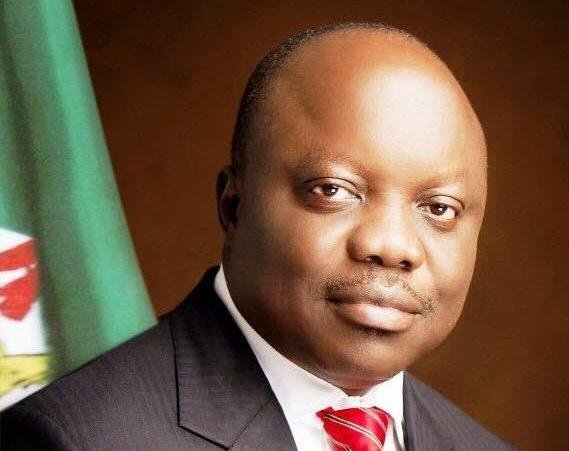
Emmanuel Uduaghan: The Doctor Who Became Governor and Shaped a Political Era in Delta
From medicine to the centre of Delta State politics, Emmanuel Uduaghan rose from commissioner to Secretary to the State Government and eventually governor, leaving behind a record marked by infrastructure, healthcare and human-capital investments, but also controversies, unfinished projects and difficult financial questions.
Dr Emmanuel Eweta Uduaghan died in the early hours of Monday, October 19, 2026, after a prolonged illness, just three days before his 72nd birthday.
His death was announced by his family in a statement signed by his son, Toju Andre Uduaghan, who described him as a source of strength, father figure, beloved brother and uncle, and a respected elder.
For Delta State, however, Uduaghan’s story is inseparable from the political transformation of the state in the years after Nigeria’s return to democracy.
A medical doctor by training, he spent more than 16 years at the heart of Delta’s government, first as Commissioner for Health, then as Secretary to the State Government and eventually as governor.
His eight years in Government House, from 2007 to 2015, produced significant projects and policies, but also a record that remains open to debate.
From medicine to politics
Born on October 22, 1954, Uduaghan trained as a medical doctor before entering public service.
In 1999, then-Governor James Ibori appointed him Commissioner for Health. Four years later, he became Secretary to the State Government, placing him at the centre of the state’s administration.
That experience positioned him as one of the leading figures in the political structure that dominated Delta at the time.
In 2007, Uduaghan emerged as the Peoples Democratic Party’s candidate for governor and succeeded Ibori.
He won a second term in 2011, giving him eight years to pursue his development agenda.
The Uduaghan years
Uduaghan governed an oil-producing state facing the familiar pressures of the Niger Delta: insecurity, notably the Ijaw/Itsekiri wari, inadequate infrastructure, unemployment, environmental concerns and intense demands for equitable development.
His administration promoted the “Delta Beyond Oil” philosophy, seeking to use oil revenues to develop infrastructure and human capital while preparing the state for a future beyond petroleum.
Roads, healthcare, education, agriculture, urban development and sports consequently became major areas of government spending.
The strategy gave his administration a clear development identity.
But the scale of the projects also created some of the biggest tests of his legacy.
Infrastructure and the Asaba airport controversy
Infrastructure was among the most visible features of Uduaghan’s tenure.
Road construction expanded across the state, while Asaba, the capital, received substantial attention.
The Asaba International Airport became the flagship project.
It was conceived as a major gateway for the state and a catalyst for economic activity. Yet the airport also became one of the most controversial projects associated with Uduaghan’s administration.
Questions were raised over its cost, construction, operational readiness and technical deficiencies.
For supporters, it represented ambition and long-term investment. For critics, it illustrated the risks of executing large infrastructure projects without adequate planning and completion standards.
The airport therefore came to symbolise both the ambition and the difficulties of the Uduaghan years.
The unfinished projects
The Asaba-Ughelli road was another major undertaking that tested the administration’s record.
The 149-kilometre road was intended to improve connectivity between major communities and economic centres, but delays in execution became a source of criticism.
It was among several projects whose progress became part of the broader debate about whether Uduaghan’s administration delivered projects as quickly and efficiently as promised.
For a government that placed infrastructure at the centre of its development strategy, unfinished projects were an unavoidable weakness.
Healthcare: the doctor’s imprint
Healthcare remained one of the areas where Uduaghan’s professional background was most evident.
His administration pursued programmes designed to improve access to healthcare, particularly for women and children, while investing in medical facilities and services.
His experience as a doctor gave the sector a distinctive place in his administration.
Yet governing required difficult choices. Healthcare competed for resources with roads, education, security, urban development and other demands across the state.
Education and sports
Human-capital development was another pillar of the “Delta Beyond Oil” agenda.
The administration invested in education and programmes aimed at widening opportunities for young people.
Sports became an even more visible success story.
Delta established itself as a dominant force at the National Sports Festival during Uduaghan’s tenure, winning the 2009 edition in Kaduna and the 2012 Eko 2012 games in Lagos.
The success reinforced the state’s reputation for producing elite athletes and demonstrated the political value of sustained investment in sports.
The financial question
Uduaghan’s development programme also came with financial pressures.
The state borrowed substantially during his tenure, including a N100 billion bond secured between 2010 and 2012 for development projects.
The borrowing generated two competing interpretations.
Supporters argued that borrowing enabled the government to finance major infrastructure and development projects.
Critics questioned whether the benefits justified the financial obligations, particularly where projects were delayed, incomplete or became controversial.
The debate over debt remains an important part of any assessment of the Uduaghan years.
Politics after Government House
Leaving office in 2015 did not end Uduaghan’s political career.
In 2018, he defected from the PDP to the All Progressives Congress and contested the 2019 Delta South senatorial election under the APC.
He lost the election and returned to the PDP in 2020.
By 2022, Uduaghan announced his retirement from active politics.
His political journey after Government House reflected the shifting alliances and calculations that have long defined Nigerian politics.
The quiet politician
Unlike some politicians of his generation, Uduaghan rarely cultivated a flamboyant public persona.
He was generally measured, restrained and technocratic.
But behind that quiet style was a politician who had spent more than a decade and a half inside Delta’s political establishment.
He served under one governor, succeeded him and governed the state for two terms.
Few politicians had such a close view of the evolution of Delta’s political system.
A legacy of achievement and unfinished business
Uduaghan’s legacy cannot easily be reduced to either success or failure.
His supporters point to roads, healthcare, education, sports and the broader “Delta Beyond Oil” vision.
His critics point to unfinished projects, controversies surrounding major infrastructure, delays and the financial obligations associated with his development programme.
Both sides form part of the historical record.
Some of the projects associated with his administration endured. Others were modified, delayed, abandoned or eventually replaced.
That is the complicated reality of his eight years in office.
The end of an era
Uduaghan’s political career was closely tied to the formative years of Nigeria’s Fourth Republic and the long period of PDP dominance in Delta State.
He entered government as a doctor, became a commissioner, rose to Secretary to the State Government and eventually occupied the state’s highest political office.
For his family, he was a father, brother, uncle and elder.
For Delta State, he was something more complicated: a governor whose administration combined ambitious development plans with projects that generated lasting controversy.
His legacy will ultimately be judged by what remained after he left office—the roads completed and left unfinished, the institutions strengthened, the investments in people, the projects that endured and the financial decisions that continued to shape the state.
Emmanuel Uduaghan was the doctor who became governor.
He was also one of the political figures who helped define modern Delta State.
His achievements remain part of that history.
So does his unfinished business.
