

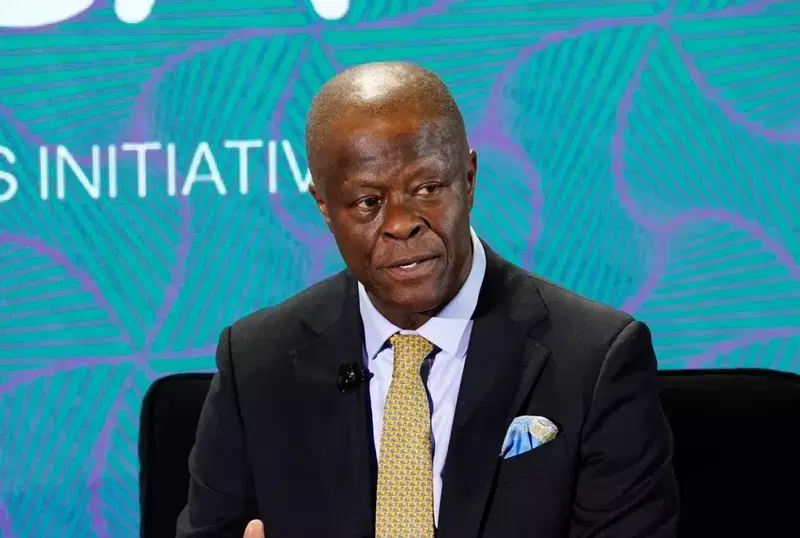
The Minister of Finance and Coordinating Minister of the Economy, Wale Edun, has said Nigeria has no immediate plans to approach the International Monetary Fund (IMF) for loans despite mounting fiscal pressures.
Edun made the statement on Thursday during a ministerial press briefing at the ongoing IMF-World Bank Spring Meetings in Washington, D.C., amid growing concerns about rising debt levels across Africa and calls for vulnerable economies to seek financial support.
He stressed that the country is not considering borrowing from the IMF or any other external source at this time, noting that many African nations are already grappling with or nearing debt distress.
According to the minister, high borrowing costs remain a major challenge for countries on the continent, with significant portions of government revenue being allocated to debt servicing instead of critical sectors such as healthcare and education. He added that addressing these structural issues is essential to improving fiscal sustainability.
Edun’s remarks come shortly after the Debt Management Office reported that Nigeria’s total public debt rose by N14 trillion to N159.27 trillion as of the end of the fourth quarter of 2025. The National Assembly had also recently approved a $6 billion external borrowing request, further fueling concerns about the sustainability and cost of new debt amid global economic uncertainties.
The minister highlighted broader concerns about financing conditions in Africa, noting that nearly half of the continent’s countries are either in or close to debt distress. He pointed out that high interest rates on commercial debt continue to strain public finances, while also calling for a reassessment of how global rating agencies evaluate African economies.
Edun said President Bola Ahmed Tinubu has advocated for lower risk premiums to make borrowing more affordable for African countries, while emphasising the need for structural reforms to reduce reliance on expensive debt.
He noted that improving efficiency through the adoption of technology, including artificial intelligence, increasing private sector participation, and diversifying funding sources are critical steps toward easing fiscal pressure and achieving sustainable economic growth.
Data from the Debt Management Office shows that Nigeria’s external debt stood at N74.43 trillion as of December 2025, accounting for 46.73 percent of total public debt. In dollar terms, external debt rose to $51.86 billion from $48.46 billion in September 2025 and $45.78 billion in December 2024, with the Federal Government accounting for the bulk of the borrowing.
