

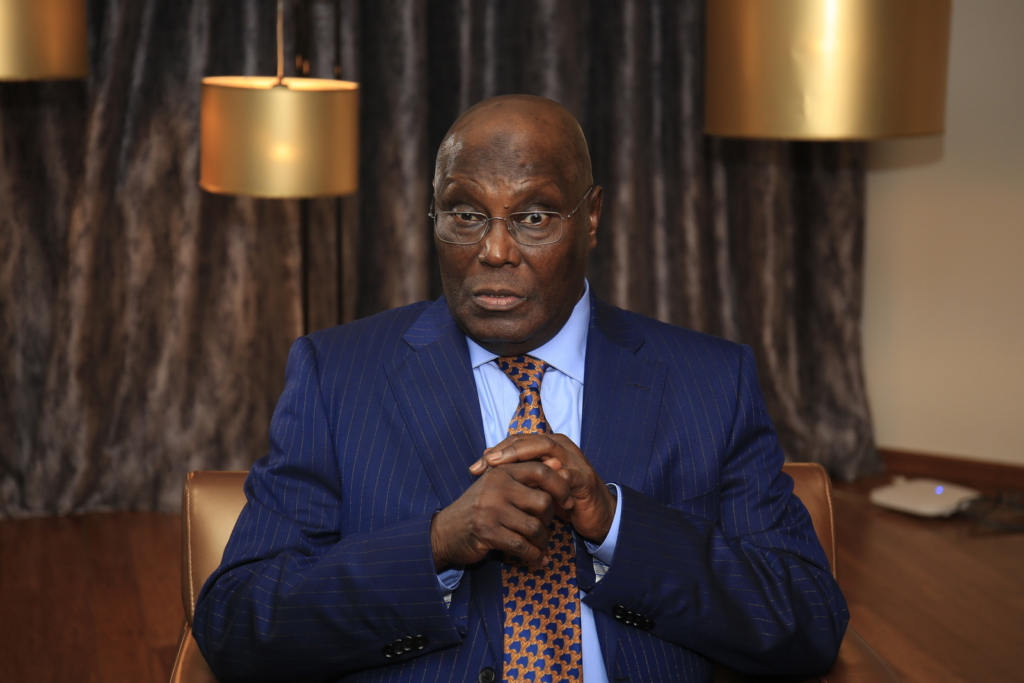
Former Vice President Atiku Abubakar has intensified his war of words with former Secretary to the Government of the Federation, Babachir Lawal, following Lawal’s assertion that Atiku is unfit to lead Nigeria.
The latest exchange comes amid growing tensions within the African Democratic Congress (ADC) after Atiku emerged as the party’s presidential candidate for the 2027 general election. Lawal has challenged the outcome of the primary, alleging that the process was manipulated in Atiku’s favour and calling for its cancellation and the nomination of a new candidate.
Responding through separate statements issued by his aides, Paul Ibe and Phrank Shaibu, Atiku dismissed Lawal’s allegations and described the former SGF as a disgruntled political figure whose recent comments reflected deep personal frustration. The former vice president also expressed concern over what he described as Lawal’s emotional and mental disposition, arguing that his public remarks lacked objectivity and balance.
According to the statements, Atiku’s camp views Lawal’s repeated attacks as evidence of mounting resentment and disappointment. The former vice president claimed that rather than addressing questions surrounding his own role during the ADC presidential primary, Lawal had chosen to focus on personal attacks aimed at discrediting him.
Atiku further urged Lawal to examine his record on national security and humanitarian interventions, maintaining that he has consistently condemned terrorism, banditry, kidnapping and communal violence across the country irrespective of ethnic or religious considerations.
The statements highlighted several security reforms Atiku has advocated, including restructuring Nigeria’s security architecture, strengthening state-backed security outfits, establishing special courts to handle terrorism-related cases and creating support systems for victims and survivors of violence.
In a separate response, Atiku accused Lawal of promoting divisive rhetoric and abandoning factual discourse in favour of ethnic profiling and conspiracy theories. He warned that such narratives could worsen existing divisions in the country and undermine efforts to foster national unity.
The former vice president said Lawal’s recent interventions appeared increasingly driven by bitterness rather than evidence-based arguments, adding that the former SGF would benefit from stepping away from what he described as politics rooted in hostility and embracing reflection capable of restoring perspective.
Atiku maintained that Nigeria’s political leaders should focus on addressing pressing national challenges, including insecurity, unemployment and economic hardship, rather than engaging in ethnic suspicion and personal attacks.
Reaffirming his vision for the country, Atiku said he remains committed to building an inclusive Nigeria where citizens enjoy equal opportunities and protection under the law regardless of ethnicity, religion or region. He stressed that the nation’s future must be anchored on unity, constructive engagement and collective progress rather than division and resentment.
