

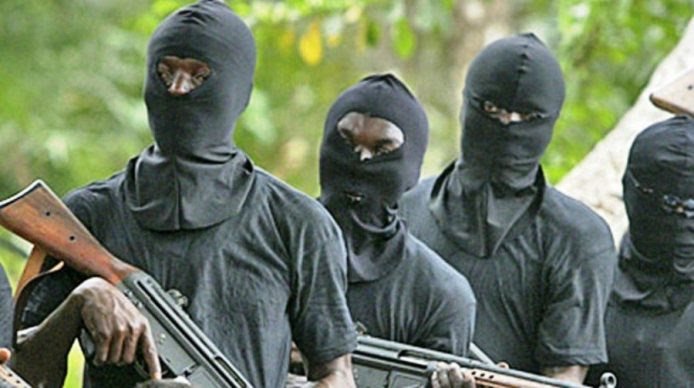
Armed bandits in Zamfara State have reportedly threatened to prevent elections from taking place in communities across Anka Local Government Area, as they intensify attacks, impose levies, and restrict movement along major roads.
The threat was disclosed in a security assessment by SARI Global, a United States-registered risk intelligence firm, which documented the growing influence of armed groups across the state.
According to the firm’s Nigeria Monthly Security Overview for October 2026, a bandit leader summoned community leaders in Anka during the month and warned that elections would not be permitted in their communities.
The report described the development as evidence of a shift in banditry from isolated attacks to systematic territorial and economic control.
It also warned that continued restrictions on major roads could turn affected communities into permanent no-go areas, forcing more residents to abandon their homes.
Zamfara reportedly emerged as Nigeria’s most incident-dense state in October, displacing Borno, with 69 security incidents and 137 fatalities recorded during the month.
The security situation was further aggravated by attacks on motorists, destruction of vehicles, kidnappings, and the imposition of an N50m levy on communities in the Dansadau District.
More than 300 residents were reportedly displaced following the threats and attacks.
The report detailed how bandits escalated their blockade of the Gusau-Dansadau road after releasing a video on October 13 threatening to burn vehicles using the route.
A truck was reportedly set ablaze on the Dansadau-Magami stretch the following day, while armed men blocked the road on October 16, destroying nine vehicles and looting travellers.
More vehicles were subsequently set on fire on October 17.
The group also threatened to attack communities that failed to pay the N50m levy, while two improvised explosive devices were discovered along the Magami-Hannutara-Dansadau road on October 8.
Beyond the Gusau-Dansadau route, the report identified several other roads affected by the blockade, including Gurusu-Anka, Abare-Anka, Gusau-Magami, Kaura Namoda-Shinkafi, Mayanchi-Anka, Anka-Kuturu, and Maradun-Danbaza.
Travellers using the affected routes were reportedly abducted, while drivers and farmers were among those killed.
Military escorts also came under attack, with an ambush near Gurusu on October 11 reportedly leaving at least 20 people dead in a convoy of traders travelling under military protection.
The victims included soldiers and police officers.
Although troops reopened the Gusau-Dansadau road on October 21 and introduced regular security escorts, the bandits reportedly blocked the route again on October 31.
Explaining the strategy behind the attacks, SARI Global said the armed groups were using road blockades to weaken economic activities and establish control over movement and commerce.
It warned that the disruption of routes connecting Gusau to the Kuyambana Forest axis could cripple local markets, disrupt supply chains, and strengthen the influence of bandits over surrounding communities.
The firm projected that the groups could consolidate their control over the Kuyambana axis and increasingly deploy improvised explosive devices if the blockades were not decisively addressed.
It also warned that the strategy could spread to other parts of the country.
Meanwhile, the report disclosed that bandits attacked Kaura Namoda town on October 23, killing seven vigilantes and a young boy while abducting at least 15 people.
Nationwide, kidnapping incidents reportedly increased from 27 in September to 55 in October, representing more than a 100 per cent rise.
The report also identified growing political tensions across northern Nigeria, recording about 46 incidents linked to political parties, campaigns, and political thugs. Ruling-party campaigners were reportedly stoned in at least five states.
The security concerns come as preparations gather momentum for the 2027 general elections.
The Independent National Electoral Commission has rescheduled the presidential and National Assembly elections for January 16, 2027, while governorship and state assembly elections are fixed for February 6, 2027.
Zamfara has 14 local government areas and 3,529 polling units. The state recorded 1,952,060 registered voters during the 2023 general elections, with an additional 313,115 voters registered through the continuous voter registration exercise as of August 2026.
The latest threat also recalls previous attempts by armed groups to influence electoral activities and impose financial demands on communities.
Ahead of the 2023 governorship election, bandits reportedly demanded N2m from three communities in Zurmi Local Government Area, charging N200,000 per polling unit before allowing elections to take place.
Similarly, in April 2025, armed groups reportedly imposed an N60m levy on 12 communities in Maru Local Government Area, allegedly accusing residents of providing information to security forces.
In January 2025, bandits also demanded N172m from 25 villages in Tsafe West Local Government Area as protection levies, forcing some residents to flee their homes.
The previous administration of former Governor Bello Matawalle had also imposed a total lockdown on Anka, Bukkuyum, and Gummi local government areas in October 2022 following renewed attacks, alongside a suspension of political activities in the affected areas.
