

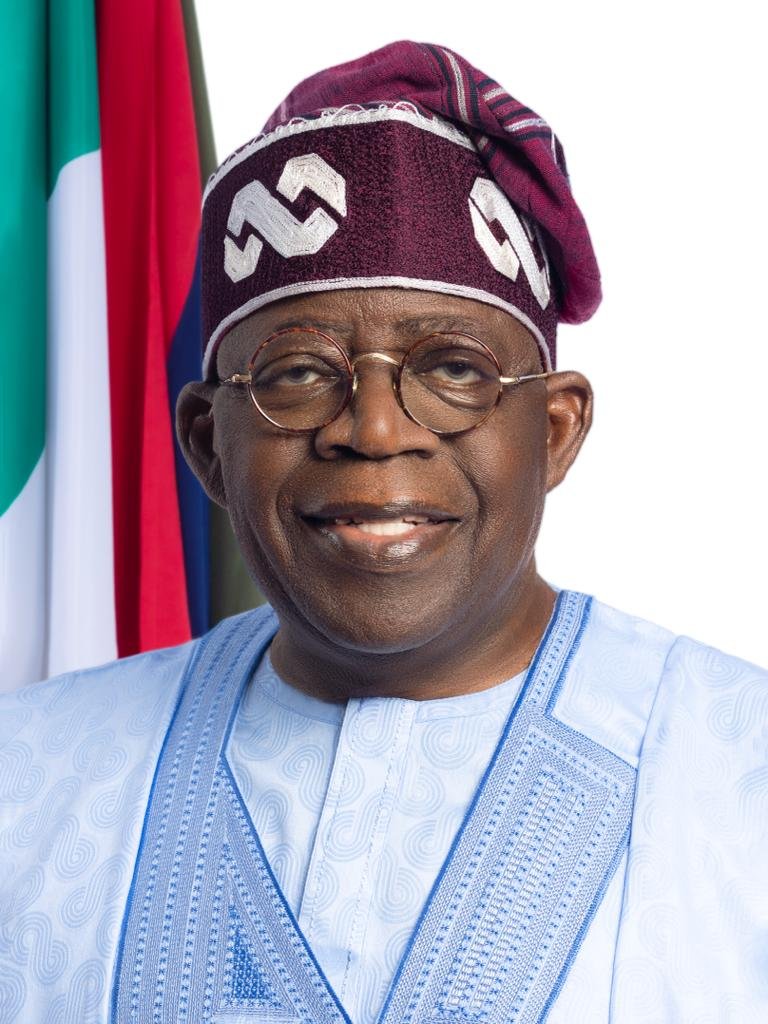
President Bola Ahmed Tinubu has declared that Nigeria has moved beyond the most difficult phase of his administration’s economic reforms and is now entering what he described as an “age of prosperity”.
Tinubu made the declaration in his Independence Day address to Nigerians on Thursday, October 1, 2026, as the country marks its 66th anniversary of independence.
The President said his administration inherited an economy weakened by years of structural distortions, rising poverty, inadequate infrastructure, and policies that, according to him, had postponed difficult decisions.
He said the government therefore chose to implement far-reaching reforms despite the hardship they initially caused, arguing that the measures were necessary to correct longstanding weaknesses in the economy.
Tinubu likened Nigeria’s economic situation to that of a patient diagnosed with cancer who must undergo painful treatment to recover.
According to him, previous administrations had often opted for temporary measures to manage the symptoms of economic problems instead of addressing their underlying causes.
“When this Administration assumed office, we resolved to do things differently. We chose to excise the cancer. The reforms that followed were difficult. The side effects were real. Yet, we must never confuse the medicine with the disease,” he said.
The President argued that the reforms implemented since 2023 did not create Nigeria’s economic problems but were introduced to address them.
He said the government would resist calls to abandon the reforms and return to what he described as unsustainable subsidy arrangements.
Tinubu highlights economic gains
Tinubu said Nigeria’s economic outlook had improved significantly, citing growth of more than four per cent in 2026 and contributions from both the oil and non-oil sectors.
He also listed reduced oil theft, declining inflation, rebuilt foreign reserves, and greater stability in the foreign exchange market among the gains recorded under his administration.
The President further said Nigeria recorded its highest-ever revenue from non-oil exports in 2025, exceeding $6 billion.
He maintained that the improvement had been recognised by international observers, multilateral institutions, and the private sector, while foreign direct investment had continued to increase.
According to him, the country had reached a turning point, with the government’s economic priorities shifting from stabilisation and reform to delivering widespread prosperity.
“The emergency treatment is over. The foundation has been repaired. The central economic task before us has changed. For three years, our overriding purpose was to correct our nation’s course.
“Now, our purpose is simple: shared and widespread prosperity,” Tinubu said.
The President promises measures to reduce the cost of living
The President said his administration’s immediate priority would be to reduce the cost of living by lowering the cost of producing and transporting goods and services.
He said the government would expand mechanised irrigation and dry-season farming, improve access to seeds and fertiliser, increase agricultural mechanisation, and invest in storage and transportation.
Tinubu also pointed to ongoing investments in roads, railways, and ports, saying improved infrastructure would help connect farms and factories to markets while reducing production and distribution costs.
He said the government’s objective was to create an environment where lower production and transportation costs would eventually translate into lower prices for consumers.
Beyond food affordability, Tinubu said prosperity must also be driven by productive employment, particularly for young Nigerians.
He noted that millions of young people enter adulthood every year and said the government would seek to turn the country’s youthful population into an engine of economic growth.
Tinubu targets jobs, industries, and the digital economy
The President said his administration would place job creation, enterprise development, and industrial expansion at the centre of its policies.
He said Nigeria’s gas resources would be used to power new industries, while the government would support efforts to revive factories and industrial centres across the country.
He also promised greater digital connectivity, skills development, and access to infrastructure and finance for Nigerian businesses.
Tinubu said he wanted to see more Nigerians producing goods locally, more Nigerian farms supplying cities and industries, and more Nigerian companies exporting their products to international markets.
He also expressed his desire to see young Nigerians build globally competitive technology companies and create employment opportunities within the country.
FG promises continued support for vulnerable Nigerians
The President acknowledged that millions of Nigerians were still struggling with food, school fees, medical bills, and transportation costs.
He said the hardship experienced by many citizens predated the reforms of his administration and reflected the cumulative effects of decades of low productivity, inadequate infrastructure, and limited economic opportunities.
Tinubu said the government could not reverse in four years problems that had accumulated over several generations but could change the country’s trajectory.
He said the Federal Government was therefore strengthening direct support for vulnerable households and improving the National Social Register to ensure that assistance reached those who genuinely needed it.
He also highlighted the Nigerian Education Loan Fund, saying it was designed to ensure that students from low-income families could pursue higher education despite their parents’ financial limitations.
The President further cited the Consumer Credit Corporation (CREDICORP), which he said was helping working Nigerians access credit for vehicles, solar systems, digital devices, and other essential assets.
He said his administration would continue to work with state and local governments to strengthen primary healthcare, basic education, and other essential public services.
Tinubu also said salaries and pensions had been paid on time and in full since 2023, while reforms to the national pension system were aimed at improving the welfare of retirees and vulnerable citizens.
‘We will defeat poverty’
Tinubu stressed that social intervention programmes were not intended to replace economic prosperity but to provide support for Nigerians while they moved towards greater economic security.
“Our objective is not to manage poverty more efficiently.
“We will defeat it,” he declared.
The President acknowledged that eliminating poverty would require sustained economic growth, discipline, and the creation of millions of productive opportunities.
He nevertheless argued that Nigeria was now better positioned to pursue that objective because the government had corrected the fundamental direction of the economy.
According to him, the reforms were laying the foundation for a future in which Nigerians would experience the benefits of economic growth more broadly.
Tinubu calls for unity and renewed hope
Reflecting on Nigeria’s 66 years of independence, Tinubu acknowledged the country’s history of civil war, military rule, economic crises, insecurity, and political upheaval.
He said that despite the difficulties, Nigerians had continued to demonstrate resilience through their daily efforts as farmers, traders, teachers, entrepreneurs, workers, and members of the security services.
He described the belief that Nigeria could become a stronger and more prosperous nation as part of the inheritance of independence.
The President said the country’s founding fathers fought for more than a flag and national sovereignty, arguing that independence was ultimately about giving Nigerians the freedom to shape their own destiny.
He urged Nigerians to remain united and look towards the future with renewed confidence.
“The age of reform has done its work. Now begins the age of prosperity. An age in which the promise of this great nation must finally become the lived experience of Nigerians from all walks of life,” Tinubu said.
Using the biblical imagery of the Israelites’ journey to the Promised Land, the President said Nigeria had “passed through our own Red Sea” and should not return to the past.
“Let us go forward together, with faith in ourselves, faith in our country, and faith that the sacrifices we have made will yield their reward,” he said.
Tinubu concluded by describing the Nigeria he envisaged as a nation where prosperity would be widely shared, children could dream beyond the circumstances of their birth, and the country’s vast potential would be reflected in the living conditions of its citizens.
“Our destination is in sight. Our foundations are strong. Our direction is clear. So let us go forward. No looking back,” he said.
He wished Nigerians a happy Independence Day and prayed for the continued blessing of the Federal Republic of Nigeria.
