

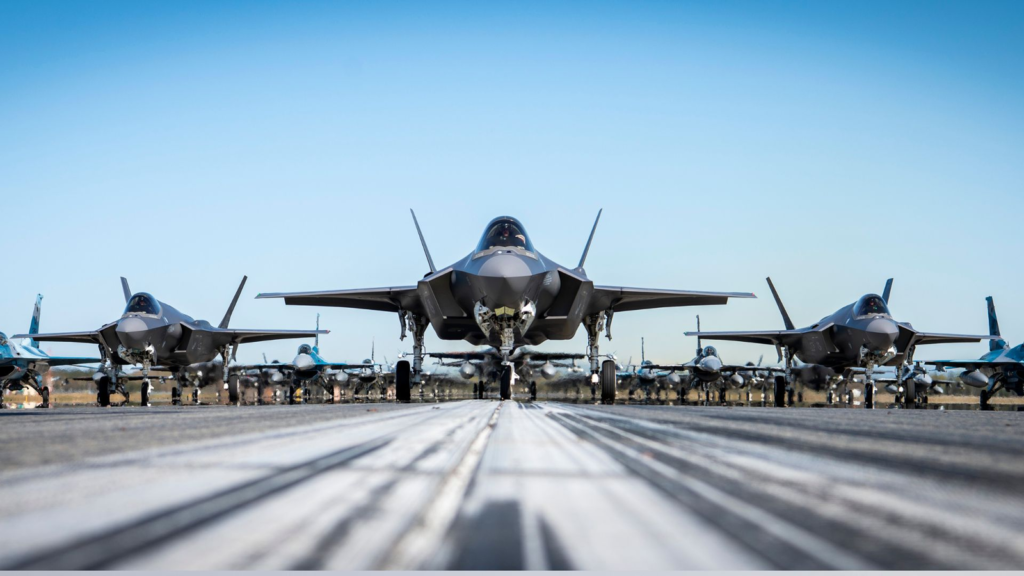
Photo: Lockheed Martin F-35
As fighting intensifies in the Middle East, the human cost of war continues to dominate headlines.
But far from the battlefield, a different reality is unfolding, that is the one measured in rising share prices, expanding defence contracts and record revenues for major U.S. weapons manufacturers.
Naija Daily News’ investigations into defence budgets, market performance and internal policy briefings show that America’s biggest military contractors are poised to make billions of dollars as governments rush to replenish weapons stockpiles and prepare for a prolonged conflict.
Lockheed Martin: FIghter Jets, Missile Defence bringing in huge earnings
Defence giant and the world’s leading fighter jets and other war equipment manufacturing, Lockheed Martin remains one of the biggest financial winners of modern warfare.
The company generates about $75 billion in yearly revenue, largely from military contracts either from the war in the Middle East or just helping American allies in the Gulf region prepare for future wars.
It produces some of the most widely used war equipment, including: F-35 stealth fighter jets used in air strikes; Patriot and THAAD missile-defence systems; Precision bombs and long-range strike missiles and military satellites and battlefield command technology
Recent defence planning discussions have focused on urgently increasing missile production, a move likely to secure new multi-year contracts worth tens of billions of dollars. Investors have responded positively. The company’s stock has risen strongly amid expectations that the conflict will drive sustained defence spending.
RTX Corporation: Missile demand fuels an $80 Billion business
Another major beneficiary is RTX Corporation, formerly known as Raytheon. The company earns over $80 billion annually, supported by heavy demand for missile systems.
Its key products include: Tomahawk cruise missiles used in long-range attacks, such as the one that allegedly hit the girls’ school in Tehran, killing over 160 school girls; Patriot missile radar and launch platforms used by Israel, Saudi Arabia and other US allies in the Gulf Cooperation Council, GCC, and Advanced air-to-air missile systems
Defence and military sources say the US and other governments worldwide plan to expand weapons production, including hundreds of millions of dollars in new procurement funding, are expected to further increase RTX’s revenues.
Northrop Grumman: Stealth Bombers and Surveillance Systems
This military technology firm Northrop Grumman generates about $37–38 billion in annual revenue and specialises in high-tech warfare systems, including, but not limited to strategic stealth bombers, long-range surveillance drones, and missile-warning radar networks
Future defence programmes under discussion could be worth over $100 billion, potentially guaranteeing long-term earnings growth for the company.
War and the stock market
Across global markets, defence stocks have risen sharply since tensions escalated.
Analysts point to: rapid share price gains among major weapons manufacturers, increased investor confidence in defence firms and emergency military budgets expected to inject tens of billions of dollars into arms production
For financial markets, war often signals government spending stability, making defence companies attractive to investors even during wider economic uncertainty.
The moral debates
Critics argue that rising profits during wartime highlight the powerful link between conflict and corporate earnings. They warn that heavy military spending can divert public funds from social development and infrastructure. Many commentators lament that the alleged $6billion dollar spent by the US on the first two days fo the latest Gulf Conflicts could benefit health, social interventions and help reduce cost fo living, not only in the US, but across the globe, especially in the developing world.
“The US, under President Donald Trump, has cut fundings to to key United Nations’ programs such as World Health Organisation, World Food Program and several others. The UN and other related agencies have warned that the Trump administration’s decision to cut these fundings could cost millions of lives in the future. Yet, this same administration is actively funding and splurging on an avoidable war,” one analyst said.
As the conflict continues, one trend is becoming clear:
While civilians face the devastation of war, major defence corporations are experiencing rising revenues, stronger stock performance and expanding government contracts. In today’s global economy, war is not only fought on the battlefield, it is also reflected in corporate balance sheets.
