

By Sodeeq Kamsela, Abuja
In a move that has puzzled many Nigerians, the Federal Government has cancelled the military parade scheduled for the country’s 65th Independence Anniversary on Wednesday, October 1.
The parade is an annual event to mark the West African nation’s independence from British colonial rule, and has only been cancelled twice post-civil war.
The announcement, delivered Monday by the Office of the Secretary to the Government of the Federation (OSGF), did not explain the decision.
The announcement said, the “cancellation “in no way diminishes the significance of this milestone”, and assured that other activities marking the anniversary would go ahead as planned.
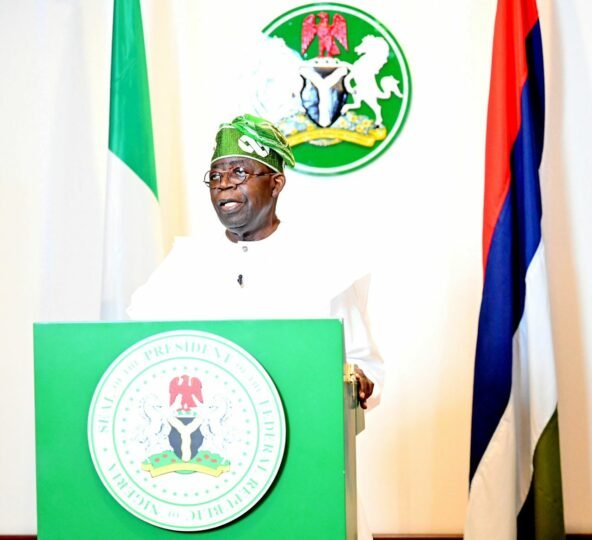
Segun Imohiosen, Director of Information and Public Relations at the OSGF, said the Tinubu administration remained committed to celebrating the nation’s independence “with dignity and enthusiasm.” The statement also expressed regret over any inconvenience the cancellation may cause and urged Nigerians to support ongoing reform programmes of President Bola Ahmed Tinubu.
But the sudden suspension has raised questions because the Independence Day parade is one of Nigeria’s most symbolic traditions — a display of unity, military strength, and national pride. While rare, the parade has been cancelled or disrupted in the past, usually under extraordinary circumstances.
The last time Nigeria witnessed a full cancellation of its national Independence parade was in 1992, when President Ibrahim Babangida called off all celebrations after a Nigerian Air Force C-130 crash killed many officers just days before the event. In 2010, the parade in Abuja was rocked by twin car bombings near Eagle Square, killing 12 and forcing security forces to abruptly end the day’s festivities.
More recently, in 2015, some states such as Kwara scrapped their parades, citing security and financial constraints, while in 2020 Lagos State cancelled its march-past amid COVID-19 restrictions on large gatherings.
Against this backdrop, the 2025 decision stands out, not because of the cancellation itself, but because the government has provided no reason. Unlike 1992, 2010, or 2020, there has been no national disaster, terrorist threat, or pandemic cited as justification.
The cancellation leaves Nigerians speculating whether security concerns, budgetary pressures, or logistical challenges lie behind the silence. What is clear, however, is that the parade’s absence will be felt deeply, even as other programmes continue in honour of the nation’s 65th year of independence.
