

At the second AFRIFF Film & Content Market in Lagos, international investors, financial institutions and African film executives confronted a defining challenge for the continent’s creative economy: African film financing for African stories, build the infrastructure behind them and generate returns that can sustain the industry.
African cinema has the stories.
It has filmmakers with compelling ideas, actors with international appeal, producers looking for wider markets and audiences increasingly receptive to stories told from African perspectives.
But behind every film is a less glamorous question: where will the money come from?
And increasingly, another question is becoming just as important: who controls the stories when the money comes from outside Africa?
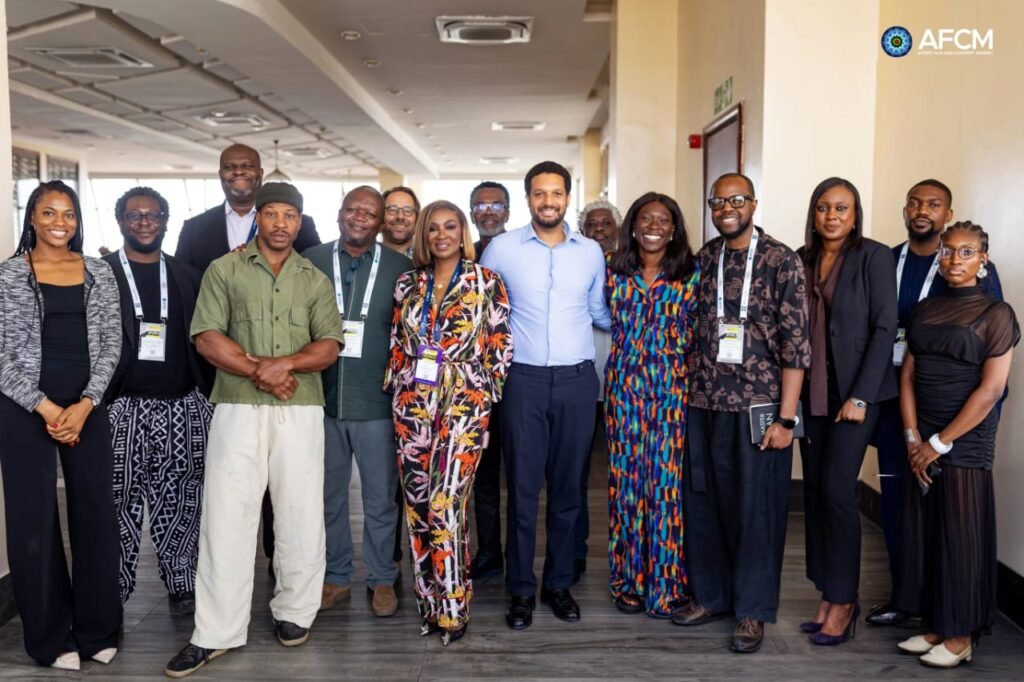
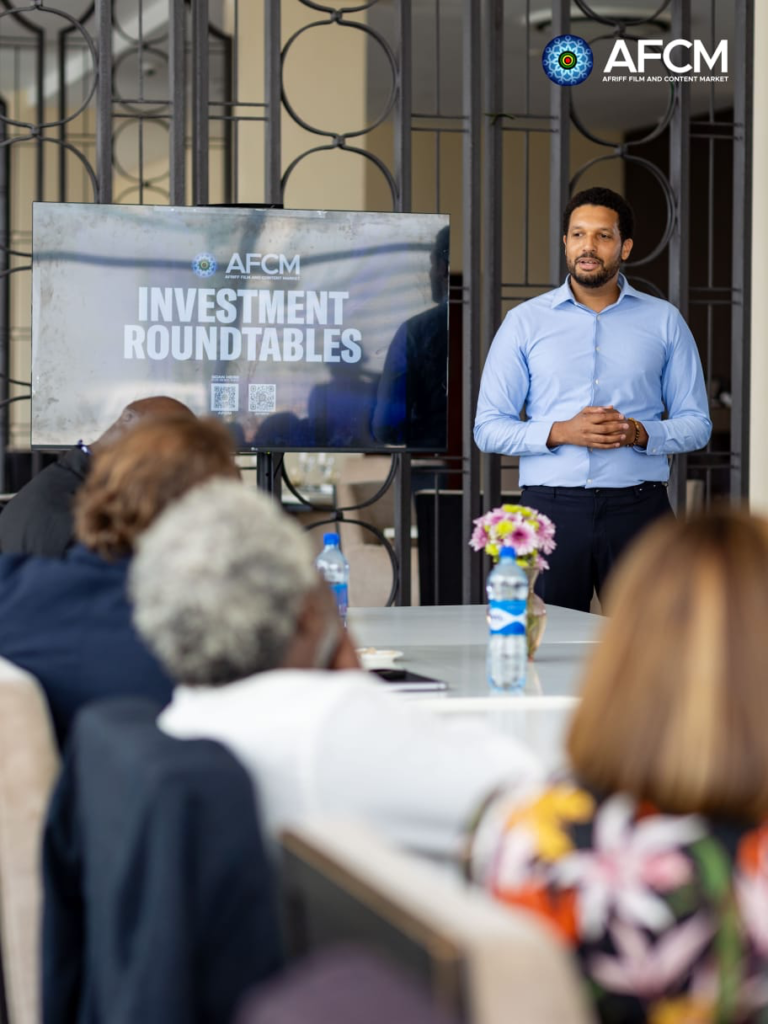
Those questions moved to the centre of discussions at the second edition of the AFRIFF Film & Content Market (AFCM) in Lagos, where international investors, financial institutions, film executives and African creative-industry leaders gathered to examine how African stories can be financed, commercialised and scaled.
Held on November 3 and 4, 2026, at 788, Twin Waters, Lekki, the AFCM Investment Roundtables brought together representatives of the International Finance Corporation (IFC), the World Bank Group, MBO Capital, Logical Pictures Group, Chapel Hill Denham, Kuramo Capital, Oui Capital, Verod-Kepple Africa Ventures, Breega and Filmhouse Group.
Coordinated by Jean A. Fall, Executive Director of AFCM, the invitation-only sessions combined two days of discussions with one-to-one investment speed-dating meetings. Ten selected production companies, animation studios and streaming businesses were given the opportunity to pitch directly to investors in 15-minute sessions.
But the significance of the gathering went beyond the meetings themselves.
At the heart of the discussions was a fundamental question for the future of African film financing: what will it take to turn African film projects and creative businesses into investable, bankable enterprises?
African cinema needs more than money
For years, conversations about African film financing have often centred on access to capital.
Producers need funding to develop scripts, assemble casts, finance production, complete post-production and take films to audiences.
But the conversations at AFCM suggested that the financing problem is more complicated than simply finding more money.
Investors want to know whether projects are properly structured, whether intellectual property has measurable value, whether revenue opportunities can be identified and whether the businesses receiving investment can manage risk.
Adekunle Adebiyi, Executive Director of Investments at MBO Capital, described production financing as an equity financing gap.
African film financing currently relies on a hybrid combination of debt and equity, he argued, but the availability of appropriate equity capital remains a critical issue.
That financial gap also raises a question with consequences far beyond the balance sheet: who controls African stories when the money comes from outside the continent?
“If we want to tell our own authentic African stories, we need to have the money behind them,” Adebiyi argued.
His concern was not an argument against international investment. Rather, it highlighted the importance of developing African sources of capital capable of supporting African creative decisions.
The issue is ultimately about ownership and influence.
If African filmmakers depend almost entirely on external capital, questions may arise over who makes key creative decisions, who owns the underlying intellectual property and who captures the economic value when a film succeeds.
Intellectual property is becoming central to African film investment
Adebiyi also stressed the importance of recognising intellectual property as an asset within the financing ecosystem.
The commercial life of a film does not necessarily end when it leaves the cinema or completes its first distribution window.
Its underlying rights, licensing opportunities and potential exploitation across different markets and platforms can determine how much value the project ultimately creates.
For investors, that means looking at a film as more than a creative undertaking.
It means understanding the rights attached to the project, the revenue streams it may generate and the contractual arrangements determining who benefits from its commercial life.
For producers, the implication is equally significant.
A compelling script may attract attention, but an investable project needs more: clear ownership, realistic budgets, defined rights, credible partners, distribution plans and a defensible route to revenue.
In other words, the story has to be good, but the business around the story has to make sense too.
MBO Capital offers a glimpse of what African film investment can become
One of the clearest examples of African institutional capital participating in film production came from MBO Capital.
Through its MCM Entertainment strategy, the firm presented an investment portfolio comprising more than 45 film titles, of which 35 have been released.
The portfolio was discussed as evidence that African capital can support film productions involving international talent, cross-border partnerships and global distribution ambitions.
A particularly notable example is Clarissa, an international feature directed by the Esiri Brothers and starring Sophie Okonedo and David Oyelowo.
According to the AFCM release, the film was co-funded by MBO Capital, CANEX Inc, Chapel Hill Denham and Mango Tree Media.
MBO Capital’s contribution included a US$1.25 million hybrid debt-and-equity commitment. A distribution agreement with NEON and a US$850,000 minimum guarantee also formed part of the financing structure.
The project was selected for Cannes and the Toronto International Film Festival in 2026 and was scheduled for release in December.
The significance of Clarissa is not simply its international cast or festival profile.
Its financing structure illustrates how different forms of capital and commercial arrangements can be brought together around a single production.
A hybrid debt-and-equity commitment, co-financing partners and a distribution agreement create a more layered financing framework than relying on a single source of funding.
The minimum guarantee also demonstrates how distribution arrangements can form part of financial planning around a film.
For African producers, the wider lesson is clear: investability is built through structure.
International investors want returns, not just good stories
The international investment perspective was represented by Frédéric Fiore, Chief Executive Officer of Logical Pictures Group and LAS Fund.
Fiore shared the company’s experience financing international productions.
Its first fund invested in 20 films between 2017 and 2021, while its second fund invested in 45 films, with total committed investment of approximately €80 million.
Its film credits include The Count of Monte Cristo and the multiple award-winning Emilia Pérez.
The figures provided a reference point for the scale and organisation of investment activity in the international film business.
But Fiore’s most important message was perhaps the simplest: investors need returns.
“If we are not bringing returns to our investors, we are out of business. The business is dead,” Fiore said.
It was a blunt description of the commercial reality behind private investment.
Film can be art. It can be culture. It can tell stories about identity and history.
But an investment fund cannot operate indefinitely on cultural goodwill.
Its capital has to be deployed in a way that can produce financial value.
Fiore argued that African markets require more equity financing alongside investment in the infrastructure needed to make production and distribution commercially viable.
That infrastructure gap is particularly important.
Africa’s film infrastructure gap could be costing the industry
Fiore highlighted limitations created by gaps in post-production capacity.
One example involved a production in Senegal that had to complete post-production work in France because the necessary facilities were unavailable locally.
The example exposes a weakness in the African film value chain.
A country may have talented directors, cinematographers and editors, but if essential finishing facilities are missing, productions may have to spend money outside their own markets to complete their work.
The consequences go beyond production costs.
Technical expertise, employment opportunities and part of the economic value generated by a production can also move elsewhere.
Logical Pictures presented Logical African Stories (LAS), a fund co-founded by Pape Boye and Fiore in 2025 and dedicated to Africa’s creative industries and the infrastructure behind them.
That distinction matters.
Investing in individual films is necessary, but investing in the facilities and businesses that support repeated production can have a broader economic effect.
Studios, post-production facilities, distribution networks and other creative services can support multiple projects instead of depending on the commercial performance of a single film.
For African cinema to become a sustainable industry, the money cannot go only into the films.
Some of it has to go into the ecosystem that makes the films possible.
Why soft infrastructure matters as much as studios
The first day of the roundtables focused on the infrastructure required to support African storytelling, including cinema networks, production studios and technical and digital facilities.
Kamsy Osakwe, Director at TAG by Oui Capital, opened the discussion with the investment case for creative infrastructure and the challenges associated with financing it.
The session was moderated by Kevwe Jefia, Founder and Principal Consultant of Frontier Access.
Presentations from Samer Abdul Samad of IFC, Filmhouse Group and MBO Capital examined the bankability of creative infrastructure.
Discussions considered how studios and platforms could attract investment, diversify income sources and reduce the risks associated with financing facilities.
But infrastructure is not only about buildings and equipment.
Joel Chikapa, Chief Executive Officer of Known Associates Group, drew attention to another dimension: the people needed to operate a modern film industry.
“Almost as important, if not more important, is soft infrastructure. This includes human capacity and training,” he said, raising questions about whether the industry has enough colour graders and visual effects professionals.
It is a point that deserves attention.
A modern film industry requires trained technicians, production managers, editors, sound professionals, visual effects specialists and other skilled workers.
Without that capacity, investment in equipment and buildings may fail to deliver its expected value.
Human capital development therefore has to be treated as part of the investment strategy, not as a separate educational concern.
The infrastructure discussion also raised another issue: revenue diversification.
For investors, a studio or cinema network must demonstrate more than its ability to serve one film or one production cycle.
It needs a business model capable of generating income from different activities and sustaining operations beyond individual projects.
That is where the film business becomes inseparable from the wider African creative economy.
African film companies are looking for millions in investment
The second major component of the AFCM initiative was its one-to-one Investment Speed Dating programme.
Ten companies were selected from applications to meet investors across the two days, in approximately 30 meetings matched to investor interests and business focus.
The companies included Cinevoya Media Technologies, Creele Animation Studios, Filmporte, FilmTribe Media, Magic Carpet Studios, New Nigeria Cinema, Sharly Dubbing Production, Suss Productions, Tribe Nation Theatrical and Wakatoon.
Lebara Play and YouNeek Studio also met investors during the sessions.
The businesses were seeking between US$250,000 and US$5 million across equity, slate financing and co-production.
The range of companies is significant.
The investment conversations were not limited to traditional film production.
They included animation, streaming, theatrical distribution, dubbing, media technology and other services supporting the movement of content from production to audience.
That reflects a broader understanding of where value can be created in the film industry.
The commercial opportunity does not begin and end with a production budget.
It extends to the technologies, platforms, services and distribution channels that make content accessible and commercially exploitable.
But there is an important distinction.
Investor meetings are not the same as completed investment.
The AFCM announcement describes meetings and capital-raising ambitions. It does not report that the participating companies secured the amounts they were seeking or that investment agreements were concluded during the market.
The real measure of the programme will therefore come later — through due diligence, negotiations, partnerships, investment commitments and businesses capable of generating sustainable returns.
Jean A. Fall said AFCM would follow up with investors and companies on the connections established, with further meetings continuing after the market.
The next phase will be crucial.
An investment market earns its reputation not only through the quality of its conversations but through its ability to convert those conversations into viable commercial relationships.
Jonathan Majors and the global appetite for African stories
The international dimension of the market was also reflected in the participation of actor and producer Jonathan Majors.
His presence at AFRIFF provided an additional connection between the creative talent shaping African stories and investors exploring how those stories could be financed.
Majors described his experience in Lagos as one that left him feeling part of a creative family.
He also spoke positively about the opportunity to sit in rooms with people serious about supporting artists and their work.
“As an actor and producer, that’s what I want to be part of: our stories, our money, our future,” he said.
His remarks captured one of the central themes of the roundtables.
African stories should not simply attract international attention.
They should also be supported by financing structures that allow African creatives and institutions to participate meaningfully in the value those stories generate.
The participation of an international actor and producer in the discussions was also a reminder that the relationship between African cinema and global markets is no longer limited to casting, festival appearances and distribution.
It can involve investment, production partnerships and the development of commercially viable projects.
The real test begins after AFRIFF
The AFCM Investment Roundtables brought together financial institutions, investment firms, film businesses and creative professionals.
They placed several practical financing issues on the table: equity gaps, intellectual property, production infrastructure, skills development, distribution agreements and the need for projects capable of generating returns.
But the long-term significance of the initiative will depend on what happens after the discussions.
Producers must be able to present projects with credible budgets, clear ownership structures, realistic production plans and commercially defensible distribution strategies.
Investors must understand the particular risks and opportunities of African markets.
Financial institutions and fund managers must be able to assess creative businesses using structures that reflect both the realities of filmmaking and the requirements of responsible investment.
There is also a need for continuity.
A market that connects companies with investors for two days can open doors, but those relationships require follow-through.
Producers need access to advice, deal structuring, legal support and the commercial expertise required to take a project from a pitch to a financed production.
For the selected companies, the immediate opportunity is to turn investor interest into serious negotiations.
For AFCM, the challenge is to sustain the relationships established and demonstrate that its market can contribute to a stronger pipeline of investable African creative businesses.
Chioma Ude, Founder and Executive Director of AFRIFF, described the ambition as helping to build an industry where African stories are supported by strong African institutions, investment and infrastructure, and can compete confidently in the global marketplace.
It is an ambition that reaches beyond one festival or one investment roundtable.
Who will finance and own the future of African cinema?
African cinema’s next phase will not be determined solely by how many films are made, how many international stars appear in them or how frequently they feature at major festivals.
It will also depend on who owns the intellectual property, who finances production, where the technical work is completed, who controls distribution and whether the businesses behind the films can survive and grow.
The figures presented in Lagos offer evidence that investment in African film is already taking place.
MBO Capital’s portfolio and Logical Pictures Group’s investment experience demonstrate that film can be approached through structured capital and commercial partnerships.
The selected companies’ meetings show that businesses across the creative value chain are actively seeking investment.
But interest alone is not enough.
The task now is to turn that interest into a more durable African film financing ecosystem.
African cinema has stories worth financing.
The question is whether the continent can build the capital, institutions, infrastructure and commercial structures required to ensure that African stories do not merely reach global audiences — but that African creators and businesses also retain meaningful ownership of the value those stories create.
That may ultimately be the most important investment question facing African cinema.
