

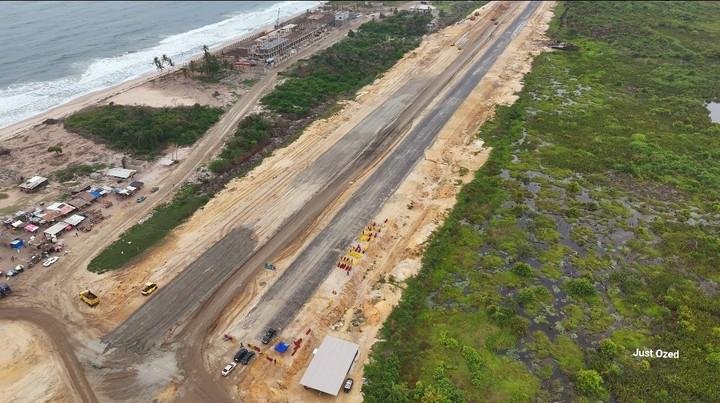
There is something fundamentally wrong when a country can extract wealth from a community for decades and depend on that wealth to finance national development, yet struggle to provide the community with basic infrastructure.
It becomes even more troubling when a major highway, presented as a pathway to economic transformation, raises fears that some of the very communities it was expected to serve may be left behind.
That is the concern surrounding the Lagos-Calabar Coastal Highway, particularly the route through Ondo and Delta states.
For the Itsekiri, Ilaje and Ikale, this is not simply a disagreement over where a road should pass. It is a question of inclusion, fairness and the credibility of government promises. It is also a test of whether Nigeria’s development policy can rise above political calculations and deliver tangible benefits to communities that have long felt neglected.
President Bola Ahmed Tinubu’s administration must understand why this issue is generating such strong feelings along the coast.
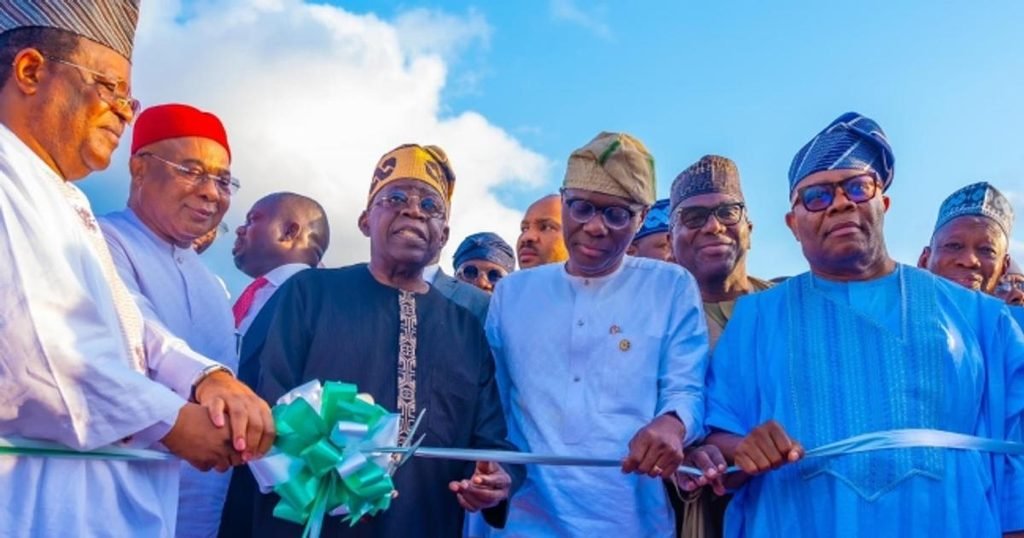
President Bola Ahmed Tinubu’s administration has made the Lagos-Calabar Coastal Highway one of its major infrastructure projects.
What is the Lagos-Calabar Coastal Highway meant to achieve?
A road is never just a strip of asphalt.
Where it passes can determine who gains access to markets, who attracts investment, where businesses emerge, how quickly patients reach hospitals and whether children can travel to school without enduring the daily risks of difficult terrain and waterways.
For isolated riverine communities, the difference between a road that reaches them and one that passes far away can be the difference between opportunity and continued hardship.
That is why the questions surrounding the Lagos-Calabar Coastal Highway route deserve more than political assurances.
What, exactly, is the highway meant to achieve?
The original appeal of the project was compelling: improve connectivity along Nigeria’s southern coastline, stimulate economic activity, strengthen transport links and open up areas whose geography has historically made development difficult.
The project was presented as an opportunity to connect economic centres and create new possibilities for communities along the coast.
For residents of Ondo and Delta states, it offered hope that decades of inadequate road infrastructure might finally give way to a new development reality.
Recent statements from Works Minister David Umahi, however, have generated renewed debate over how the highway will proceed through parts of the Niger Delta. The minister initially said President Tinubu had directed that parts of the corridor should use the existing East-West Road rather than involve a completely new alignment. The Federal Ministry of Works subsequently clarified that the East-West Road reconstruction is an additional project and maintained that the 750-kilometre coastal highway remains intact.
That clarification matters.
But it does not eliminate the need for detailed public information about the affected sections.
The questions remain: What is the approved alignment? What has changed from earlier plans? Which sections have been redesigned, and why? What are the comparative costs of the alternatives? And, most importantly, how will the communities that expected to benefit from the highway be connected to the final network?
These are reasonable questions, not acts of political sabotage.
The Niger Delta cannot remain a place of extraction without development

Riverine communities in Ondo and Delta states have raised concerns about access to the Lagos-Calabar Coastal Highway and the infrastructure benefits it is expected to deliver.
There is a painful contradiction at the heart of the Niger Delta’s relationship with Nigeria.
The region has contributed enormously to the country’s oil and gas wealth. Its resources sustain public revenue, support national budgets and help finance development across the federation.
Yet many communities within the region continue to struggle with poor roads, inadequate healthcare, unreliable access to essential services and environmental degradation.
For many riverine settlements, a canoe remains more than a means of transportation.
It is the route to school, the journey to the hospital and, sometimes, the only available means of transporting a deceased family member to a place of burial.
Imagine a woman in labour who must depend on a boat to reach medical care.
Consider a child whose journey to school is determined by the availability of a canoe, the weather and the condition of the waterways.
Think of the family whose access to a market, emergency service or new economic opportunity depends on a transport system that has barely changed in decades.
These are not abstract development statistics.
They are the everyday realities behind the demand for better infrastructure.
For the Ilaje communities of Ondo State, concerns have been raised about the reported exclusion of settlements along the coastline, including Ugbonla, Awoye, Ilepete and Ikorigho.
In Delta State, the Itsekiri have raised concerns about the future of the Koko-Ogheye corridor, Warri and other coastal settlements whose economic prospects depend heavily on improved connectivity.
Ilaje and Itsekiri leaders have publicly opposed what they describe as a move away from the original coastal alignment and have called on the Federal Government to maintain meaningful access for coastal communities.
These concerns deserve a serious response.
If a community was expected to benefit directly from a major infrastructure project, the government should explain whether that commitment remains in the final design.
If an alternative route is necessary, the government should identify what will be done to ensure that affected populations are not simply left to fend for themselves.
National development cannot mean that the benefits of public investment are concentrated in places that already enjoy better infrastructure while economically important but underserved communities continue to wait.
The people of the coast are not asking for charity.
They are asking for a fair opportunity to participate in Nigeria’s economic progress.
Engineering efficiency must not become an excuse for social exclusion
Let us be clear: a coastal highway does not have to run continuously along the water’s edge to qualify as a coastal transport corridor.
Modern highways must respond to terrain, environmental considerations, safety, cost and connections to existing transport networks.
An inland deviation or integration with an existing road may be justified in some circumstances.
The question is whether the decision is supported by credible evidence and whether it preserves the project’s wider development objectives.
This is where the government must be careful.
A route that is cheaper to build may not necessarily deliver the greatest social and economic value.
Conversely, a route that passes through more communities is not automatically the best engineering option if its construction creates disproportionate costs or environmental risks.
The proper assessment must consider both.
The government should publish comparative evaluations of the alternatives, showing construction costs, expected journey times, bridge requirements, environmental implications, maintenance obligations and the communities served.
It should distinguish settlements directly connected to the highway from those that would depend on feeder roads, waterways or other transport links.
If the original alignment is technically impracticable in particular sections, explain why.
If the revised alignment offers better value, demonstrate it.
If additional access roads are required to protect the development interests of affected communities, identify them, cost them and provide a delivery timetable.
What should not happen is for communities to be left guessing about their future while officials exchange explanations through the media.
A project of this magnitude demands a higher standard of communication and accountability.
Who changed the blueprint, and what informed the decision?
This controversy also raises a broader question about public administration.
When a major infrastructure project undergoes a significant change, Nigerians are entitled to know what was approved, what was revised, when the revision occurred and which authorities authorised it.
The Lagos-Calabar Coastal Highway is a public project with enormous financial implications. Its planning and execution should therefore be accompanied by accessible documentation and appropriate legislative oversight.
The Federal Government should make the original and current route maps available for public examination.
It should explain the technical and financial basis for significant changes and disclose the relevant environmental and socioeconomic assessments.
These documents would help separate legitimate engineering decisions from political speculation.
They would also protect the government itself.
When information is withheld or explanations appear inconsistent, suspicion fills the vacuum. Communities begin to interpret technical decisions through the lens of their historical experiences, while political opponents find opportunities to portray every unanswered question as evidence of deliberate exclusion.
Transparency is therefore not a concession to critics.
It is an instrument of good governance.
The concerns surrounding procurement, project costs and environmental assessments should likewise be addressed through the publication of relevant records in accordance with applicable laws and disclosure requirements.
Allegations of irregularity should not be treated as established facts without evidence, but neither should the public be expected to dismiss them without satisfactory explanations.
The government has an opportunity to replace controversy with verifiable information.
It should take it.
The political consequences of neglecting the coast
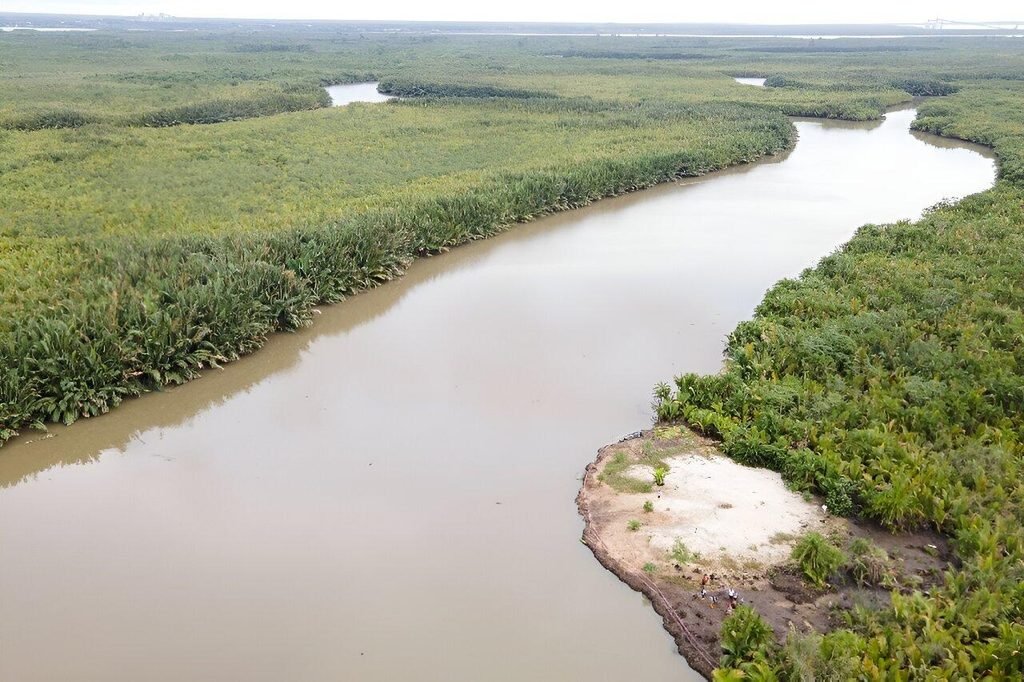
The Niger Delta’s mangroves, wetlands and waterways present important environmental considerations for major infrastructure projects.
The controversy carries political implications, but the demand for equitable development should not be reduced to electoral calculations.
Ondo and Delta are not merely dots on a political map.
Their communities have economic interests, development priorities and legitimate expectations of government. Those expectations do not disappear because an administration faces competing infrastructure demands or because affected communities have different political affiliations.
Nor should support for a government be mistaken for permission to overlook its shortcomings.
The Itsekiri, Ilaje and Ikale people must be able to raise legitimate concerns without being dismissed as disloyal, unreasonable or politically motivated.
Their leaders, traditional institutions, elected representatives and community organisations have a responsibility to engage the government firmly, peacefully and constructively.
The 3Is Alliance provides an opportunity for these communities to coordinate their demands and speak with a stronger collective voice.
That voice should insist on clear documentation, meaningful consultation and measurable commitments.
It should also recognise that the rehabilitation of the East-West Road and the construction of the Lagos-Calabar Coastal Highway need not be competing priorities.
Both can serve Nigeria’s interests if properly planned and funded.
The real danger is not that two important roads are being considered.
It is that confusion over their respective purposes could undermine public confidence and leave affected communities uncertain about which promises will actually be delivered.
President Tinubu should ensure that the Ministry of Works provides a coherent, evidence-based account of the project’s future alignment.
The minister’s public explanations should reinforce confidence in the administration’s infrastructure programme, not deepen uncertainty.
A highway must be measured by the people it connects
There is a tendency in Nigeria to celebrate infrastructure by the size of its budget, the number of kilometres announced or the grandeur of the original design.
Those things matter.
But they are not the ultimate measure of success.
A road’s real value lies in what it makes possible.
Can a farmer move produce to market more cheaply?
Can a business reach new customers?
Can a student travel safely?
Can a patient reach medical care faster?
Can a previously isolated community attract investment and create jobs?
And, in the case of the Lagos-Calabar Coastal Highway, will the people living along the coast enjoy meaningful access to the transport corridor whose name invokes their geography?
The answers should guide the project.
The government must also take the environmental realities of the coastline seriously.
Mangroves, wetlands, fishing livelihoods, coastal erosion and flooding require careful planning.
The objective should not be to force a road through environmentally sensitive terrain at any cost, but to find a technically sound solution that balances environmental protection, financial responsibility and community access.
That is precisely why transparent feasibility studies and environmental assessments are indispensable.
The people of the coast deserve infrastructure that lasts, not a grand project that fails to account for the land on which it is built.
They deserve development that respects their environment while opening up opportunities for their children.
Above all, they deserve to know where they stand.
Tinubu must protect the coastal vision
President Tinubu has an opportunity to turn this controversy into a demonstration of responsible leadership.
He should direct the relevant authorities to publish the approved alignment and explain any significant changes.
He should ensure that affected communities are consulted and that the government identifies the transport links through which they will benefit.
The National Assembly should exercise its oversight responsibilities, while traditional rulers, governors and representatives of affected constituencies should press for clear commitments rather than settle for general assurances.
Where the evidence supports restoration of the original coastal alignment, the government should seriously consider it.
Where engineering constraints make that impossible, credible alternatives must be provided and their delivery monitored.
The people of the coast should not have to choose between the reconstruction of an important existing highway and the construction of a new coastal corridor.
Nor should they be expected to accept that a project intended to promote connectivity can leave their communities without a clear route to its benefits.
Nigeria needs roads that connect, not projects that deepen old grievances.
The Lagos-Calabar Coastal Highway must remain a national development project in substance, not merely in name.
Its success should be measured not only by the distance covered between Lagos and Calabar, but also by the opportunities it creates for the people whose communities lie along the coast.
For the Itsekiri, Ilaje and Ikale, the demand is straightforward:
Fairness. Transparency. Meaningful inclusion.
Show us the approved route.
Explain the changes.
Publish the evidence.
Identify the communities to be served.
Provide a credible timetable.
And then build what has been promised.
A coastal highway must not lose sight of the coastal people.
By Oregbemi Martins Moren
Oregbemi Martins Moren is a Nigerian writer, public affairs commentator and development advocate focused on politics, governance, regional equity and socioeconomic development. His work explores public policy, accountability and the realities of underserved communities, using informed public discourse to promote inclusion and meaningful change.
