

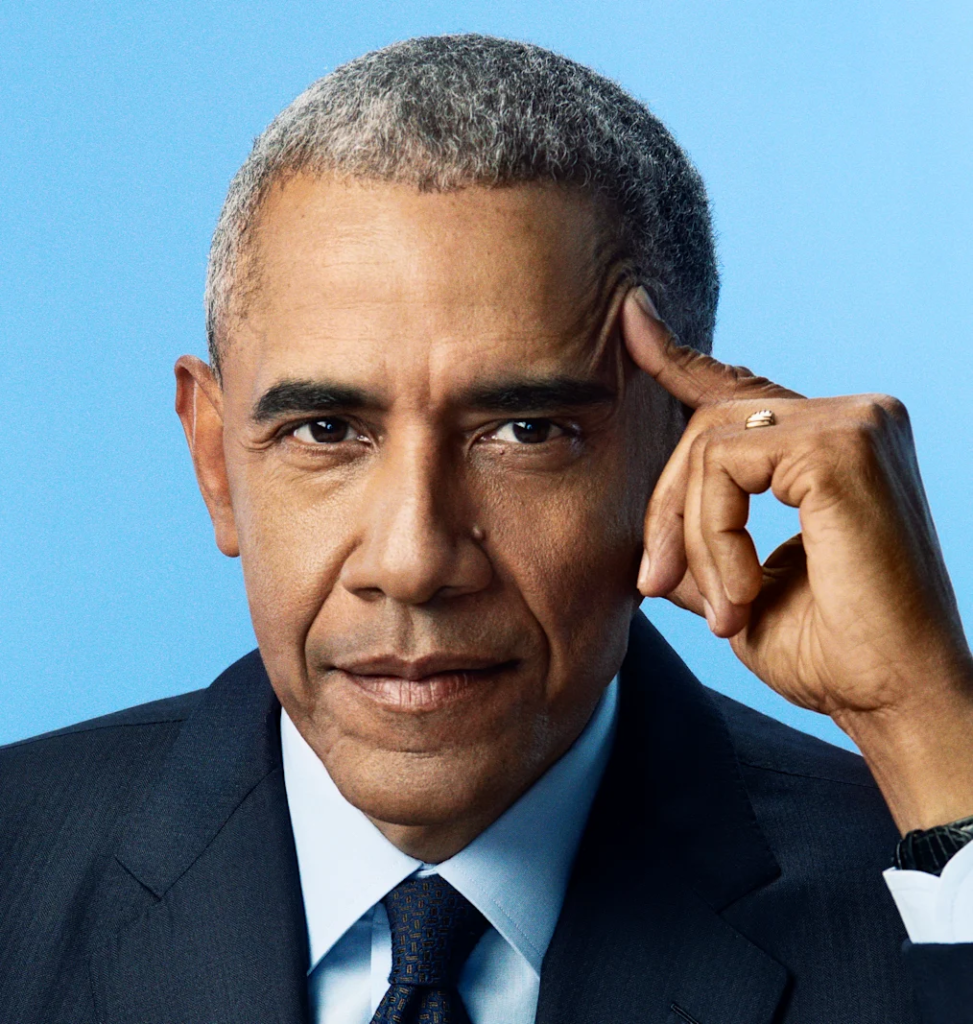
Former U.S. President Barack Obama urged Americans to reject political division and recommit themselves to democracy on Thursday as he officially opened the Obama Presidential Center, describing the sprawling campus as a place where future generations would be inspired to tackle the country’s most pressing challenges.
Speaking before thousands of supporters, community leaders, elected officials and invited guests on Chicago’s South Side, Obama said the presidential center was intended to be more than a monument to his presidency, calling it “a living place” dedicated to civic participation, public service and leadership.
“Democracy is not something we inherit once and keep forever,” Obama said during the ceremony. “It is something each generation must nurture, defend and strengthen. This center exists because we believe ordinary people, working together, can continue the unfinished work of building a more perfect union.”
The opening of the Obama Presidential Center marked the culmination of nearly a decade of planning and construction following Obama’s departure from the White House in 2017. Situated in historic Jackson Park near Lake Michigan, the campus includes a museum chronicling Obama’s presidency, a public library operated in partnership with the Chicago Public Library, an athletic facility, an auditorium, outdoor public spaces and programs focused on youth leadership and civic education.
Former First Lady Michelle Obama, a Chicago native, said the center reflected the city’s resilience and diversity while remaining rooted in the community where she and her husband began their careers.
“This is not simply about preserving history,” she said. “It’s about creating opportunities for young people to imagine themselves as leaders and giving them the tools to turn those dreams into action.”
Among those attending the ceremony were former Presidents Bill Clinton, George W. Bush and Joe Biden, as well as former Vice President Kamala Harris, Illinois Governor J.B. Pritzker, Chicago Mayor Brandon Johnson, members of Congress, civil rights leaders, business executives and representatives of community organizations. Musical performances by Stevie Wonder, Bruce Springsteen and Jennifer Hudson punctuated the celebration.
The centerpiece of the campus is a museum featuring interactive exhibits that trace Obama’s journey from his early years through his rise in Illinois politics and his two terms as the nation’s first Black president. Displays examine major moments of his administration, including the passage of the Affordable Care Act, the response to the global financial crisis, the operation that killed al Qaeda leader Osama bin Laden, the legalization of same-sex marriage during his presidency and international efforts to combat climate change.
Visitors can also explore reconstructed White House spaces, multimedia presentations, original documents, campaign memorabilia and exhibits encouraging participation in community organizing and public service.
Obama acknowledged the increasingly polarized political climate in the United States, saying disagreement was inevitable in a democracy but warning against allowing partisan conflict to erode trust in democratic institutions.
“We don’t have to agree on everything,” Obama said. “But we do have to believe that our fellow citizens deserve to be heard, that facts matter, and that our democracy is strongest when everyone has a seat at the table.”
The center, developed by the Obama Foundation, is expected to become one of Chicago’s leading cultural attractions, drawing visitors from around the world while serving as a venue for educational programs, leadership training, policy discussions and community events.
Supporters have hailed the project as a major investment in the city’s South Side, predicting it will create jobs, attract tourism and stimulate economic development through new businesses and infrastructure improvements.
The project has also faced criticism over its impact on Jackson Park, a historic landscape designed in part by Frederick Law Olmsted. Environmental groups and preservation advocates challenged aspects of the development in court, arguing it would alter public green space. Those legal challenges were ultimately unsuccessful, allowing construction to proceed.
Obama addressed the debate indirectly, saying the foundation had worked closely with residents and city officials to ensure the center would remain accessible and beneficial to surrounding neighborhoods.
“We wanted this to belong to the community,” he said. “We wanted children growing up just blocks away to see this place and understand that history isn’t made by extraordinary people alone. It’s made by ordinary citizens who choose to get involved.”
The opening comes as the United States prepares for another contentious election season, with political polarization, misinformation and declining public trust in institutions continuing to dominate national debate. Obama did not endorse any candidates during his speech but repeatedly emphasized the importance of voting, volunteering and engaging respectfully with people holding different views.
The Obama Presidential Center opens to the general public on Friday, with visitors able to access permanent exhibitions, educational programming and community spaces designed to encourage dialogue on democracy, citizenship and public leadership.
For Obama, whose political career began as a community organizer on Chicago’s South Side, the center represents both a reflection on his presidency and an investment in what he described as “the next generation of citizens who will write America’s future.”
