

10 SHOCKING NIGERIAN MURDERS STILL WITHOUT JUSTICE AFTER 30 YEARS
By Austin Manekator
For more than three decades, Nigeria has faced a troubling pattern: prominent citizens murdered under mysterious or politically charged circumstances, followed by failed investigations and collapsed prosecutions. These cases span military and civilian governments, different regions, and various professions—journalists, politicians, judges, lawyers, and religious leaders.
Despite public outrage and official promises, justice has remained elusive.
- Dele Giwa (1986)
Dele Giwa, founding editor of Newswatch magazine, was one of Nigeria’s boldest investigative journalists. On October 19, 1986, he was killed by a parcel bomb delivered to his home in Ikeja.
The murder sent shockwaves across Africa. It marked the first known assassination of a journalist by mail bomb on the continent. Suspicion fell heavily on senior figures within the military government at the time, as Newswatch had published explosive reports on corruption and power struggles.
Multiple probes, including a judicial panel, failed to produce charges. Court cases stalled. Key witnesses vanished. Nearly 40 years later, Giwa’s murder remains perhaps Nigeria’s most powerful symbol of silenced truth.
- Chief Alfred Rewane (1995)
Chief Alfred Rewane was a billionaire businessman and a key financier of NADECO, the pro-democracy movement opposing military dictatorship after the annulment of the June 12, 1993 election. On October 6, 1995, gunmen disguised as police officers gained access to his Ikeja residence and shot him at close range.
Authorities initially claimed the killing was a robbery. Later investigations suggested a politically motivated operation. Several suspects were arrested, tried, and even convicted by a military tribunal. However, after Nigeria returned to democracy, appellate courts overturned the convictions, citing weak evidence and procedural flaws.
Three decades later, no one has been conclusively held accountable for his murder.
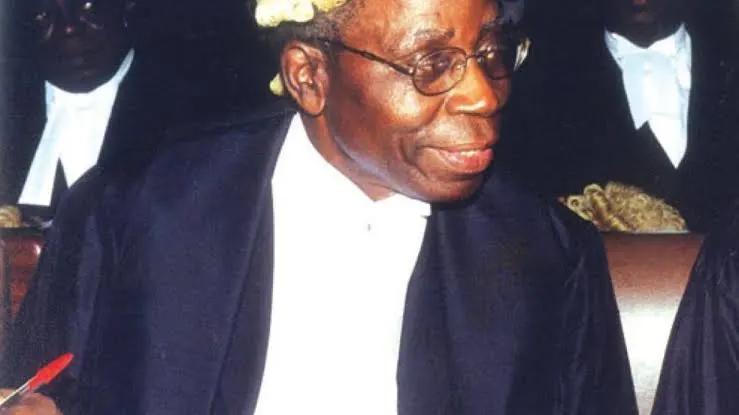
- Chief Bola Ige (2001)
Chief Bola Ige was a former governor, respected legal mind, and Nigeria’s Attorney General and Minister of Justice. On December 23, 2001, armed men entered his bedroom in Ibadan and shot him dead.
Given his political stature, the murder was expected to be thoroughly investigated. Several high-ranking political figures were arrested over the years and charged. However, prosecutions repeatedly collapsed due to inconsistencies in witness testimony and prosecutorial incompetence.
Despite multiple administrations promising closure, Bola Ige’s killers were never identified or convicted.
- Chief Barnabas Igwe and Abigail Igwe (2002)
Chief Barnabas Igwe, Chairman of the Nigerian Bar Association (Onitsha branch), and his wife Abigail were stopped at a checkpoint on September 1, 2002, while returning from church. Gunmen executed both at close range.
The murder of a senior lawyer and his wife shocked the legal community and raised fears about targeted attacks on voices advocating justice. Investigations dragged on for years, with suspects arrested, released, and rearrested.
Ultimately, the courts discharged all defendants for lack of credible evidence. The case remains unsolved.
- Chief Aminasori Dikibo (2004)
Chief Aminasori Dikibo was a powerful PDP chieftain and National Vice Chairman (South-South). On February 6, 2004, he stopped along the Asaba–Owerri road to change a flat tire when gunmen approached and shot him multiple times.
Political rivalry was immediately suspected, especially given tensions within the ruling party. Several suspects were arrested, including party insiders. Yet, investigations were poorly coordinated, evidence was weak, and cases collapsed in court.
No conviction ever followed.
- Engineer Funsho Williams (2006)
Funsho Williams was a leading contender in the Lagos governorship race and a major opposition figure. On July 27, 2006, he was found strangled in his Ikoyi home.
Given the political climate, many believed the killing was not a simple burglary. His domestic staff were arrested and prosecuted, but the courts ruled that the prosecution failed to establish motive or link them conclusively to the murder.
With suspects cleared and no further arrests, the case effectively went cold.
- Jesse Aruku (2008)
Jesse Aruku was a Niger Delta political figure and businessman navigating a period of militant unrest and political instability in Rivers State. In July 2008, he was killed by unknown gunmen.
The killing was widely linked to local power struggles and factional violence. Despite public pressure, no arrests led to prosecution. As with many Niger Delta killings at the time, the case disappeared into silence.
- Justice Simeon Ellah (2014)
Justice Simeon Ellah was a High Court judge in Borno State, presiding over sensitive cases during a period of intense insurgency. On September 1, 2014, gunmen attacked him at his residence in Maiduguri and shot him dead.
Although Boko Haram was suspected, no group officially claimed responsibility. No confirmed arrests were made, and no trial followed. The murder raised serious concerns about judicial security in conflict zones.
- Imam Musa Dato (2016)
Imam Musa Dato was a respected Islamic cleric in Maiduguri known for preaching against violent extremism. On June 9, 2016, he was assassinated after prayers.
His killing was widely believed to be a targeted attempt to silence moderate religious voices opposing terrorism. While Boko Haram was suspected, authorities made no confirmed arrests, and no prosecutions followed.
The murder remains unresolved.
- Other Prominent Unresolved Political and Civic Killings
Beyond these named cases, Nigeria has witnessed dozens of high-profile assassinations—traditional rulers, activists, election officials, and community leaders—whose cases never reached court or ended without convictions. These forgotten victims are part of a larger pattern of impunity.
Across these cases, familiar problems appear: compromised crime scenes, lack of forensic capacity, intimidated witnesses, political interference, slow trials, and weak prosecution. Cases drag on until public attention fades, allowing suspects to walk free without factual determination of guilt or innocence.
Each unresolved murder erodes public trust, encourages political violence, and teaches criminals that power offers protection. Families live without closure, and justice becomes a slogan rather than a reality.
Until Nigeria reforms its investigative institutions, protects witnesses, strengthens prosecution, and insulates justice from politics, these murders will remain open wounds. Accountability is not just about the past—it is essential for the country’s future.
Justice delayed, in these cases, has truly become justice denied.
