

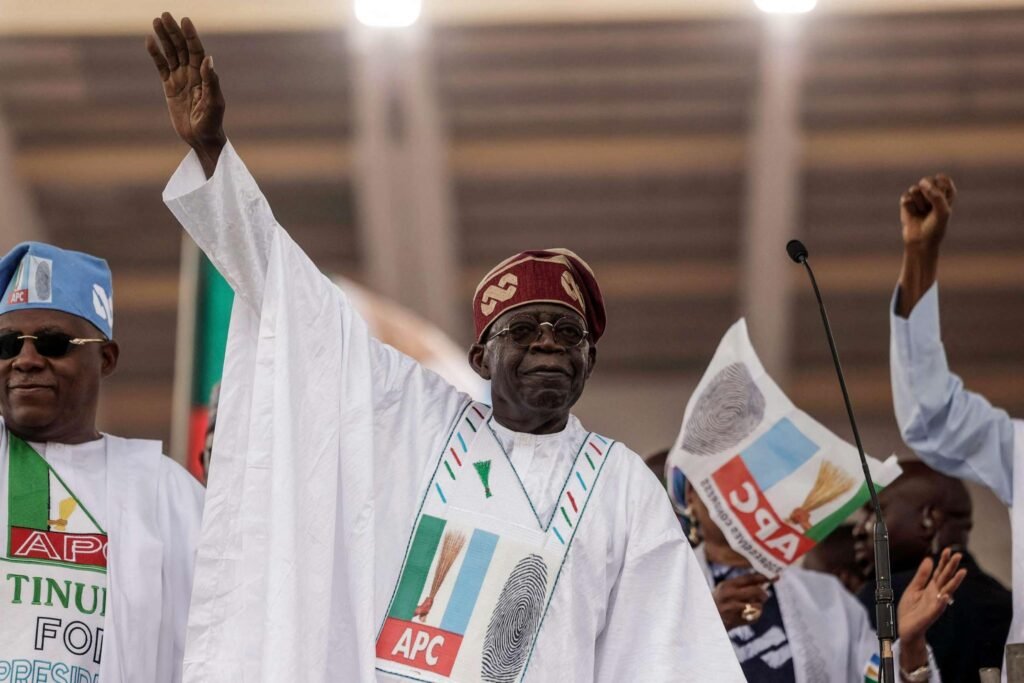
As the 2027 elections draw nearer, Nigeria’s political landscape is becoming increasingly charged, with the opposition deploying every available strategy to dislodge the ruling All Progressives Congress (APC) and President Bola Ahmed Tinubu.
Ultimately, however, the Nigerian electorate will decide. Come January 16, 2027, Nigerians will speak through their votes. And if the realities on the ground are anything to go by, President Tinubu is well positioned for a resounding victory.
The Opposition’s Struggle to Challenge Tinubu in 2027 Elections
Sadly, instead of presenting a formidable alternative, the opposition is recycling the same failed strategies, time-worn and legally-defeated propaganda, and rhetoric deployed in 2023. Rather than offering Nigerians credible manifestos and practical solutions, its leading figures have focused largely on attacking the administration and exploiting the temporary pain caused by necessary reforms.
That approach exposes the opposition’s greatest weakness: it has no convincing alternative to the difficult but necessary choices President Tinubu has made.
Atiku, Peter Obi and the Nigerian Opposition
Leading opposition figures, including perennial presidential contender Alhaji Atiku Abubakar and Mr Peter Obi, Atiku’s running mate in the 2019 presidential election, appear trapped in a political maze. Their frequent movement across political platforms has also raised serious ethical questions and exposes their lack of ideological consistency and political direction.
On issues ranging from fuel subsidy removal and economic reforms to the floating of the naira and the proposed creation of state police, the opposition has failed to present alternatives compelling enough to displace the Tinubu agenda.
Indeed, Atiku and Obi have, at different times, expressed conflicting positions on some of these major reforms. Their shifting positions make it difficult for Nigerians to identify a coherent alternative programme.
President Tinubu, by contrast, has demonstrated the political courage to make decisions that previous administrations avoided for decades.
Tinubu’s Economic Reforms and the Opposition’s Alternative
The removal of the fuel subsidy was painful, but continuing to spend scarce public resources sustaining an unsustainable and fraud-fraught subsidy regime was not a viable option. The same applies to the foreign-exchange reforms and other difficult economic decisions taken by the administration.
These reforms have imposed hardship, but they are beginning to correct fundamental distortions in the Nigerian economy.
What Tinubu Inherited in May 2023
Before May 29, 2023, Nigeria was burdened by an unsustainable subsidy regime, severe foreign-exchange distortions, declining investor confidence, mounting fiscal pressures and growing difficulties in meeting financial obligations. Several states (28) struggled to pay salaries, while the Federal Government continued borrowing to sustain a system that was increasingly impossible to maintain.
The Tinubu administration confronted these problems instead of postponing them.
Today, states are generating more revenue and are better positioned to meet their obligations. Infrastructure spending has increased, while investment in healthcare, education and other sectors continues across the country.
Tinubu’s Economic Reforms and Investor Confidence
More importantly, investor confidence is returning. International financial institutions (World Bank and IMF) have taken note of the reforms, while major global companies are showing renewed interest in Nigeria. JP Morgan’s decision to deposit $38 million with the Central Bank of Nigeria as part of its bid for a banking licence is a significant signal of renewed confidence in the Nigerian financial system.
Multinational companies are also returning with substantial investments. Dutch energy giant Shell, which had scaled back some of its Nigerian operations, has continued to make significant investments in the country. These developments are important because foreign investment brings not only capital but also jobs, technology and opportunities for young Nigerians.
Have Nigerians forgotten so soon?
President Tinubu inherited a failing country, but did not go about complaining about his predecessor. He inherited both the liabilities and opportunities of the Nigerian state and chose to act.
Tinubu’s Infrastructure Projects Across Nigeria
He has also demonstrated the political will to pursue major infrastructure projects that previous administrations discussed for years without delivering. The Lagos-Calabar Coastal Highway and the Badagry-Maiduguri Super Highway are examples of ambitious projects capable of transforming transportation, trade and economic activity across the country. Other massive road projects are springing up and going on across the six geopolitical zones of the country.
These projects, alongside the administration’s economic reforms, represent a long-term attempt to reposition Nigeria rather than merely manage its immediate problems.
A successful country requires a stable economy, durable infrastructure, strong institutions and productive human capital. President Tinubu has placed these fundamentals at the centre of his administration’s agenda.
Why Tinubu’s Reforms Need Time
Nigeria is not yet out of the woods, and pretending otherwise would be dishonest. But the answer to temporary hardship cannot be a return to the failed policies that created the problems in the first place.
Great nations are not built overnight.
Singapore spent decades implementing economic and infrastructure reforms before becoming the prosperous nation it is today. China has similarly spent decades transforming its economy. Nigeria must be prepared to make the same long-term commitment.
What Is the Opposition’s Alternative for Nigeria?
The opposition should therefore tell Nigerians what it intends to do differently, rather than simply telling them what is wrong with Tinubu’s government.
Elections are not won through anger, emotional blackmail or political theatrics. They are won through hard work, a clear vision, credible policies and the ability to convince voters that the alternative is better. Atiku, Obi and the other pretenders have not done so.
Why Tinubu Deserves a Second Term
President Tinubu has taken difficult decisions, started major projects and embarked on reforms that require time to deliver their full benefits. Abandoning that process now would amount to throwing away the foundation before the building is completed.
Nigeria has put its hands to the plough. It must not turn back.
The task before Nigerians in 2027 is therefore not merely to choose a president. It is to decide whether the country should continue on the path of economic reform, infrastructure development and institutional transformation or return to the policies that brought it to the brink.
President Bola Ahmed Tinubu deserves a second term to consolidate the reforms he has started and complete the work already underway.
The Nigerian economy is heavily pregnant with positive growth; it must not be aborted.
God bless Nigeria.
Olanrewaju Atere
Tamworth, United Kingdom
