

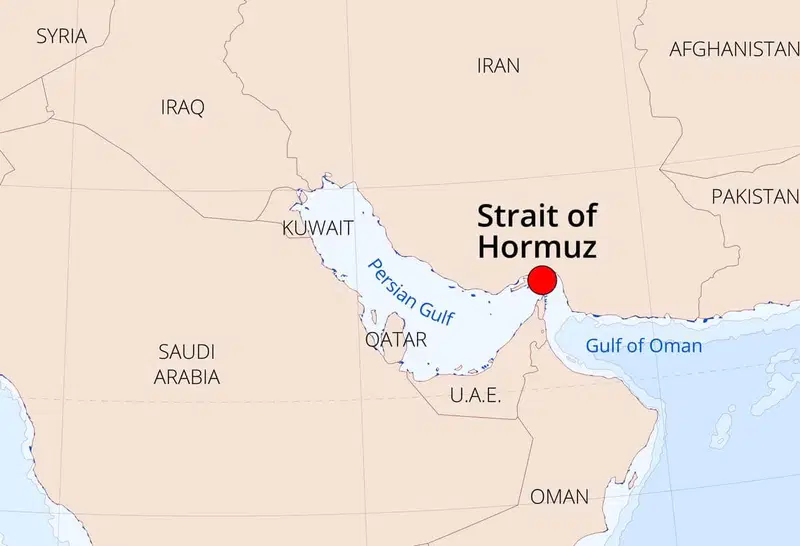
A commercial tanker was struck by a projectile in the Strait of Hormuz on Saturday, amid renewed military exchanges between Iran and the United States in the most serious escalation since both countries signed an interim peace agreement two weeks ago.
Britain’s United Kingdom Maritime Trade Operations (UKMTO) said the vessel sustained damage to its bridge, but all crew members were safe. The Joint Maritime Information Center also raised its maritime security threat level following the latest incidents.
The attack came two days after another cargo ship was targeted in the strategic waterway, raising fresh concerns over the safety of one of the world’s busiest oil shipping routes.
The renewed violence follows overnight U.S. strikes on Iranian targets, which Washington described as a response to an earlier Iranian attack in the Strait of Hormuz. Iran, however, said it launched strikes on targets linked to U.S. forces in retaliation for American airstrikes, with both sides accusing each other of violating the interim ceasefire agreement.
Iranian state television reported that the Revolutionary Guards fired what it described as “warning shots” at vessels using shipping channels not approved by Tehran, adding that some ships were now seeking Iranian permission before transiting the strait. Iranian authorities have not directly confirmed reports of attacks on specific commercial vessels.
The crisis has also spread across the Gulf. Bahrain, which hosts the U.S. Navy’s regional headquarters, accused Iran of carrying out a drone attack on its territory, calling it a violation of the peace agreement. The U.S. military had not issued an immediate response.
Meanwhile, tensions remain high along the Israel-Lebanon border despite a newly announced U.S.-brokered peace agreement. Lebanese state media reported an Israeli drone strike in the southern Nabatiyeh area on Saturday, while Hezbollah has continued to reject calls to disarm as long as Israeli troops remain in disputed areas.
Iranian officials accused Washington of breaching the peace memorandum by supporting regional allies and contributing to instability around the Strait of Hormuz. Tehran has also warned that any vessel failing to comply with its shipping directives would face decisive action.
U.S. Vice President JD Vance insisted Washington had honoured the ceasefire agreement and blamed Iran for the renewed hostilities.
“Iran signed a ceasefire agreement. We have honored it. If they have disagreements about how the memorandum is being applied, they can pick up the phone. But violence will be met with violence,” Vance said in a post on X.
The latest confrontation has renewed concerns over global energy supplies, as the Strait of Hormuz remains a vital route for international oil shipments. Although oil prices had fallen in recent days as shipping gradually resumed, the latest attacks threaten to undermine confidence in the security of the strategic waterway.
