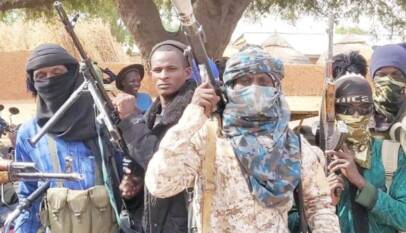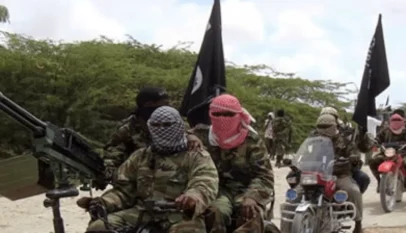


Borno State Governor, Babagana Zulum, has raised serious concerns about internal sabotage in Nigeria’s fight against terrorism, alleging that some military officers, politicians, and community members are acting as informants and collaborators for Boko Haram insurgents.
During a recent interview on News Central’s Breakfast Central, Governor Zulum expressed frustration over the presence of saboteurs within critical institutions. He pledged that his administration would take decisive and ruthless action against anyone undermining efforts to restore peace and stability in Borno State.
Zulum emphasised the importance of strengthening intelligence operations as a non-negotiable strategy in combating terrorism. He warned that the insurgency could persist indefinitely without confronting the embedded insiders within security agencies and political circles.
“There are informants and collaborators within the Nigerian Armed Forces, within politicians, and even among community members,” the governor said. “We will not hesitate to deal ruthlessly with anyone sabotaging our counter-insurgency efforts.”
According to Zulum, defeating Boko Haram requires more than just military operations. He stressed the importance of combining kinetic (military) and non-kinetic approaches, which include socio-political and economic reforms aimed at addressing the root causes of extremism.
“You cannot end insurgency through military force alone,” he explained. “We must focus on economic and political solutions. Among the over 300,000 so-called repentant insurgents, it’s likely that some may return to the bush if long-term strategies are not put in place.”
The governor criticised the lack of modern equipment available to Nigerian troops, warning that the insurgents now enjoy a technological advantage on the battlefield.
“Our soldiers are under-equipped,” Zulum lamented. “Boko Haram has better technology and firepower in many cases, which is unacceptable.”
Despite his criticism, Zulum commended the Nigerian Armed Forces for supporting peacebuilding efforts and the implementation of non-combat solutions in affected regions.
He also called on President Bola Tinubu to listen to credible military advisers and intelligence experts, urging him to avoid politicising insecurity.
“The President must prioritise ground-level intelligence,” he said. “Forest guards will be deployed immediately, and the President should listen to those who truly understand the dynamics of security, not political loyalists.”
Zulum concluded by calling for national unity and a more professional, strategic response to end the Boko Haram insurgency once and for all.