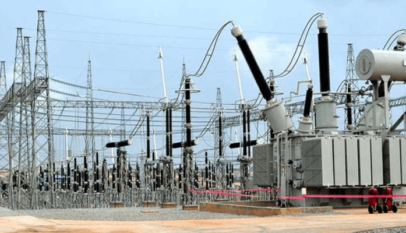


Nigeria’s national electricity grid has suffered another collapse, plunging several parts of the country into darkness, although restoration efforts are currently underway, according to updates from electricity distribution companies.
As of Monday afternoon, electricity supply across the country had dropped to minimal levels, with most distribution companies receiving little or no power. Data from the national grid at about 3:12 pm showed that only Ibadan and Abuja distribution companies were allocated limited loads of 30 megawatts and 20 megawatts, respectively, while other major DisCos, including Eko, Ikeja, Benin, Enugu, Jos, Kaduna, and Kano, recorded zero megawatts.
Several distribution companies confirmed the system disturbance. The Abuja Electricity Distribution Company said a disruption occurred on the national grid at about 2:02 pm, leading to power outages across its coverage areas. The company assured customers that it was working with relevant stakeholders to restore supply once the grid stabilises.
Eko Electricity Distribution Company, however, later informed customers that the national grid had been restored, adding that power supply to its feeders was being restored gradually.
As of the time of reporting, the Transmission Company of Nigeria had yet to issue an official statement on the latest grid collapse.
The incident marks another setback in Nigeria’s power sector and adds to a series of grid collapses recorded in 2025, despite repeated assurances by the Federal Government that measures are being taken to stabilize electricity supply nationwide.
In August, the Federal Government disclosed plans to secure a $238 million loan from the Japan International Cooperation Agency to expand and strengthen the national grid. The project, backed by a ₦19 billion counterpart funding approved by the use Federal Executive Council, is expected to deliver new transmission lines and substations, including over 200 kilometres of new 330kV and 132kV double-circuit lines and multiple substation expansions, aimed at improving grid reliability across the country.