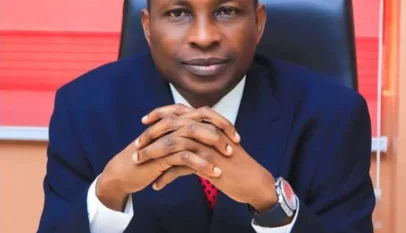


Photo: Abubakar Malami SAN
By Douglas Maha, Abuja
Nigeria’s former Attorney-General of the Federation, Abubakar Malami, is facing intensified scrutiny after the Economic and Financial Crimes Commission (EFCC) confiscated his international passport as part of a widening investigation into the whereabouts of $490 million in recovered Abacha funds.
Malami, who served as the country’s chief law officer for eight years under former President Muhammadu Buhari, was detained for several hours and released around 1am on Saturday under strict bail conditions. He is required to report to EFCC headquarters in Abuja every day for the next month, effectively restricting him from leaving the country.
An EFCC official familiar with the investigation, who asked not to be named because they were not authorised to speak publicly, said the agency’s focus is to determine how nearly half a billion dollars in repatriated loot—funds returned to Nigeria under international Mutual Legal Assistance Treaties (MLAT)—was handled during Malami’s time in office.
“We have not accused him of stealing money,” the official said. “But he must explain the whereabouts of the $490 million. That is one of the issues he has to clarify before our investigators. The volume of documents and interactions required means he cannot travel during this period.”
The EFCC says Malami may only leave Nigeria if the agency consents or a court specifically grants permission.
Malami: ‘Allegations fabricated’
Responding on X (formerly Twitter), Malami dismissed the allegations as “fabricated” and claimed the truth would “soon unfold”, but he did not comment on the seizure of his passport.
“I give glory to Allah for His divine intervention,” he wrote. “The engagement was successful, and I am eventually released while on an appointment for further engagement as the truth relating to the fabricated allegations continues to unfold.”
Malami’s powerful, controversial tenure
Malami is one of the most politically influential figures of the Buhari era. As Attorney-General, he controlled key levers of the justice system, oversaw sensitive corruption cases, and acted as custodian of high-profile international legal disputes—including those relating to recovered assets looted by former military leader General Sani Abacha.
His tenure was marked by a mixture of praise and criticism:
- He spearheaded several asset recovery drives, securing billions in stolen funds through cooperation with the US, UK, Switzerland and the UAE.
- He faced repeated questions over transparency, particularly regarding how recovered loot was allocated and disbursed.
- His office was involved in controversial decisions, including the withdrawal of high-profile corruption charges, the handling of the P&ID arbitration scandal, and the management of contracts awarded under emergency provisions.
- Civil society groups accused him of shielding political allies, a charge he repeatedly denied.
Questions around the management of recovered assets intensified during Buhari’s final years in office, especially as Nigeria announced multiple rounds of returned Abacha funds—often with limited public accounting.
Where is the money?
The $490m under investigation is believed to be part of a tranche repatriated during collaborative anti-corruption efforts between Nigeria and several foreign governments. Under MLAT agreements, recovered funds are expected to be transparently documented and directed to agreed public projects.
The EFCC has not disclosed when it believes the funds went missing or whether other officials will be questioned. “We will release our findings after a painstaking investigation,” the senior official said.
A test for Nigeria’s anti-corruption institutions
The case marks one of the most significant corruption-related investigations involving an ex–Attorney General in years, and will test the EFCC’s independence as well as the Nigerian government’s commitment to accountability.
Anti-corruption campaigners say the investigation highlights a persistent structural problem: Nigeria’s lack of a public, independently verifiable framework for tracking the final destination of recovered loot.
“This is exactly the kind of opacity that fuels mistrust in the anti-corruption system,” said a governance expert in Abuja. “Recovered funds are meant to rebuild public confidence—not disappear into bureaucratic shadows.”
For now, Malami’s daily reporting obligation ensures he will remain in Abuja as the probe unfolds. Whether the investigation leads to formal charges—or fades into the long list of unresolved corruption inquiries—may depend on what the documents, and Malami’s answers, eventually reveal.