

By Deborah Nnamdi
The Nigerian health sector is bracing for further disruption as nurses in federal health institutions embark on a seven-day nationwide warning strike starting from midnight, Tuesday, July 29, 2025. The industrial action follows the expiration of a 15-day ultimatum issued to the Federal Government by the National Association of Nigerian Nurses and Midwives (NANNM).
According to emerging reports, the strike will be total, with no skeletal services available. Nursing services are expected to be completely shut down in all federal health institutions, including teaching hospitals and Federal Medical Centres across the country.
A circular announcing the strike was sent to chairmen and secretaries of federal health institutions, instructing them to mobilize members to withdraw their services. The directive follows a resolution passed at an emergency meeting of the NANNM National Executive Council (NEC), held at the National Hospital, Abuja, on July 10, 2025.
The notice, signed by NANNM National Secretary, Comrade Enya Agatha Osinachi, reads in part:
“Following the decision taken by the National Executive Council during the Emergency Meeting held at National Hospital, Abuja on 10th July, 2025, and subsequent to the directive from the national headquarters, you are hereby directed to embark on a seven-day warning strike commencing from 12:00 midnight on Tuesday, 29th July, 2025.
This action follows the failure of the Federal Government of Nigeria and the Federal Ministry of Health to proactively address our concerns despite the 15-day ultimatum issued on Monday, 14th July, 2025.
The strike is to be total. There shall be no skeletal nursing services in any federal health institution nationwide.”
Earlier in the month, NANNM National Chairman, Comrade Morakinyo Rilwan, had voiced frustration over a recent review of allowances, which the union deemed inadequate. He stated that the government failed to respond meaningfully to nurses’ welfare concerns despite repeated warnings and deadlines.
The association criticized the new allowances as grossly insufficient, particularly for night and weekend shifts, and highlighted the inadequacy of call duty compensation. It emphasized that nurses routinely sacrifice personal time and are essential to emergency responses and continuity of care.
Among the union’s demands are: Creation of a dedicated Department of Nursing within the Federal Ministry of Health, upward review of shift duty and call allowances, special incentives for specialist nurses, safer, more conducive working conditions, and better-equipped hospitals to reduce reliance on medical tourism
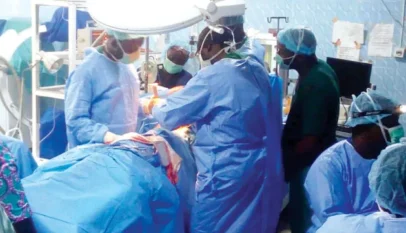
Given that nurses are responsible for the bulk of hospital-based care in Nigeria, there are growing concerns the strike could cripple key services including emergency response, surgeries, maternal care, and chronic disease management. Units such as intensive care and maternity wards are particularly vulnerable, raising fears of avoidable fatalities.
The warning strike also casts a spotlight on Nigeria’s deepening nursing crisis. Since 2019, over 75,000 nurses and midwives have reportedly emigrated in search of better working conditions abroad.