

By Didimoko A. Didimoko, with agency report
Governor Siminalayi Fubara of Rivers State is walking a tight rope after the Supreme Court of Nigeria ruling on Friday stopped the Central Bank of Nigeria and the Accountant General of the Federation from releasing the state’s allocation.
The ruling by a 5-man panel averred that the 2025 appropriation bill must be duly passed by the embattled Speaker of the Rivers State House of Assembly, Rt Hon Martins Amaehule and 26 others, who are supporters of former Governor Nyesom Wike.
The governor had presented the budget to four of the 31-member Assembly, who are loyal to him.
The Supreme Court, in its ruling on Friday, upheld the judgment that barred the CBN, and the Accountant General of the Federation from releasing statutory monthly allocations to Rivers State.
The apex court ordered the Hon. Martins Amaewhule-led faction of the Rivers State House of Assembly and other elected members of the House to forthwith resume sitting, unhindered.
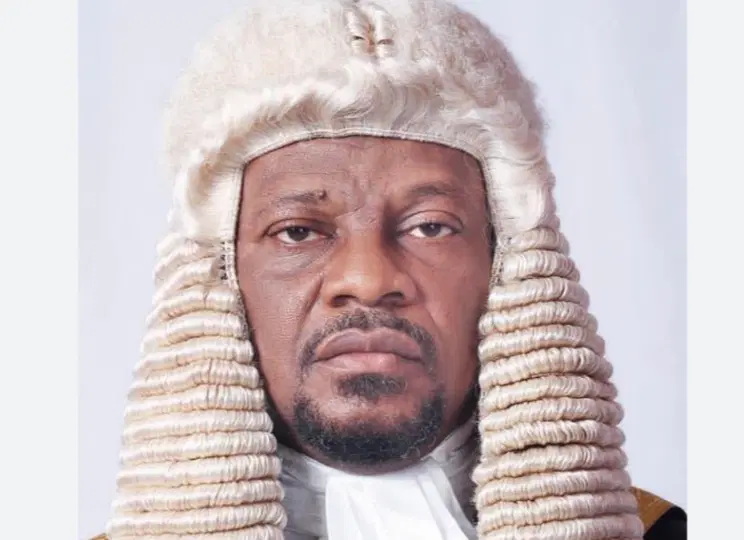
Rt. Hon. Martins Amaehule, Speaker, Rivers State House of Assembly
The Supreme Court criticized the Abuja Division of the Court of Appeal for overturning the initial order that halted the release of funds to Rivers State from the consolidated revenue. This action followed Governor Siminalaye Fubara’s failure to re-present the 2024 Appropriation Bill to the faction of the Rivers State House of Assembly led by Hon. Martins Amaewhule.
The Supreme Court ruled that, contrary to the decision of the appellate court, the Federal High Court in Abuja had proper jurisdiction to hear the suit filed by the 27 lawmakers from the Amaewhule-led faction. They had challenged the unauthorized withdrawal and expenditure of state funds without the requisite approval of the State Assembly.
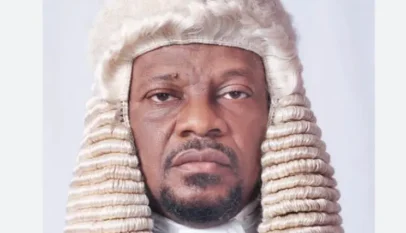
A five-member panel of the Supreme Court, in a lead judgment delivered by Justice Emmanuel Agim, found that the Court of Appeal had misunderstood the central issue in dispute by narrowly focusing on the consolidated revenue of Rivers State. The Supreme Court emphasized that the core issue was not merely the state’s revenue, but Governor Fubara’s refusal to comply with a standing court order mandating him to present the Appropriation Bill to the valid Assembly.
The apex court agreed with the Federal High Court’s position that the 27 lawmakers, who allegedly defected from the People’s Democratic Party (PDP) to the All Progressives Congress (APC), remained valid members of the Rivers Assembly. Their status will remain subject to the final determination of their legal standing.
The Supreme Court also rejected Governor Fubara’s argument that, due to the defection of the lawmakers, he was compelled to invoke the doctrine of necessity by presenting the Appropriation Bill solely to the five remaining members of the Assembly. The Court held that the doctrine of necessity could not be invoked to legitimize an unlawful act.
In its ruling, the Supreme Court accused Governor Fubara of undermining the functioning of the government out of fear of potential impeachment. As a result, the Court imposed a cost of N5 million against him.