


By Oghenekevwe Kofi, Ericsson LM, Lagos
In the face of Nigeria’s economic growth and diversification, one sector stands out as a catalyst for financial inclusion and economic transformation: digital finance. With millions of Nigerians previously underserved by traditional banks, mobile payments and fintech services are reshaping the nation’s economic landscape. They are expanding access to financial tools, bolstering old businesses and stimulating new business growth. In a country where mobile phone penetration is high, digital finance is playing a critical role in bridging the gap between the banked and unbanked populations.
The Importance of Financial Inclusion in Nigeria

Mr Wale Edun, Nigeria’s Minister of Finance/Coordinating Minister of the Economy
Financial inclusion refers to providing affordable and accessible financial services to every member of society, especially to those previously excluded, such as those in rural areas and economic environments deemed unviable by conventional financial institutions. This inclusion is key to lifting people out of poverty, enabling them to save, invest, and manage their finances more effectively, and more importantly, from the comfort of their homes, farms or stalls.
The World Bank consistently avers that countries with higher financial inclusion levels also see accelerated economic growth, reduced inequality, and greater poverty reduction.
In Nigeria, however, financial exclusion remains a significant challenge. The 2022 Access to Financial Services in Nigeria Survey reported that nearly 40% of adults were still financially excluded. This figure highlights an urgent need for innovative solutions, which is where mobile payments and fintech have shown immense promise.
Mobile Payments: Connecting the Unbanked
Mobile payment platforms have revolutionised the financial services landscape in Nigeria. With services like Paga, Flutterwave, and OPay, Nigerians can now perform transactions with their phones, bypassing the need for a traditional bank account. This is particularly beneficial in rural and underserved communities where banking infrastructure is limited or non-existent.
Mobile payments offer several advantages:
- Convenience: Mobile wallets allow users to send money, pay bills, and make purchases without the confines and comfort of their homes and travelling to physical banks.
- Affordability: With reduced transaction fees, mobile payments are accessible to low-income individuals who might otherwise be unable to afford banking services.
- Security: Mobile payment platforms use encryption and authentication technologies, making transactions safer than handling physical cash.
As a result, mobile payments are driving financial inclusion, enabling millions of Nigerians, and SMEs to participate in the formal economy and contribute to national growth.
Fintech: Driving Innovation and Economic Development
Beyond mobile payments, Nigeria’s fintech sector has rapidly expanded, with a focus on innovative solutions that address unique local challenges. Nigerian fintech firms have developed products catering to diverse financial needs, from savings and lending platforms to investment and insurance solutions. Startups like Paystack, Kuda, and Cowrywise are changing how Nigerians access financial services.
Key Contributions of Fintech to Nigeria’s Economy
- Employment Generation: The fintech sector has created thousands of jobs in Nigeria, especially among young tech professionals and entrepreneurs. As the sector grows, it continues to generate opportunities for skilled labour, bolstering Nigeria’s knowledge economy.
- Enhanced SME Growth: Fintech solutions enable small and medium-sized enterprises (SMEs) to access credit, process payments, and manage finances efficiently. By making it easier for SMEs to access financial services, fintech supports business growth, which, in turn, stimulates job creation and economic activity.
- Increased Investment: Nigeria’s fintech boom has attracted significant international investment. Global venture capitalists see Nigeria as a prime market for fintech innovation, which has brought in millions of dollars of investment. This capital inflow strengthens the economy and fuels further growth in the sector.
- Financial Literacy and Savings Culture: Fintech platforms are encouraging more Nigerians to save and invest through accessible digital tools. Apps like PiggyVest have created a savings culture among Nigerians, helping individuals build financial security.
Challenges Facing Mobile Payments and Fintech in Nigeria
Despite these advances, digital financial inclusion in Nigeria still faces challenges. Network infrastructure limitations, regulatory hurdles, and issues with internet connectivity in rural areas hinder mobile payment adoption. Additionally, cybersecurity risks threaten the reliability of digital finance platforms, making it essential for fintech companies to invest in robust security measures.
Moreover, fintech firms must navigate Nigeria’s complex regulatory environment, where the Central Bank of Nigeria (CBN) has set guidelines to ensure safe, ethical practices. While regulation is crucial, finding a balance between oversight and innovation is essential to allow fintech to thrive without stifling growth.
Future Prospects: Toward a Digitally Inclusive Economy
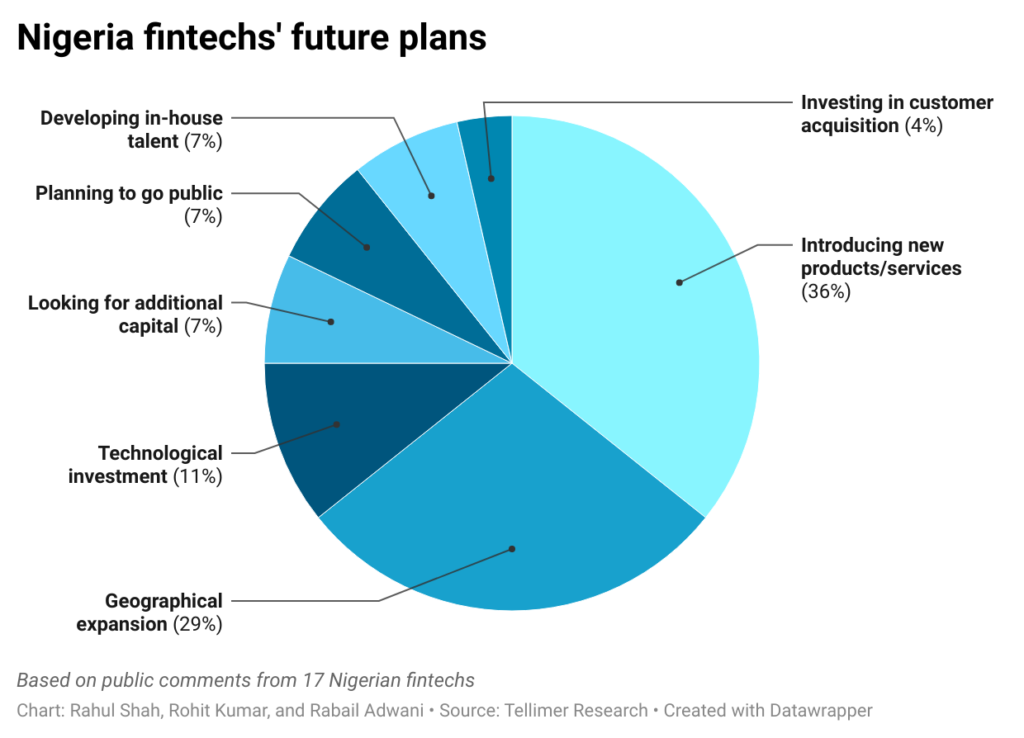
Above chat is a 2021 presentation by Tellmer, a data research and investment agency,
The future of digital financial inclusion in Nigeria looks promising. As mobile and internet penetration continues to increase, more Nigerians will gain access to mobile payments and fintech solutions. Furthermore, as digital literacy improves, so will the population’s ability to navigate and leverage these financial tools effectively.
The Nigerian government, in collaboration with the CBN and financial industry stakeholders, is working to create an environment conducive to digital financial inclusion. Initiatives like the National Financial Inclusion Strategy and the cashless policy are steps in the right direction to ensure that more Nigerians benefit from digital financial services.
In conclusion, digital financial inclusion through mobile payments and fintech is a powerful driver of economic growth and development in Nigeria. By providing accessible, affordable, and innovative financial services, these technologies are empowering Nigerians to participate in the economy, fostering entrepreneurship, and stimulating national growth. With continued investment, regulatory support, and technological advancements, digital finance will play an increasingly vital role in Nigeria’s journey toward a more inclusive and prosperous future.