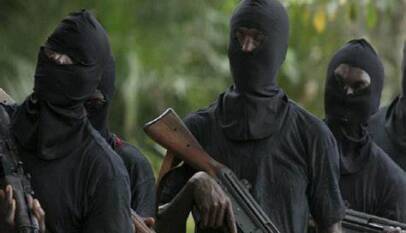

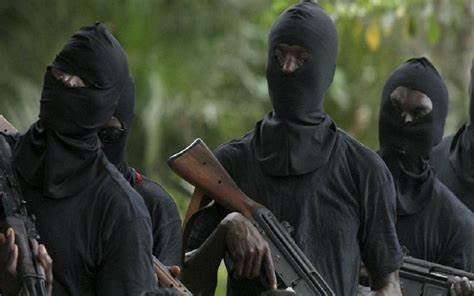
The Federal Government has formally classified kidnappers and violent armed groups as terrorists, marking a major escalation in Nigeria’s response to abductions, attacks on farmers, and violence against local communities.
The designation was announced on Monday by the Minister of Information, Mohammed Idris, during the federal government’s end-of-year press briefing in Abuja.
Under the new policy, mass kidnappings and rural attacks will no longer be treated as conventional crimes but will fall squarely within the framework of counterterrorism operations.
“Henceforth, any armed group or individual that kidnaps our children, attacks our farmers, and terrorizes our communities is officially classified and will be dealt with as a terrorist organisation. This is the declaration that Mr President has made,” Idris said.
He added that the government would no longer tolerate what he described as “ambiguous nomenclature” in addressing violent actors. “If you terrorise our people, whether you are a group or an individual, you are a terrorist and will be classified as such. There is no name hiding under this again,” he said.
The minister explained that the new classification would strengthen intelligence sharing and enhance operational coordination among security agencies, allowing for faster and more decisive responses to security threats.
He noted that improved inter-agency collaboration is already producing results, citing the arrest of two internationally wanted criminals in 2025 through joint security operations.
As part of efforts to protect vulnerable rural communities, Idris disclosed that trained and properly equipped forest guards are being deployed to forests and other remote areas commonly used as hideouts by criminal groups. He said the initiative combines surveillance, local intelligence gathering, and rapid-response operations.
According to him, the forest guard programme is aimed at disrupting criminal supply lines, dismantling camps, and providing protection and reassurance to farming communities affected by insecurity.
Highlighting recent successes, the minister said coordinated efforts between security agencies and intelligence services led to the capture of two of the world’s most wanted terrorists in 2025, including a senior leader of the Islamic State West Africa Province (ISWAP) operating in Nigeria.
He also referenced the arrest of Abu Barra, described as one of the most wanted terrorists on the African continent, noting that he had previously attracted a substantial bounty for his capture.
“As we speak today, this individual, together with his chief of staff, is undergoing trial and having their day in court. They will get justice that befits them,” Idris said.