
…NNPC launches investigation, but sources say it was sabotaged
By Douglas Maha, Abuja
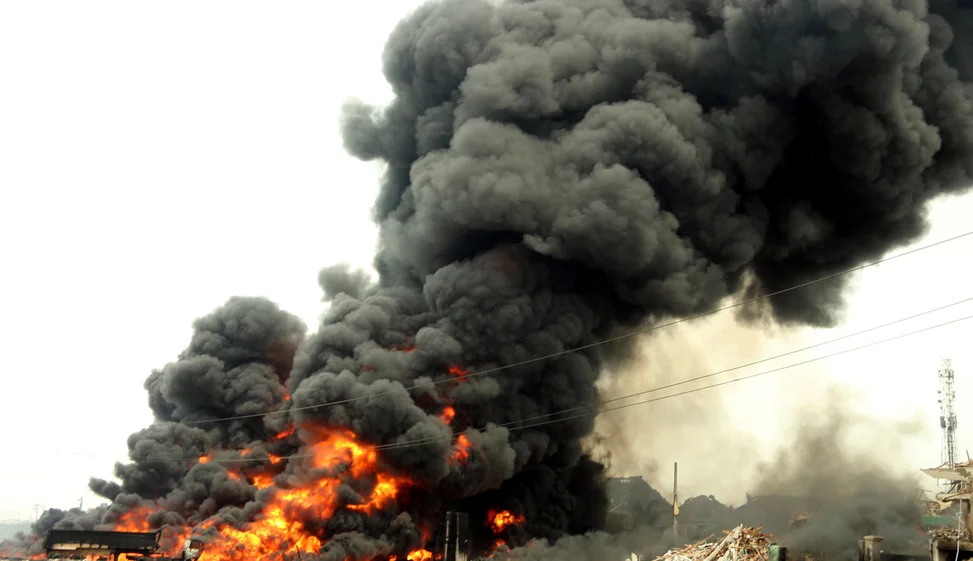
The Nigerian National Petroleum Company (NNPC) Limited has confirmed an explosion on the Escravos–Lagos pipeline system, a major national gas artery, disrupting gas supply operations after a rupture on Wednesday, December 10, 2025.
What caused the explosion was unclear at the time of the report, but there were concerns that it could be sabotage or due to aged equipment.
What Niger Daily News can confirm is that the blast occurred around 17:50 hours near Tebijor, Okpele, and Ikpopo communities in Gbaramatu Kingdom, Delta State, prompting an immediate shutdown of the affected segment and the deployment of emergency response teams.
Residents reported a loud explosion, followed by flames and strong vibrations felt across nearby riverine settlements.
In a statement issued Thursday by NNPC’s Chief Corporate Communications Officer, Andy Odeh, the company said early assessments showed a sudden pressure drop consistent with a loss of containment on the pipeline operated by NNPC Gas Infrastructure Company (NGIC).
He added that while the exact cause of the rupture is still unknown, investigators are examining possible factors, including third-party interference, corrosion, vandalism, and equipment fatigue — all recurrent risks on Nigeria’s aging energy infrastructure.
Odeh said the company is working with security agencies, community leaders, and environmental teams to contain the impact and monitor potential gas leaks or secondary hazards. No casualties had been officially confirmed as of Thursday evening, though NNPC said safety checks were underway in the affected communities, where some residents reportedly fled their homes out of fear of further explosions.
“NNPC Limited confirms an incident involving an explosion… Our priority at this time is the safety of nearby communities and the protection of the environment,” Odeh said, stressing that additional updates will be provided as investigations progress.
The Escravos–Lagos Pipeline System (ELPS), commissioned in 1989, transports gas from Chevron’s Escravos Gas Plant — which processes roughly 680 million cubic feet of gas per day — to power stations in the South-west, including Egbin, and also feeds the West African Gas Pipeline. The line is considered critical to Nigeria’s electricity stability, and disruptions often result in reduced power generation.
The latest incident adds to a growing list of pipeline breaches. In March 2025, an explosion on the Trans-Niger Pipeline in Bodo, Rivers State, ignited a major fire and temporarily halted crude oil flows to the Bonny export terminal. Analysts say recurring pipeline failures reflect the twin challenges of aging infrastructure and persistent sabotage.
Authorities say a full environmental impact assessment will follow once the site is secured.