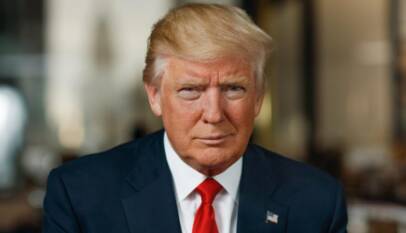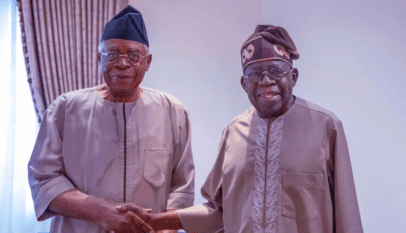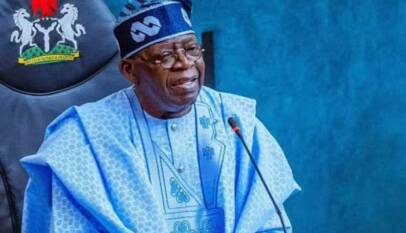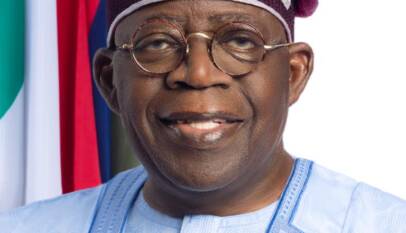

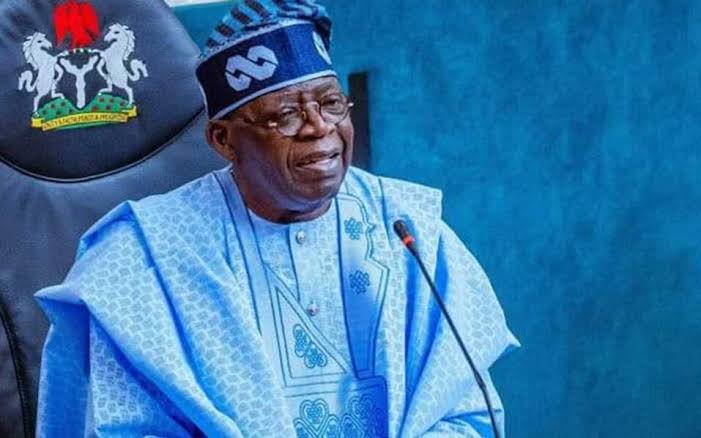
Photo: Nigeria President Bola Tinubu
By O.M.O-Beecroft, Special Correspondent, Ajagbodudun, Warri North
In a country where education is often touted as the ladder to success, Nigeria’s reality makes a mockery of that promise—daily, and in full glare of the world. Just recently, that painful truth was amplified yet again when Habeeb Hamzat, popularly known as Peller, a popular TikToker with allegedly no known higher education, staged a job interview that has left Nigerians questioning the value of their degrees.
In the recent viral clip, over 20 master’s degree holders—yes, master’s holders—filed in humbly to compete for the privilege of holding a camera for Peller. The role? Trail him around, record his life, and be paid ₦500,000 a month. But here’s the real catch: Peller’s only qualification requirement was that applicants must have a master’s degree. Not an OND, not an HND, not a BSc. Only a master’s would do – for a cameraman job.
While some giggled at the absurdity, others, rightfully, were insulted. Here were people who had spent years in lecture halls, burning candles at both ends, sitting through seminars, writing theses—only to line up to be quizzed, bantered with, and mocked by someone who himself allegedly hasn’t seen the four walls of a university lecture theatre.
It would have been laughable if it weren’t such a damning portrait of our broken system. In this same country, we have had presidential candidates and state governors, lawmakers and ministers, who struggle to produce even a valid school certificate—yet they go on to rule, amass wealth, and become untouchable masters over the same graduates who queue up to carry their bags, hold their cameras, or drive their trucks.
This is no exaggeration. In 2021, Nigeria’s Dangote Group announced that among over holders 13,000 applicants for the position of Graduate Executive Truck Driver, there were six PhD, 704 Master’s holders, and more than 8,000 Bachelor’s degree holders. Imagine that, a country where PhDs steer trailers on dusty highways while politicians with questionable certificates fly in private jets, deciding our fate.
This is the tragic irony Nigerian graduates face daily: degrees that open no doors; interviews that humiliate rather than uplift; leaders who need not bother with the very education they preach to the masses. For decades, our universities have been factories producing certificates—some say millions of them—but with no industries or functional systems to absorb these educated minds.
Meanwhile, the constitution still allows anyone with just a School Certificate (or its equivalent) to vie for the highest offices in the land. And when they do present certificates, the legitimacy of such documents often sparks controversy, court cases, and social media debates. Yet these same individuals wield enormous power over the lives of graduates who must now beg for menial jobs to survive, and when they finally get one most times they are rejected on the ground that they are overage.
What then is the message to the young Nigerian who has spent years collecting degrees? That knowledge is worthless without connections? That a TikToker’s mock interview can break you more than any hard exam? That politicians with school certificates and forged transcripts can rule over you with impunity? Sadly, that’s the lesson many have internalized: “Education is a scam.”
But here’s the hard truth—education itself isn’t the scam; the Nigerian system is. A degree is not an automatic ticket to dignity or prosperity in a society where leadership is allergic to merit and allergic to accountability. If we must change this narrative, young Nigerians must refuse to let their degrees become mere props for mockery. They must build skills, create opportunities, collaborate, and, more importantly, organize to demand leaders who embody the very values they want to see—leaders whose qualifications are not forged, whose vision goes beyond personal gain.
To every Nigerian graduate reading this: your degree should never be your only asset. Let it be your foundation, not your ceiling. Acquire skills, build networks, learn trades, explore entrepreneurship, and yes, demand a better system that stops rewarding mediocrity and dishonesty in high places.
Our leaders must not continue to be the least qualified among us. If we want a country where degrees matter, then the top must stop being a playground for the barely literate and the fraudulently credentialed. Until then, a nation that makes its brightest fight for the scraps thrown by the uneducated will remain the tragic comedy we saw play out in Peller’s interview room.
O.M.O-Beecroft reports on policy, youth, and human rights issues from Warri North, Delta State.