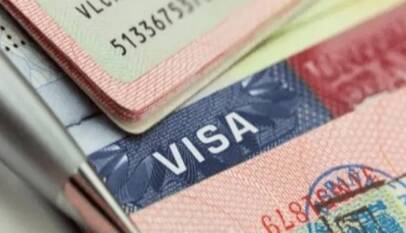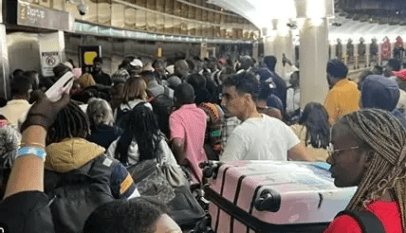


Canada’s immigration system is facing renewed pressure as more than 1.8 million temporary resident permits are set to expire by the end of 2026, according to data from Immigration, Refugees and Citizenship Canada (IRCC).
The looming expirations are heightening uncertainty for international students, foreign workers and visitors who had hoped to transition to permanent residency, amid tightening federal immigration policies.
IRCC figures show that the number of expiring temporary permits has declined slightly from nearly 2.1 million in 2025 to just over 1.8 million by the end of 2026. Temporary residents are individuals legally allowed to stay in Canada for a limited period for study, employment or short-term visits, and they play a significant role in the country’s labour market and education system.
Immigration lawyer Mario Bellissimo attributed the situation to a backlog that has built up over several years, driven largely by a surge in international student admissions and work permits.
“The scale of expiring permits is not unexpected,” Bellissimo said, describing the situation as a “runaway inventory” of temporary residents accumulated in recent years.
He added that opportunities for permanent residency are narrowing, with the federal government planning to admit 380,000 permanent residents in 2026—about 15,000 fewer than the previous year.
“Many temporary residents now feel the rules have shifted,” Bellissimo said. “Individuals who believed they would eventually be allowed to remain in Canada now feel the understanding they had with the government has changed, creating frustration and uncertainty.”
Students appear to be the most affected group. IRCC data shows that more than 265,000 study permits are due to expire in 2026, including nearly 166,000 extensions. Many of those students had arrived in Canada with the expectation that their education would lead to long-term residency.
Enforcement actions are also increasing. The Canada Border Services Agency recorded more than 22,000 removals in 2025, with close to 30,000 cases still pending as of October.
Despite the tightening measures, over 177,000 former temporary residents were granted permanent residency between January and November 2025. However, new arrivals have dropped sharply, with international student and temporary worker entries falling by 53 per cent between January and September 2025 compared to the same period in 2024. The decline forms part of Canada’s effort to ease pressure on housing, infrastructure and public services.
Tensions have been particularly pronounced in Ontario, where temporary residents affected by rejections under the Ontario Immigrant Nominee Program (OINP) have staged protests. The OINP is designed to help skilled workers, students and professionals obtain provincial nominations for permanent residency.
In 2025, the federal government cut Ontario’s nomination allocation by half, citing concerns over compliance and fraud—claims strongly disputed by applicants. Since last year, about 2,600 OINP applications have been rejected, leaving many individuals on “maintained status,” which often limits their ability to work.
Rising rents and living costs in major cities such as Toronto have further compounded the hardship faced by affected residents, while the reduction in provincial nominations has deepened uncertainty for thousands, particularly those working in high-demand sectors.
The expiration of millions of temporary permits underscores the growing challenge for Canada as it seeks to balance economic needs with sustainable immigration management.