

By Douglas Maha, Abuja
BudgIT has raised serious concerns over alleged budgetary anomalies amounting to N6.93 trillion in the proposed 2025 national budget.
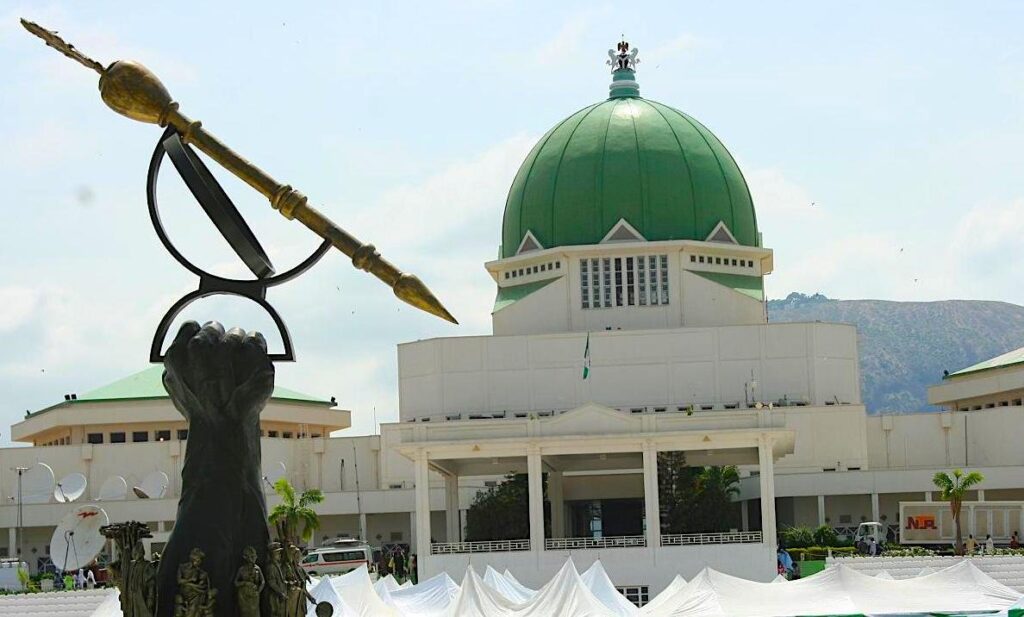
The group, a leading Nigerian civic technology organisation advocating for fiscal transparency, claims that thousands of projects were inserted into the budget by Nigeria’s National Assembly without adequate justification or alignment with national development priorities.
The questionable N6.93 trillion worth of suspicious projects represents about 11 per cent of Nigeria’s total N54.2 trillion budget for the year.
In a statement published via its verified X (formerly Twitter) handle, BudgIT revealed that a total of 11,122 projects were inserted into the 2025 federal budget. Of these, 238 projects—each valued above N5 billion—amount to a staggering N2.29 trillion and were allegedly included with “little or no justification.”
The organisation stated, “We have combed through the 2025 Federal Government budget and our findings are deeply troubling. Projects worth billions have been indiscriminately added, often lacking any transparent rationale.”
BudgIT’s analysis further highlights:
- 984 projects worth N1.71 trillion were inserted without clarity on need or execution;
- 1,119 mid-sized projects, ranging from N500 million to N1 billion, total N641.38 billion;
- N653.19 billion in projects were earmarked for federal constituencies;
- N444.04 billion was allocated to senatorial districts through 1,972 projects.
Among the most controversial inclusions are:
- 1,477 streetlight installations valued at N393.29 billion;
- 538 borehole projects totalling N114.53 billion;
- 2,122 information and communication technology (ICT) projects amounting to N505.79 billion;
- N6.74 billion allocated for the “empowerment of traditional rulers.”
The Ministry of Agriculture, in particular, appears to be a major target of the insertions, with BudgIT noting that 39% of all additions, equivalent to 4,371 projects worth N1.72 trillion, were forced into its capital allocation. This reportedly inflated the ministry’s budget from N242.5 billion to N1.95 trillion.
The report also names the Ministries of Science and Technology and the Budget and National Planning Ministry as recipients of significant insertions, with respective increases of N994.98 billion and N1.1 trillion.
Equally concerning, according to BudgIT, is the apparent use of specialized agencies—such as the Nigerian Building and Road Research Institute (NBRRI) and the Federal Cooperative College, Oji River—as “dumping grounds” for politically driven projects. BudgIT argues that these agencies lack the technical capacity to manage such large-scale projects, which could result in underperformance, mismanagement, and waste of public funds.
The civic group’s allegations come amid mounting scrutiny of Nigeria’s budgetary process, often criticised for its opacity and weak oversight mechanisms. BudgIT called for urgent reforms to strengthen budget discipline, enhance project vetting processes, and prevent misuse of public resources.
Neither the National Assembly nor the mentioned ministries have publicly responded to the claims as of the time of this report.
BudgIT has urged Nigerians to demand accountability and transparency in budget implementation, stressing that unchecked insertions compromise economic planning, governance, and public trust.
