

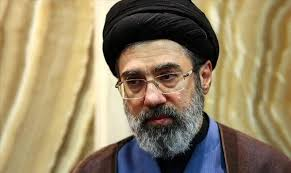
Photo: Mojtaba Khamenei
Iran has appointed Mojtaba Khamenei as its new supreme leader following the death of his father, Ali Khamenei, a move that signals continuity in Tehran’s hardline posture as its conflict with Israel and the United States intensifies.
The appointment was announced after Iran’s powerful Assembly of Experts convened to select a successor to the late leader, who had dominated the country’s political and military decision-making for more than three decades. The swift transition is widely seen as an effort by Iran’s clerical establishment to demonstrate stability and unity during wartime.
Mojtaba Khamenei, 56, has long been regarded as an influential figure within Iran’s political and security circles despite holding no formal senior government office. He is believed to have close ties with the Islamic Revolutionary Guard Corps, the powerful military institution that plays a central role in Iran’s defence strategy and its network of regional allies.
His elevation to the supreme leadership suggests that Iran’s strategic direction is unlikely to change significantly in the near term. Instead, it indicates that Tehran intends to maintain the policies developed under Ali Khamenei, including resistance to Western influence and continued support for allied armed groups across the Middle East.
The leadership transition comes at a time when the conflict between Iran and Israel has escalated sharply. Israeli forces have carried out strikes targeting Iranian military and nuclear infrastructure, while Tehran has responded with missile and drone attacks against Israeli targets and Western-linked assets across the region.
The United States, under President Donald Trump, has backed Israeli operations while maintaining its own pressure campaign against Tehran. Washington has said its objective is to curb Iran’s missile capabilities and prevent it from advancing its nuclear programme.
American officials have reacted cautiously to the leadership change. While the administration has criticised Iran’s political system, it has signalled that the emergence of a new supreme leader does not immediately alter Washington’s strategic calculations. U.S. officials believe the Iranian system remains largely intact despite the death of its most powerful figure.
The appointment of Mojtaba Khamenei is also being interpreted in diplomatic circles as an attempt to prevent internal power struggles within Iran’s leadership. The swift succession suggests that the country’s clerical and military institutions were prepared for such a transition and moved quickly to consolidate authority.
Beyond the immediate military confrontation, the conflict is already producing global economic consequences. Oil prices have surged amid fears that instability could threaten shipping through the Strait of Hormuz, a narrow waterway through which a significant portion of the world’s oil exports passes. Any disruption to that route would have far-reaching consequences for global energy markets.
Regional reactions have been mixed. Some governments in the Gulf have urged restraint and called for diplomatic efforts to prevent further escalation, while others remain deeply concerned that the conflict could widen and draw in additional regional actors.
For Iran’s supporters and allies, the appointment of Mojtaba Khamenei represents continuity of leadership during a moment of crisis. For its adversaries, however, it signals that the ideological and strategic foundations of the Islamic Republic remain firmly in place.
As fighting continues and diplomatic channels remain limited, the emergence of a new supreme leader may stabilise Iran’s internal political structure. But it also reinforces expectations that the confrontation between Iran, Israel and the United States could persist, prolonging a conflict that is already reshaping the political and security landscape of the Middle East.
