
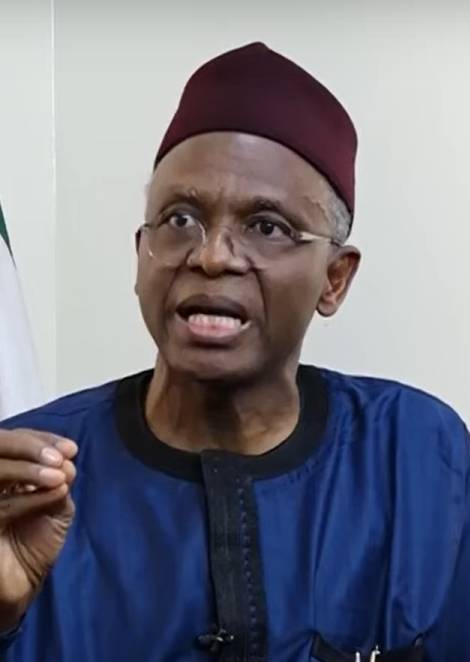
The Department of State Services (DSS) has filed criminal charges against former Kaduna State governor, Nasir El-Rufai, accusing him of involvement in the illegal interception of phone calls belonging to the National Security Adviser, Nuhu Ribadu.
The case was filed on Monday at the Federal High Court in Abuja under charge number FHC/ABJ/CR/99/2026. Prosecutors say the alleged acts violate both the Cybercrimes (Amendment) Act 2024 and the Nigerian Communications Act 2003.
According to the three-count charge, the DSS based its case largely on statements El-Rufai allegedly made during a February 13, 2026 appearance on Arise TV Prime Time programme. During that interview, he was said to have spoken about the interception of the NSA’s phone communications.
In the first count, the DSS claims El-Rufai admitted that he and others unlawfully tapped Ribadu’s phone lines. That, prosecutors say, is an offence under Section 12(1) of the Cybercrimes Amendment Act.
In the second count, he is accused of saying he knew people who carried out the interception but did not report them to security agencies, which the DSS says also breaks the law.
The third count alleges that El-Rufai and others still at large used technical tools to intercept the NSA’s communications in a way that could threaten national security and create fear among the public. That charge is tied to Section 131(2) of the Nigerian Communications Act.
Background
The case adds to growing political tension involving El-Rufai, who governed Kaduna State from 2015 to 2023 and remains a strong voice in national politics. In recent months, he has openly criticised some federal government policies and key officials, including Ribadu. Their political relationship has been widely viewed as strained, making the charges even more sensitive in political circles.
Illegal wiretapping is treated as a serious national security offence under Nigerian law because it involves privacy violations and possible intelligence risks. Convictions under the cited laws can attract heavy fines and prison terms.
Early Reactions
Legal and political reactions have started to trail the charges.
Sources close to El-Rufai say he denies wrongdoing and insists his comments during the television interview have been misinterpreted. His associates describe the case as politically driven and say he will challenge the charges in court.
Security sources, however, maintain that the DSS acted within its mandate and that the matter is strictly legal, not political. They say the agency has documentary and broadcast evidence to support the filing.
Some opposition figures have called for a transparent trial, warning that the case should not be used to settle political scores. Others argue that anyone linked to unlawful surveillance — no matter how highly placed — must face the law.
The court is expected to fix a date for arraignment, where the former governor will formally respond to the charges.