
The United States has confirmed that it has deployed a limited number of military personnel to Nigeria as part of a renewed joint security effort aimed at strengthening counter-terrorism and stability operations.
The disclosure came from the head of the United States Africa Command (AFRICOM), General Dagvin R.M. Anderson, who said the move followed fresh security understandings reached between Washington and Abuja to deepen operational cooperation against militant threats.
According to reports, the deployment is structured as a targeted support mission rather than a large troop presence. US officials described the team as a small, specialized contingent designed to provide high-level technical and operational capabilities to Nigerian security forces. Specific details regarding troop numbers, locations, and operational scope were not made public for security reasons.
General Anderson explained that the arrangement reflects a growing alignment between both countries on the urgency of coordinated counter-terrorism measures. He noted that the deployed personnel bring niche expertise intended to enhance intelligence coordination, operational planning, and mission support functions.
Security analysts say such specialized teams typically focus on intelligence sharing, surveillance support, logistics coordination, training, and advisory roles — rather than direct frontline combat. This model has been used in other African partner nations where the US provides technical backing while local forces lead field operations.
The announcement is significant because it represents the first formal confirmation of an American military presence in Nigeria since US air operations targeted militant positions in December 2025. Those strikes followed intelligence and surveillance flights linked to extremist group tracking within the region.
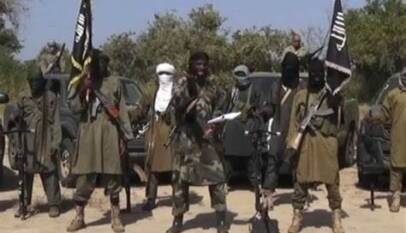
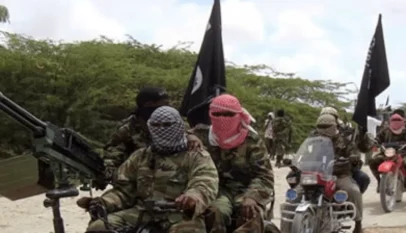
Nigeria continues to face multiple security pressures, including insurgent activity in the northeast, armed banditry in the northwest, and militant networks operating across parts of the Sahel corridor. Observers note that increased foreign technical cooperation may improve intelligence fusion and rapid response capacity, particularly in cross-border threat monitoring.
Neither government has indicated how long the current deployment will last, but officials suggest the collaboration framework allows for flexible scaling depending on operational needs and security assessments.
Defence watchers also point out that such partnerships often include technology transfer, joint exercises, and capacity-building programs aimed at strengthening domestic security institutions over the long term.
More operational details are expected to emerge as the joint coordination structure between both countries develops.