
Fresh signs of reconciliation have emerged in Rivers State following President Bola Tinubu’s intervention in the prolonged political crisis rocking the state.
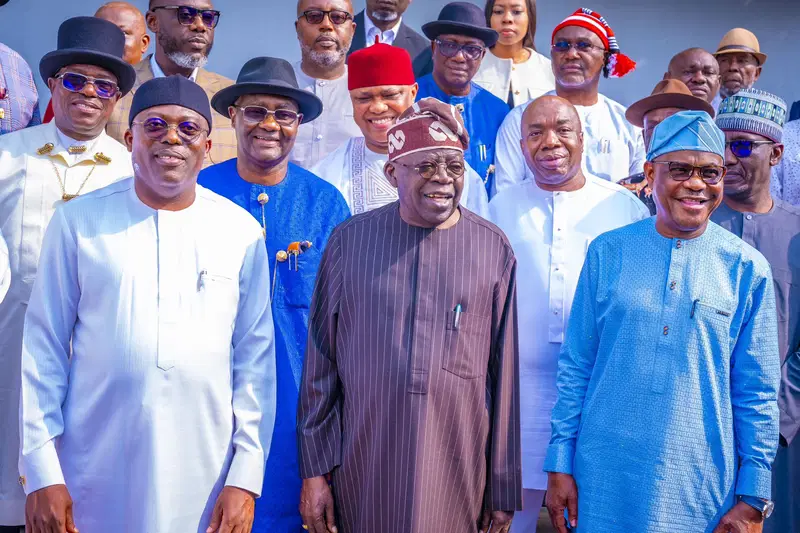
The President convened a late-night meeting in Abuja with the Minister of the Federal Capital Territory, Nyesom Wike; Rivers State Governor, Siminalayi Fubara; and other key political stakeholders from the state. Although details of the discussions were not officially disclosed, the talks are widely believed to have focused on finding a lasting solution to the political tensions in Rivers State.
Reports indicated that Governor Fubara accompanied Wike to his residence in Guzape, Abuja, after the meeting, a development seen as a strong signal of rapprochement. Unconfirmed accounts further claimed that the governor appealed to the minister and pledged to avoid actions that could be interpreted as disrespectful, suggesting a possible thaw in their strained relationship.
The meeting comes after months of intense political rivalry between Governor Fubara and his predecessor, Wike, whose influence in the state has remained significant since he was appointed FCT minister. The rift, which became public shortly after Fubara assumed office, plunged Rivers State into a political crisis marked by a split within the State House of Assembly, impeachment threats, prolonged court battles, and repeated disruptions of legislative activities.
The dispute has largely been attributed to a struggle for political control and influence in the state, particularly over party structures and the direction of governance. Several earlier reconciliation efforts by party leaders and stakeholders failed to yield results, fueling concerns over political stability and effective governance in the oil-producing state.
President Tinubu’s intervention is therefore being viewed as a strategic move to de-escalate tensions, restore political stability, and ensure smooth governance in Rivers State ahead of future political activities within the state and the ruling party.