
An outbreak of human metapneumovirus in China has raised concerns of another widespread respiratory illness, but HMPV has been around for years and it’s likely infected most people once in their lifetime.
An outbreak of human metapneumovirus (HMPV) in China is drawing attention due to local reports of cases spreading across some parts of the country.
HMPV is a virus first identified by a research group in the Netherlands in 2001 and had likely spread among human populations for many years prior to that.
News of the outbreak followed an announcement by China’s National Disease Control and Prevention Administration that it was testing a new reporting protocol in response to pneumonia cases.
At a news conference reported by China’s state broadcaster CCTV, health officials noted several common disease-causing infections were circulating among the country’s population during cold months and issued warnings about relying on antiviral medications to address the disease.
What is the current situation with HMPV?
The current HMPV situation in China is a new outbreak of a known and relatively well-understood virus that has likely circulated among humans for hundreds of years.
HMPV cases have reportedly surged among young people in northern parts of China in recent weeks. Rhinovirus cases (which cause common colds) have also risen.
Across the border, India’s health ministry has confirmed two cases of the disease in that country’s Karnataka state, saying in a statement that HMPV is endemic across the world, and that no “unusual surge” of flu or severe respiratory disease cases had been reported in the country.
Epidemiologists elsewhere have tempered suggestions of a major health emergency.
“The increased prevalence is likely the normal seasonal increase seen in winter. The reported high prevalence amongst children also reflects what we know about this virus: it is a common cause of childhood respiratory illness,” said Jacqueline Stephens, an epidemiologist at Flinders University, Australia.
Jill Carr, a virologist also from Flinders University, said this HMPV outbreak in China is very different to the COVID-19 pandemic, where the virus was completely new in humans and there was no protective immunity.
Is HMPV like COVID-19 or flu?

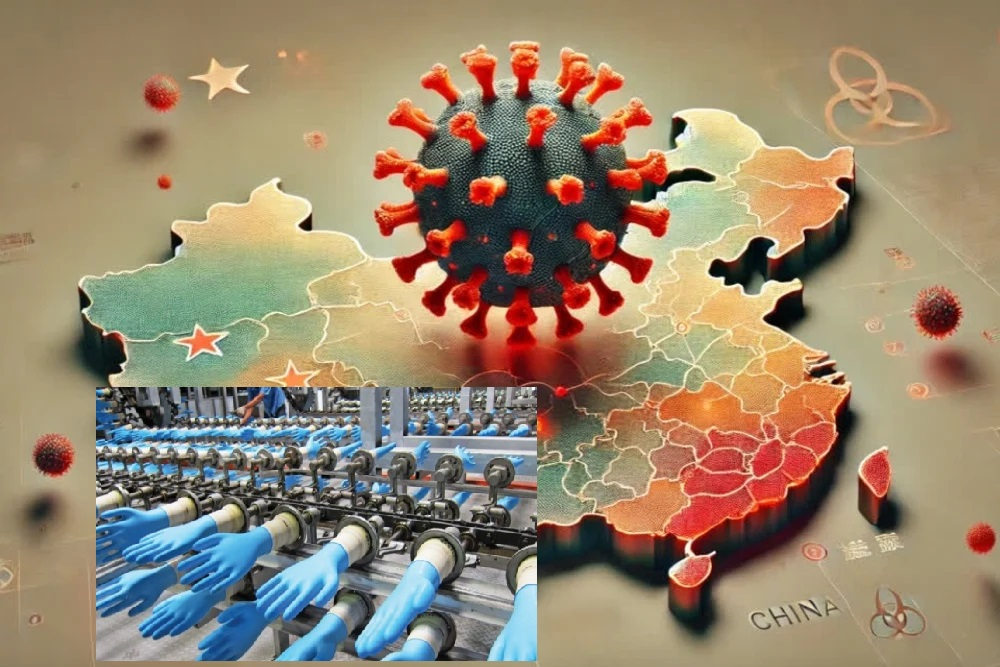
Photo: HMPV is predicted to cause surge in gloves demand
HMPV comes from the same viral family as the respiratory syncytial virus (RSV), which also causes short-term respiratory infections.
And like RSV, HMPV is a seasonal infection occurring in colder months with the potential to reach epidemic levels, where a high rate of infection occurs at a particular point in time.
Until a Dutch research group first identified the HMPV virus in 28 Dutch children in 2001, HMPV cases were often misdiagnosed as RSV, due to very similar symptoms.
“What we found is that all the children over about five years of age had antibodies against this [HMPV] virus,” Albert Osterhaus, a virologist at the University of Veterinary Medicine Hannover, Germany, who led that first study, told DW.
Osterhaus and his colleagues have since determined that HMPV has circulated in humans for hundreds of years.
Unlike coronaviruses and influenza viruses, HMPV also appears to be relatively stable. This means that mutations are less frequent, and reinfection occurs over time as immunity wanes.
“Influenza virus is the champion in mutation,” said Osterhaus. “[HMPV] is relatively stable and we have looked into both RSV and HMPV viruses from 10-15 years ago and we saw some changes, but not major changes.”
What are the symptoms of HMPV?
HMPV causes upper and lower respiratory tract infections, with many symptoms like disease caused by its relative RSV.
Symptoms can include cough, fever and congested nasal passages, which are often caused by other viruses as well. In mild cases, this can make diagnosis difficult.
Pneumonia or bronchitis can result in more severe cases.
Like other respiratory illnesses, HMPV is contagious. Transmission occurs through exposure to airborne droplets expelled when an infected person coughs or sneezes, as well as contact with contaminated surfaces, including by physical contact with hands or skin.
While anyone can become infected with HMPV, very young children and the elderly are at most risk for developing serious illness.
Is there a treatment or vaccine for HMPV?
There is currently no treatment or vaccine for HMPV.
Preventative measures include good hygiene, avoiding exposure to infected people (or, if infected, staying home), and adopting measures like mask-wearing.
A suitable vaccine is in the development. Osterhaus said the vaccine might come from a “revolution” for RSV vaccines.
“We know how to make them these days and so they are used in elderly people, in pregnant women and, it’s being tried to have them for young infants as well.
“For HMPV, I think, in principle, because the virus is very similar to RSV, I expect the companies that are working on developing an RSV vaccine HMPV will be next,” he said.
Osterhaus predicts that an HMPV vaccine will be ready “in the coming years”
>>>>from msn.com with minor editing