
A Senior Special Assistant on Media to Lagos State Governor, Mr Wale Ajetunmobi, has criticized claims circulating on social media that recent fire outbreaks in major Lagos markets were targeted attacks against Igbo traders, describing such narratives as misleading and divisive.
Ajetunmobi, reacting in a post on X, said it had become routine for “some individuals from the Southeast” to fabricate ethnic motives around market fire incidents in Lagos, even when investigations and eyewitness accounts point to unsafe trading practices as the primary causes.
His comments followed a post by an X user, Obiasogu David (@afrisagacity), who alleged that the burning of Balogun Market, Arena Market in Oshodi and Ikotun Market within a week suggested a deliberate pattern against markets dominated by Igbo businesses.
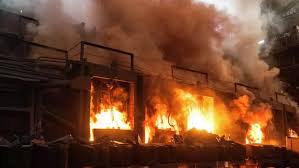
Responding, Ajetunmobi accused the user and others of attempting to portray the incidents as ethnic sabotage by Yoruba people against Igbo traders. He dismissed the claims, noting that the fire at Balogun Market started from the GNI building, which he said is owned by Odu’a Group, a Yoruba-owned conglomerate.
He added that the fire had severe consequences for traders of different ethnic backgrounds, including Yoruba traders, and even destroyed historic landmarks such as the Shitta-Bey Mosque on Martins Street, one of the oldest mosques in Lagos.
Ajetunmobi further listed what he described as common unsafe practices in Lagos markets, particularly Balogun Market, which he said contribute significantly to frequent fire outbreaks. According to him, traders often place industrial generators on upper floors of high-rise buildings converted into warehouses, store flammable materials in poorly ventilated spaces, and position fuel tanks close to running generators.
He also alleged that some traders illegally tap electricity, trade close to transformers and store combustible materials near power installations, while using staircases and emergency exits as storage areas, thereby worsening the risks during emergencies.
The governor’s aide stressed that traders from different ethnic groups — including Yoruba, Hausa, Igala, Ibibio and others — operate in the affected markets and are equally impacted by such disasters.
He also noted that the Lagos State Government routinely carries out fire safety advocacy campaigns in markets, especially during the dry season, to educate traders on safe practices, but said many continue to disregard safety guidelines.
Ajetunmobi warned that attributing market fire incidents to ethnic persecution only fuels division and distracts from the real issues of safety and compliance.
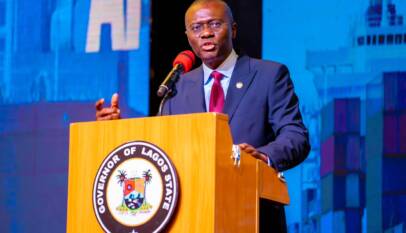
Meanwhile, Governor Babajide Sanwo-Olu recently visited the scene of the GNI building fire on Lagos Island, where he confirmed that eight people lost their lives. The governor also declared the area unsafe as emergency agencies continue efforts to stabilise the environment and restore normalcy.