

By Deborah Nnamdi
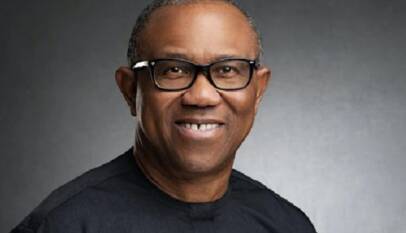
Former Anambra State governor and 2023 Labour Party presidential candidate, Peter Obi, has criticized the House of Representatives for declining to criminalize vote-buying at the level of party primaries, describing the move as a setback for Nigeria’s democracy.
In a post on X (formerly Twitter) on Sunday, Obi said Nigerians had hoped lawmakers would take a firm stand against vote-buying while amending the Electoral Act, 2022, but were disappointed by the decision to exclude inducements at party primaries.
He described vote-buying as a major threat to credible elections and argued that refusing to address it at the foundational stage of the electoral process showed an unwillingness to confront the root of the problem.
“Just yesterday, Nigerians hoped that the House of Representatives would finally take a decisive stand against the cancer of vote-buying,” Obi said, adding that by failing to criminalize inducement at party primaries, lawmakers had chosen to protect a broken system rather than safeguard the nation’s future.
The former governor warned that efforts to curb vote-buying would be ineffective if the practice was not tackled from the outset, stressing that democracy loses its meaning when votes are traded for money.
Obi also expressed concern that the culture of vote-buying had spread beyond partisan politics into other areas of society, including town unions, village associations, clubs, and student elections.
Calling for bold reforms, he said Nigeria’s democratic future must not be compromised, insisting that integrity must be enforced from the very beginning of the electoral process.
“Any effort to stop vote-buying must begin at the primaries. Without addressing the problem at its roots, any measures taken later will lack the strength to endure,” he said, adding that “a democracy where votes are bought is not a true democracy; it is a criminal marketplace.”
Obi concluded by urging lawmakers and stakeholders to prioritise reforms, declaring that Nigeria’s future “must not be for sale” and that a new Nigeria was possible if the country confronted electoral malpractices decisively.