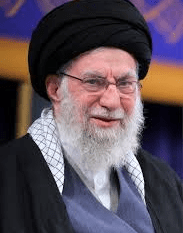

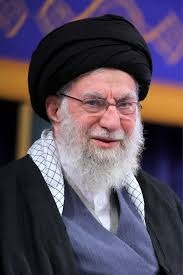
The Middle East was thrust into unprecedented turmoil early Saturday after Israel confirmed that Iran’s Supreme Leader, Ali Khamenei, was killed in a coordinated military strike targeting key leadership and military installations inside Iran.
According to Israeli officials, the operation began shortly after midnight local time, when waves of fighter jets, long-range missiles, and armed drones penetrated Iranian airspace in a highly coordinated assault. The opening phase focused on disabling Iran’s air defense systems, missile infrastructure, and command-and-control facilities before striking what was described as Khamenei’s secure compound in the capital, Tehran.
Explosions rocked several districts of the city in the early hours, with thick plumes of smoke seen rising above government complexes. Residents reported sustained bombardment lasting several hours, as emergency sirens echoed through the capital and surrounding provinces.
Israeli Prime Minister Benjamin Netanyahu addressed the nation later in the day, stating that “all indications” confirm the elimination of Khamenei alongside senior commanders of Iran’s Revolutionary Guard. He described the strike as a decisive move aimed at neutralizing what he called an existential threat posed by Iran’s missile and nuclear capabilities.
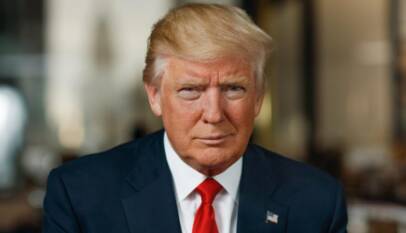
The operation reportedly involved coordination with the United States, with American military assets assisting in the broader campaign targeting strategic Iranian infrastructure. In Washington, U.S. President Donald Trump characterized the offensive as a major turning point in confronting Iran’s leadership, though official statements from the current U.S. administration have been more measured, emphasizing regional security concerns.
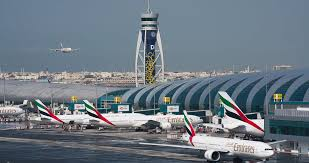
Within hours of the strike, Iranian forces launched retaliatory ballistic missiles and drones toward Israel and U.S.-aligned positions across the Gulf region. Air defense systems were activated in multiple countries as the confrontation widened, raising fears of a broader regional conflict.
Casualty figures remain unclear. Iranian emergency services have reported significant losses in multiple provinces, though independent verification is ongoing. Iranian state media has yet to formally confirm Khamenei’s death, creating uncertainty amid the rapidly evolving situation.
Global reaction was swift. The United Nations Security Council convened an emergency session as world leaders called for restraint, warning that further escalation could destabilize global energy markets and trigger a wider war across the Middle East.
If confirmed, the killing of Iran’s Supreme Leader would mark one of the most consequential geopolitical events in decades, potentially reshaping the balance of power in the region and plunging long-standing hostilities into a new and unpredictable phase.
Although world leaders are scrambling to make sense of how this affect the peace in the region, there were indications that the late Iran leader had prepared for his possible assassination by the US by not only naming a number of possible successors, but also preparing layers of backup for other members of his inner cricle.
This remains a developing story.