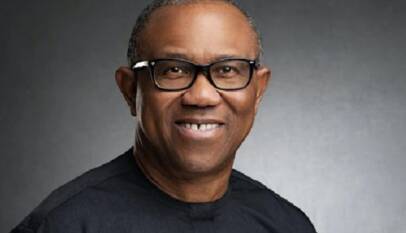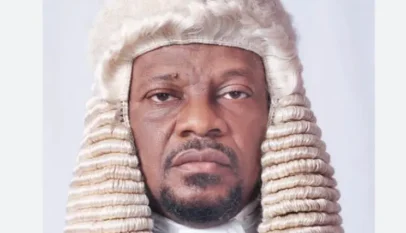


Justice Kudirat Kekere-Ekun, Chief Justice of Nigeria
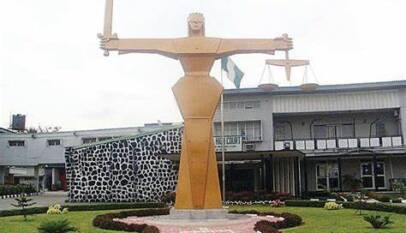
On July 11, 2024, Nigeria’s Supreme Court delivered a landmark ruling affirming the financial and administrative autonomy of the nation’s 774 Local Government Councils. The seven-member panel, led by Justice Mohammed Garba, unanimously upheld the federal government’s case for LGA independence, rejecting state governments’ attempts to dissolve democratically elected councils.
This judgement sets a sparkling precedent of unfettered administration for local governance in Nigeria and signposts the path to a credible and better governance system and development at that level.
Unfortunately, recent events have raised concerns about the integrity of the electoral process, with civil society organisations and stakeholders, including the National Assembly, calling for the Independent National Electoral Commission, INEC, to be responsible for the conduct of elections into that tier of government.
Autonomy Debate: A Democratic Victory?
The Supreme Court ruling was hailed as a victory for democracy, granting local councils the authority to govern independently of state interference. In theory, this promotes localized, responsive leadership. It also makes it impossible for governors to impose and depose heads of council at their whims and caprices. The Federal Government also set a timeline for states to conduct elections into the councils or risk losing monthly allocations to the LGAs.
Consequently, many state governments, fearing the loss of federal funds, rushed to hold elections under questionable circumstances. This scramble has not resulted in free and fair elections, it is instead casting a shadow over the court’s decision.
Governors’ Hijack: A Flawed Process
Following the ruling, state governors have hastily organized local government elections to maintain access to federal funds. The results have been overwhelmingly skewed in favour of ruling parties, with governors ‘selecting’ and installing their stooges to man the councils, and in turn, continue their control of the resources.
In Jigawa, the ruling APC won all 27 chairmanship seats, and in Rivers, the Action People’s Party (APP) secured 22 out of 23 seats. The APP is an SPV (special purpose vehicle) by Governor Sim Fubara, after losing control of his ruling PDP to his erstwhile godfather and predecessor, Ezenwo Nyesom Wike. Similar trends were seen in Akwa Ibom, Benue, Delta, Gombe, and Oyo, where ruling parties dominated, leaving little room for opposition or independent voices.
These patterns reflect a broader issue in Nigerian politics, where local elections are manipulated to favour the ruling parties, further consolidating state governors’ power.
Threats to Democracy
The dominance of ruling parties in local elections undermines the Supreme Court’s intent of fostering LGA autonomy. Instead of promoting independent governance, these elections have reinforced state governors’ control. The exclusion of opposition parties signals a worrying trend in Nigeria’s electoral landscape, eroding accountability and representation at the local level.
The Path Forward: Strengthening Electoral Integrity
For Nigeria to benefit from the Supreme Court’s ruling, local government elections must be free, fair, and transparent. Reforming State Independent Electoral Commissions (SIECs), often seen as extensions of governors’ offices, is crucial. Additionally, civil society organizations and election observers must actively monitor elections to ensure they reflect the will of the people, not a few powerful individuals.
While the ruling has the potential to strengthen grassroots democracy, it will only succeed if elections are liberated from state governors’ influence. True local government autonomy, driven by accountable leadership, is key to fostering inclusive governance in Nigeria.
Ultimately, Nigeria’s democracy depends not only on legal rulings but on the integrity of its elections and the public’s ability to hold leaders accountable at all levels.